
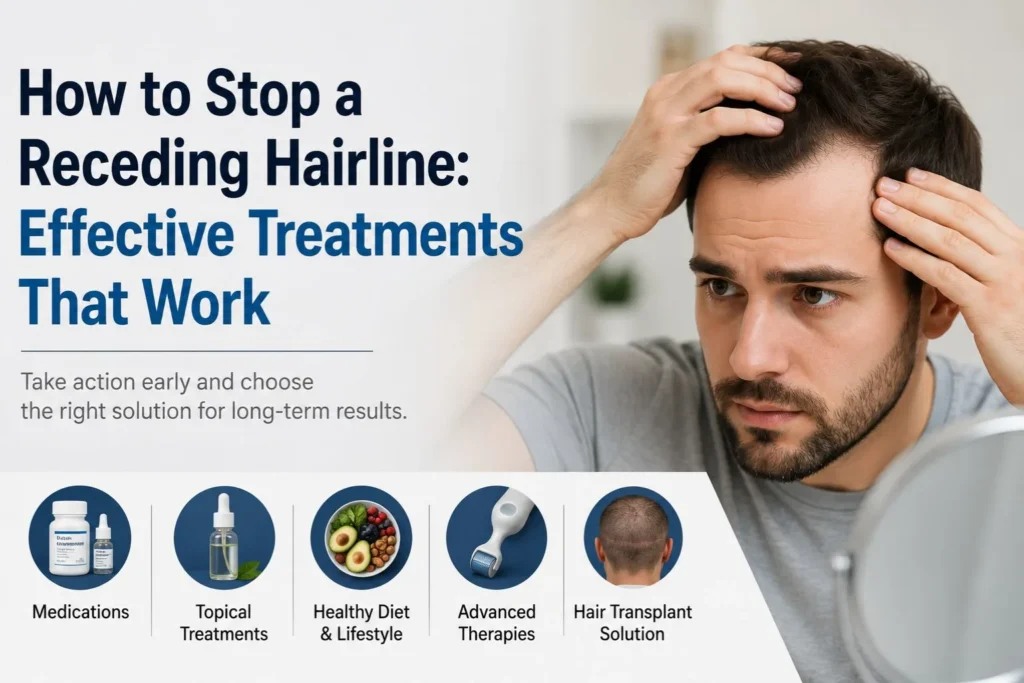
The most effective way to stop a receding hairline is to start treatment early with clinically proven options such as medication, hair restoration therapies, or a hair transplant, depending on the cause and stage of hair loss. While you may not always reverse hairline recession completely, early treatment can often slow, stop, or significantly improve it.
Did you know? According to the NHS, Male-pattern baldness is the most common type of hair loss, affecting 6.5 million men in the UK.
This shows that more and more men must be wondering about how to stop a receding hairline. A receding hairline is common. It is not something you just have to sit with, either. In this blog, we will shed some light on the effective treatment options that help to stop the receding hairline
Table of Contents
Key Takeaways
- A receding hairline catches up with most men eventually, but early treatment slows it down significantly
- Minoxidil and finasteride remain the strongest first-line medical options
- PRP and laser therapy offer a drug-free route for mild to moderate loss
- FUE hair transplants restore hairlines once follicles have already stopped producing hair
- Small habits like better sleep, more protein, and quitting smoking help protect what’s left
What Is a Receding Hairline?
Many people wonder about “What is a receding hairline?” It is hair pulling back from the temples and forehead, usually forming an M-shape or a widow’s peak. Nothing mysterious about it. It happens because certain follicles shrink over time until they give up.
The main culprit is a hormone called DHT. It targets follicles that are genetically wired to react to it. Once those follicles shrink past a point, they stop growing visible hair. That is why hairline receding tends to sneak up on you rather than happen overnight. Most men first notice it in their late twenties.
Why Does This Even Happen?
A few things tend to feed into it:
- Genetics: Still the single biggest predictor
- Hormones: Rising DHT sensitivity shrinks follicles over time
- Age: The risk climbs steadily once you pass 30
- Stress: Won’t cause it alone, but can speed things up
- Poor scalp health: Clogged follicles struggle to push through
Smoking matters more than people think. One UK study found 47% of smokers had a visibly receding hairline, against just 10% of non-smokers. That gap is hard to ignore.
How to Prevent a Receding Hairline Before It Gets Worse
Wondering how to prevent receding hairline damage before it spreads? Timing is really important. Treatments work best on follicles that are still shrinking, not ones that have already shut down. Waiting rarely pays off. Starting early usually does.
A Few Habits Worth Building In
- Wash your scalp properly to clear product build-up
- Get enough protein, since hair needs it to grow
- Sleep and exercise to keep stress in check
- Skip tight hairstyles that tug at the temples
- Cut back on smoking if you can
None of these will reverse hair loss on their own, to be clear. But they set the stage so other treatments have a fair shot at working.
Receding Hairline Treatment Options Worth Knowing
Here’s a quick side-by-side of the main receding hairline treatment routes doctors tend to recommend.
| Treatment | How It Works | Best For |
| Minoxidil | Widens blood vessels, wakes up follicle activity | Early to moderate thinning |
| Finasteride | Blocks DHT production at the root | Genetic hairline recession |
| Low-level laser therapy | Stimulates follicles using light | Mild to moderate loss |
| PRP therapy | Uses your own plasma to trigger growth | Thinning with active follicles |
| FUE hair transplant | Relocates healthy follicles to the hairline | Advanced or stable recession |
Minoxidil: Usually the First Step
Minoxidil is still the most studied option you can buy without a prescription. In one trial, it reduced hair loss in 62% of men within a year. It’s not instant, though. Give it three to four months before judging results.
Finasteride and the DHT Problem
Finasteride goes after the actual cause rather than just the symptom. It lowers DHT levels in the scalp itself. In research, 83% of men saw no further crown loss after two years on it. Frontal hairline results came in slightly lower but still meaningful. For a lot of men, this is about as close to a genuine receding hair cure as medicine currently gets.
PRP and Laser, Side by Side
Both skip medication altogether and work by waking up follicles that are still alive but sluggish. They suit anyone who would rather avoid tablets or creams. Results differ from person to person, and pairing either with minoxidil tends to work better than using it alone.
How to Fix a Thinning Hairline When Follicles Are Gone
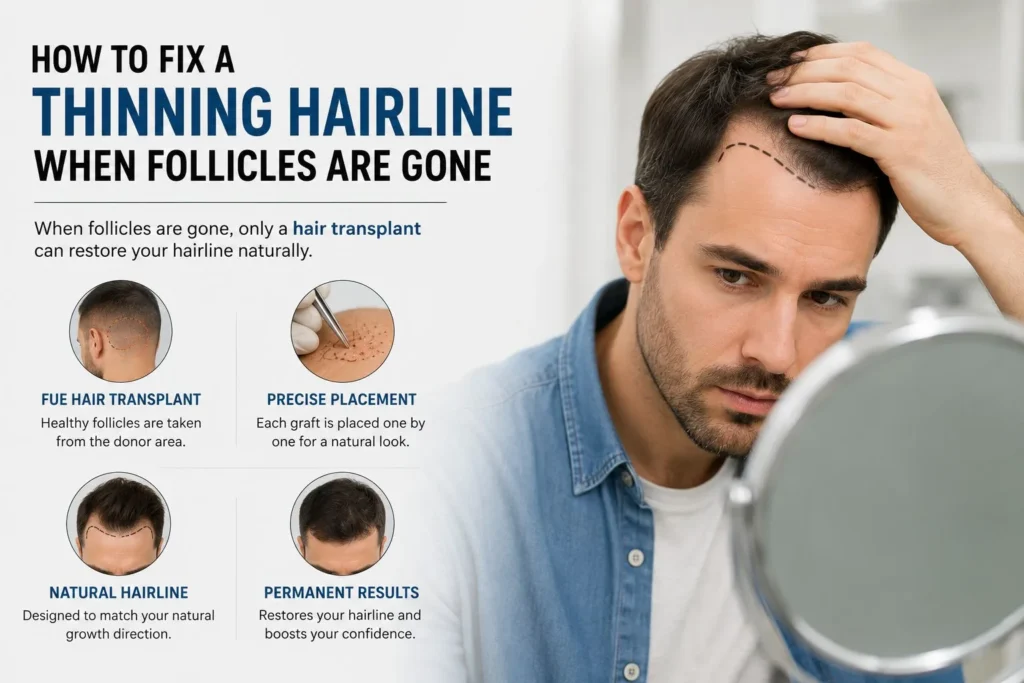
Once a follicle dies, no cream or tablet brings it back. That is exactly when to get a hair transplant instead of holding out for medication to work a miracle.
A FUE hair transplant is the current gold standard for this. Individual follicles get extracted and placed one by one along the new hairline. Knowing how a hair transplant works helps keep expectations realistic going in. Surgeons map your natural growth direction first, then place each graft to match it.
It is not just for the front hairline, either. The same technique works well as a hair transplant for thinning hair at the crown, and recovery is quicker than most people expect. Most men are back at work within a week.
How Can I Stop Receding Hairline Loss?
There is no magic here, but sticking to the right steps gets you close:
- Start minoxidil or finasteride as soon as you notice changes
- Sort out the lifestyle habits that quietly speed things up
- Layer in PRP or laser therapy if you want extra support
- Opt for an FUE hair transplant once follicles have already died
- Take photos every few months so you can actually see progress
Do these roughly in order, and you give yourself the best real shot at holding the line.
Hairline Remedies You Can Try Alongside Treatment
Apart from the clinical treatment, a few hairline remedies genuinely help support your scalp day to day. Scalp massage gets blood moving to follicles that need it. Biotin-rich foods like eggs and nuts feed keratin production. A gentle, sulphate-free shampoo protects the hair you already have.
None of this replaces proper treatment, worth saying again. But together, it makes a solid routine to build everything else around.
Take the Next Step Towards Healthier Hair!
Now you understand how to stop a receding hairline. A healthier hairline starts with the right diagnosis and treatment plan, not with waiting for hair loss to get worse. The Skin and Hair Clinic offers treatment built around exactly where your hair loss stands right now. Visit our website to book your consultation and take the first step towards protecting your hairline.
Frequently Asked Questions
1. Can a receding hairline grow back naturally?
Rarely, once follicles have actually died. Catching it early gives shrinking follicles a real chance to recover.
2. What age does a hairline usually start receding?
Most men notice the first signs in their late twenties or early thirties, though it can start earlier.
3. Does stress cause a receding hairline?
No, not by itself. However, stress can trigger or speed up hair shedding in people who are already genetically prone to hair loss.
4. Is an FUE hair transplant permanent?
Yes, generally. Transplanted follicles tend to resist DHT, so results usually last a lifetime.
5. How long does minoxidil take to show results?
Most men need three to four months of consistent, daily use before they notice real change.