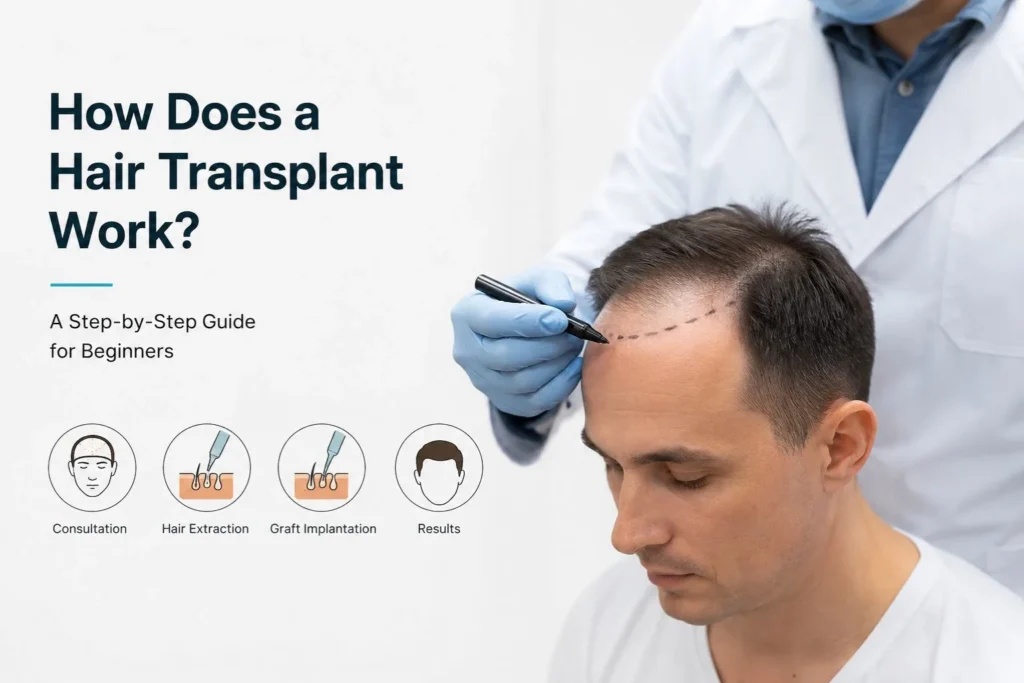
This blog addresses one of the most common questions asked by people considering hair restoration. According to the Market Research Future Report, the UK hair transplant market is projected to grow from USD 393.08 million in 2025 to USD 1,373.0 million by 2035, largely thanks to improved surgical techniques. This guide walks through the entire process step by step, from the very first hair transplant consultation to the months that follow surgery, so nothing is left to guesswork.
Objective
This article explains how a hair transplant actually works, from where the hair comes from to what recovery feels like, so anyone considering the procedure can walk into a consultation already knowing the right questions to ask.
Table of Contents
Key Takeaways
- A hair transplant moves healthy follicles from a donor area into thinning or bald patches
- FUE and DHI are the two main techniques used today
- Nothing happens without a proper consultation first
- Healing takes weeks, but final results take months
- The surgeon’s skill matters more than almost anything else
How Does a Hair Transplant Work? The Basics
So, how does a hair transplant work, in plain terms? Hair follicles are moved from a part of the scalp that’s resistant to balding, usually the back and sides, into areas where hair has thinned out or stopped growing.
This is why the question of where donor hair comes from comes up so often. That donor area is picked deliberately, since hair there carries a genetic resistance to DHT, the hormone responsible for most pattern hair loss. Once those follicles are moved, they generally keep that same resistance. That’s the whole reason results tend to last.
Where Does Donor Hair Come From and Why Does It Matter?
Donor hair usually comes from the back of the head, known as the occipital region. A few reasons this area gets chosen:
- It’s genetically far less prone to balding
- It tends to carry a higher density of follicles
- Any scarring is faint and easily hidden by surrounding hair
In some cases, where scalp donor hair is limited, the beard or body may be considered instead. This depends entirely on what’s found during assessment.
What Happens During an FUE Hair Transplant Consultation?
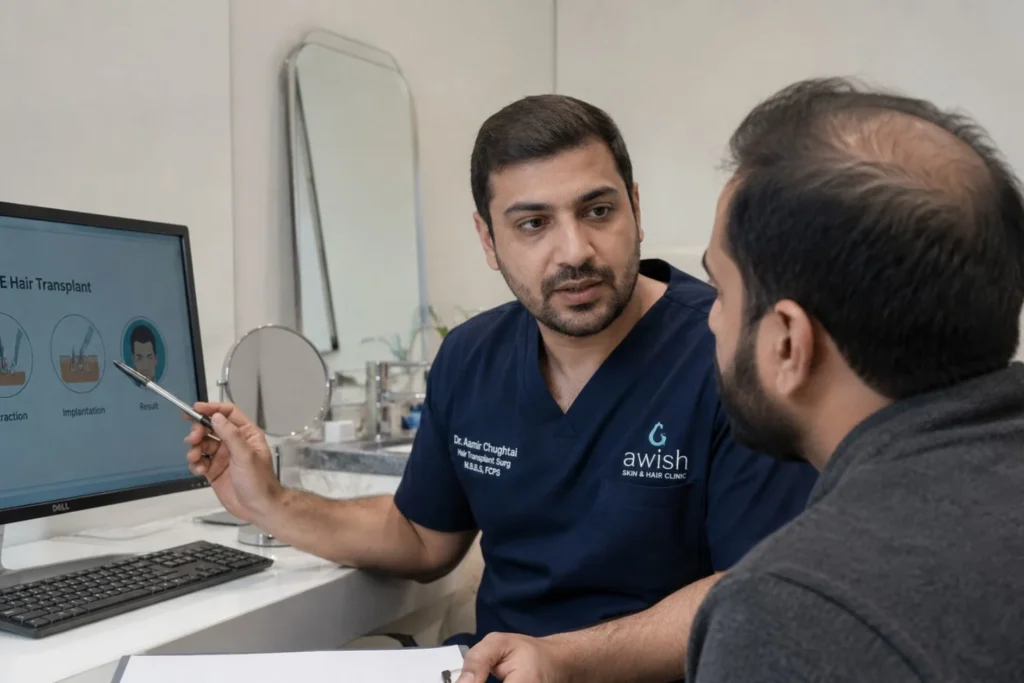
An FUE hair transplant consultation is where everything genuinely starts. The scalp is examined, medical history is discussed, and the density and quality of donor hair is checked closely. Not everyone turns out to be a good candidate for surgery, and a proper consultation should make that clear from the outset, rather than booking someone in regardless.
This stage shapes the whole hair transplant process that follows. Getting the consultation right early on tends to avoid a lot of disappointment later. Anyone unsure which technique might suit them best is encouraged to get in touch and discuss it properly beforehand.
How Does a Hair Transplant Work Step by Step?
Once a patient is confirmed as suitable, the hair transplant surgery process generally runs through these stages.
1. Preparation
The scalp is cleaned and numbed with local anaesthetic, covering both the donor and recipient areas. Most patients are surprised by how little discomfort there is.
2. Extraction
Follicular units are removed one by one from the donor area, using fine instruments suited to either FUE or DHI.
3. Implantation
Follicles go into tiny incisions made across the recipient area. Getting the angle right is the tricky part, it has to follow the direction hair would naturally grow, or the result can look slightly unnatural even months later once it’s fully grown in.
4. Aftercare guidance
Before leaving the clinic, staff talk patients through how to wash the area, which side to sleep on for the first few nights, and what activities to steer clear of while everything heals.
How Do Hair Implants Work During a DHI Procedure?
DHI takes a different approach. Rather than cutting incisions first and placing follicles in afterwards, a pen-like tool inserts each one directly into the scalp in a single motion. This hands the surgeon tighter control over depth and angle, something that counts for a lot around the hairline, where even minor inconsistencies tend to stand out.
A skilled DHI hair transplant surgeon will often combine this with manual extraction, building density gradually at the front rather than all at once, since that’s usually where natural-looking results are hardest to fake.
What Does Hair Transplant Healing and Recovery Actually Look Like?
Recovery after hair transplant surgery tends to follow a rough pattern:
- Days 1 to 5: Some swelling and redness, which settles fairly quickly
- Week 2: Transplanted hairs often shed, this catches people off guard but is completely normal
- Months 3 to 4: New growth starts coming through
- Months 6 to 12: Hair restoration work becomes properly visible, with thicker, fuller coverage
Hair transplant healing differs from person to person, so a slightly different timeline isn’t a cause for concern. Most patients return to work within a week, though strenuous exercise is best avoided for a while longer.
Does a Hair Transplant Really Work? Looking at the Evidence
This is a question worth answering honestly. When performed by an experienced surgeon, transplanted follicles continue growing for life, because they retain the genetic properties of the donor area. How well a hair transplant really works depends on donor supply, scalp condition, and how carefully aftercare instructions are followed.
Anyone wanting to know exactly where they’d stand is welcome to book a no-obligation consultation to discuss their specific situation.
How Does a Hair Transplant Work for Long-Term Results?
To pull this together without simply saying “in conclusion”: the hair transplant procedure works because it relocates permanent, balding-resistant follicles into areas that need them, then allows nature to take over. Getting it right comes down to accurate diagnosis, careful extraction and implantation, and proper aftercare afterwards. Booking a consultation is the best next step for anyone wanting to find out if this is the right option.
Frequently Asked Questions
1. How does a hair transplant work if hair loss is quite advanced?
Even with advanced hair loss, a transplant can still work well, provided there’s enough donor hair to work with. This is checked carefully during consultation.
2. Is the hair transplant process painful?
Not particularly. Local anaesthetic is used throughout, so most patients describe mild discomfort at most, rather than actual pain.
3. How long does the hair transplant surgery process actually take?
Usually between four and eight hours, depending on how many grafts are required.
4. When will the final results actually be visible?
Most patients see full results around nine to twelve months out, once everything has grown through properly.
5. Can women have a hair transplant too?
Yes. Women dealing with thinning or pattern hair loss can benefit just as much, provided there’s enough healthy donor hair available.