YOUR QUESTIONS, ANSWERED
Explore helpful answers about the procedure, recovery, results, aftercare, and what to expect on your hair restoration journey.

15+ YEARS OF EXPERIENCE

ADVANCED TECHNOLOGY

NATURAL, LASTING RESULTS

PERSONALIZED CARE
At The Skin & Hair Clinic, we combine medical-grade expertise with a refined, patient-first philosophy. Whether you’re rebuilding a hairline or reviving your skin, our CQC-registered specialists deliver world-class FUE, FUT and DHI techniques in a calm, luxurious setting.
All hair transplants are performed under local anesthesia, so the procedure itself is virtually painless. Patients describe mild discomfort at most, with very manageable recovery.
Most patients return to non-strenuous work within 3–5 days. Full healing of the donor area takes around 10–14 days, and final results appear over 9–12 months.
Absolutely. Our surgeons map your hairline to match your facial structure and natural growth pattern, ensuring undetectable, refined results.
Yes. The Skin & Hair Clinic is fully CQC-registered, with all procedures led by GMC-registered specialist surgeons.
We offer flexible payment plans designed to spread the cost of your transformation. Speak to our team for a bespoke package.
Book a free, no-obligation consultation. We'll assess your scalp health and donor density and design a tailored plan — or honestly tell you if treatment isn't right for you.
Yes. Women can have hair transplants provided they are suitable candidates based on factors such as their age, type of hair loss and overall health.
Yes. Afro hair can be transplanted successfully, although the curved shape of the follicles can sometimes make extraction more technically challenging. Wimpole says this does not generally affect the procedure’s cost, duration or success rate.
Not necessarily. Your pattern and rate of hair loss, donor hair availability and overall suitability are generally more important than your age alone.
Possibly. Hair loss beginning in the teens or early twenties may still be developing, so a transplant may be premature. Non-surgical treatments can sometimes be more appropriate initially.
Yes, provided there is enough healthy hair remaining in the donor area for additional procedures.
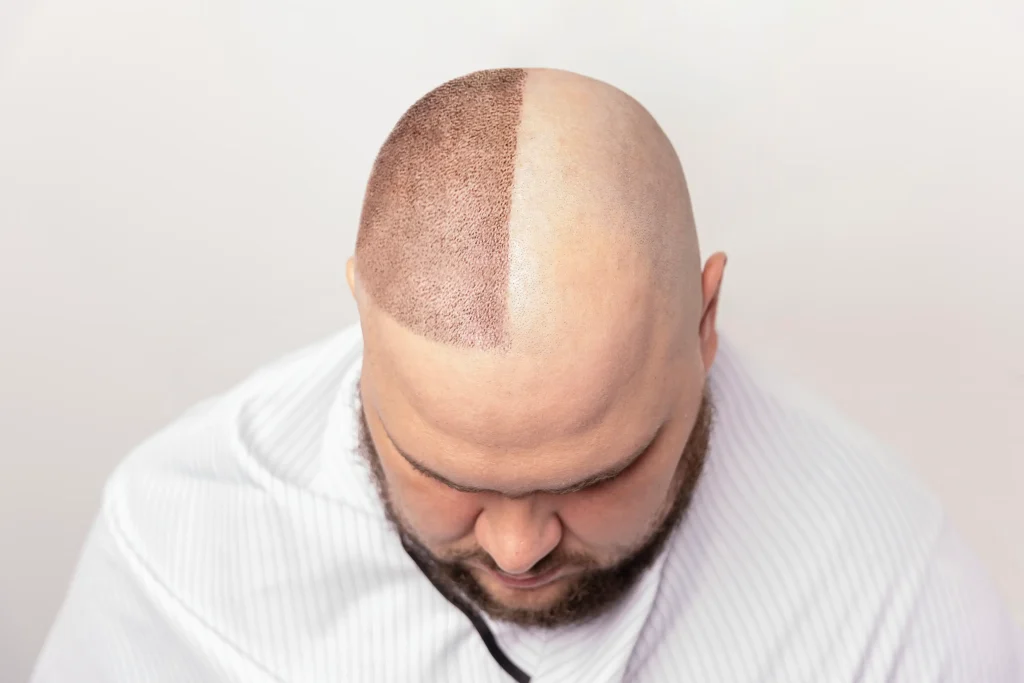
Your clinician will assess your hair and scalp, discuss your medical history and lifestyle, and determine whether you are suitable for treatment. You’ll also discuss your desired results, the procedure itself and any potential risks.
You should provide a full and accurate medical history. It is particularly important to mention bleeding disorders, haemophilia, previous heart attacks, epilepsy, drug allergies and any medication that thins the blood.
As with any surgery, there are potential risks including infection, prolonged scalp soreness and the possibility that some transplanted hair may not grow successfully. Choosing an experienced surgeon and clinic helps minimise these risks.
Yes. Wimpole advises avoiding aspirin for at least seven days beforehand, alcohol and exercise for 48 hours, and smoking for 24 hours. Your hair should also be washed either the night before or morning of surgery.
You should stop smoking at least 24 hours before the procedure. Smoking can interfere with blood supply and healing, potentially reducing the chances of successful graft growth.
Yes. A light breakfast is recommended before surgery. For an afternoon appointment, have a light lunch as well. It’s best to avoid caffeine shortly before the procedure.
Wear something that won’t need to be pulled tightly over your head afterwards. A button-down shirt or wide-necked top is recommended to avoid disturbing the newly implanted grafts.
Most procedures take around 4–5 hours, although larger transplants can take longer. You should also allow at least another hour afterwards for rest and monitoring.
Modern transplant techniques generally leave small scabs rather than the more noticeable holes associated with older techniques, so they are less likely to trigger trypophobia.
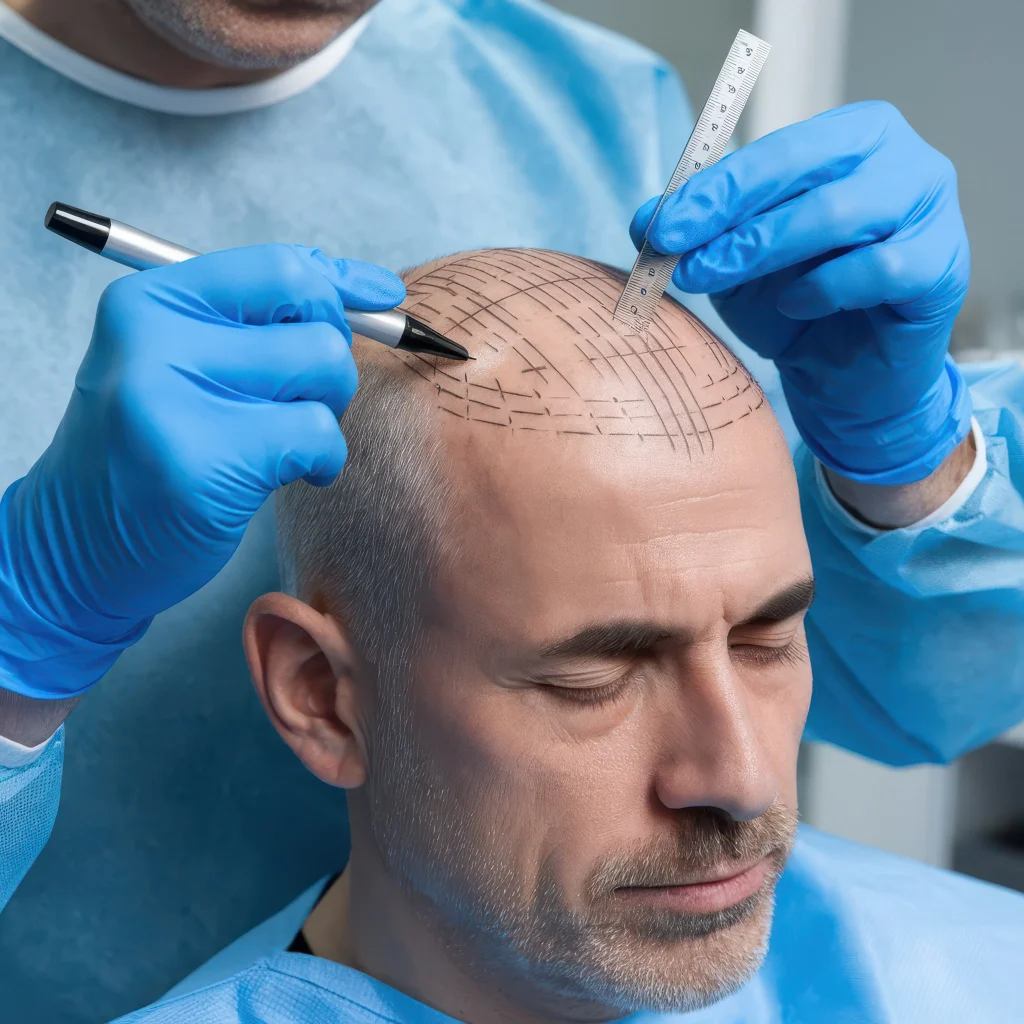
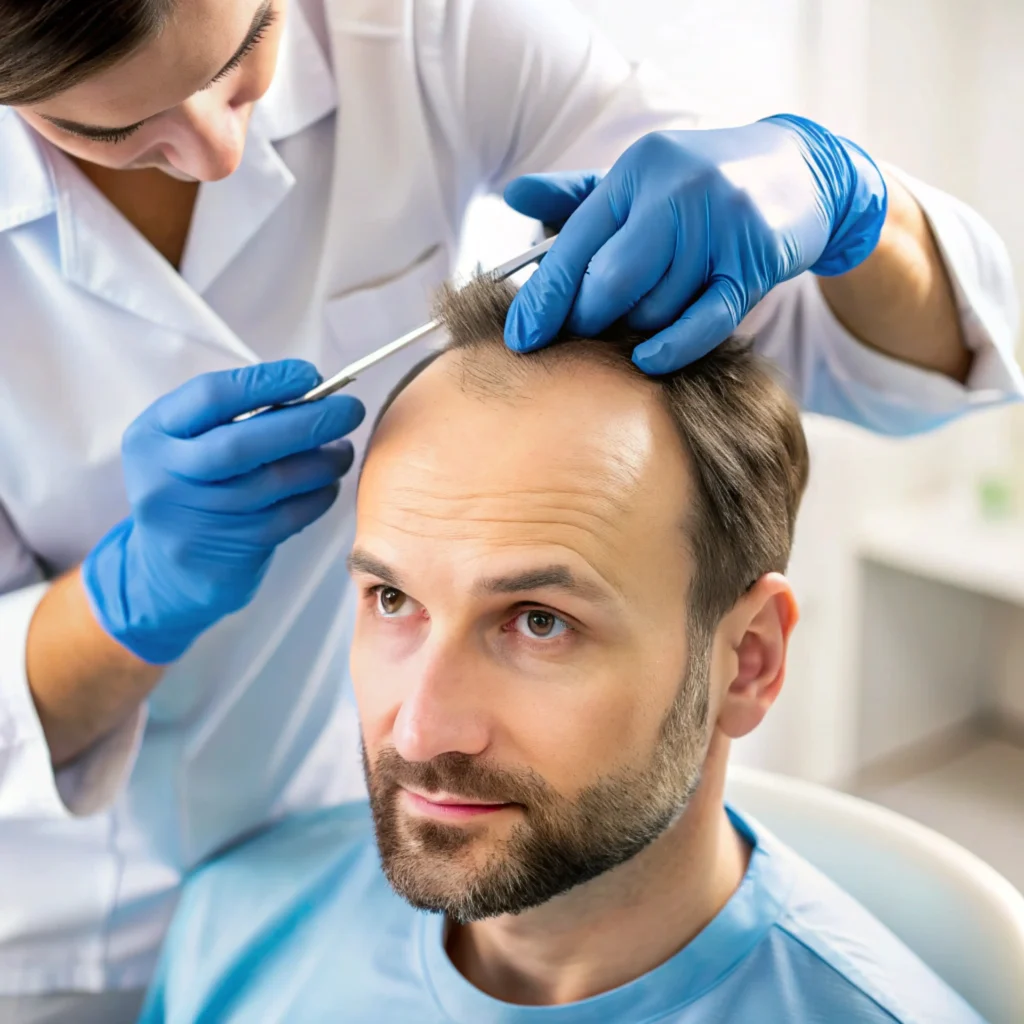
The surgical team will confirm and draw your planned hairline, then you’ll usually receive a mild sedative and local anaesthetic. Once the scalp is numb, the procedure begins. There are breaks during the day, including lunch and toilet breaks.
At The Skin & Hair Clinic, we provide surgical excellence and permanent hair restoration in Liverpool. Our GMC-registered team is dedicated to natural results and patient-first care.
Copyright © 2026 The Skin & Hair Clinic. All rights reserved.
Regulated by the Care Quality Commission. Company Number: 11508341 Registered Address: 203-205 Rose Lane, Liverpool, United Kingdom, L18 5EA