Table of Contents
You got your hair transplant. Now what? The first two weeks after surgery matter most, and small mistakes can slow your healing or affect how your hair grows back.
The fix is simple: know what to do, and what to avoid, from day one. According to the NHS, you need to be very careful with your transplanted hair for the first 2 weeks after your operation, as the grafts will not be secure. Bandages usually come off after 2 to 5 days, but the grafts shouldn’t be touched, and hair can be gently washed by hand from day 6.
At The Skin and Hair Clinic, we don’t just perform your surgery, we stay with you through hair transplant recovery. Our team offers personal aftercare advice, follow-up checks, and honest guidance at every stage, so your results grow in exactly the way they should.
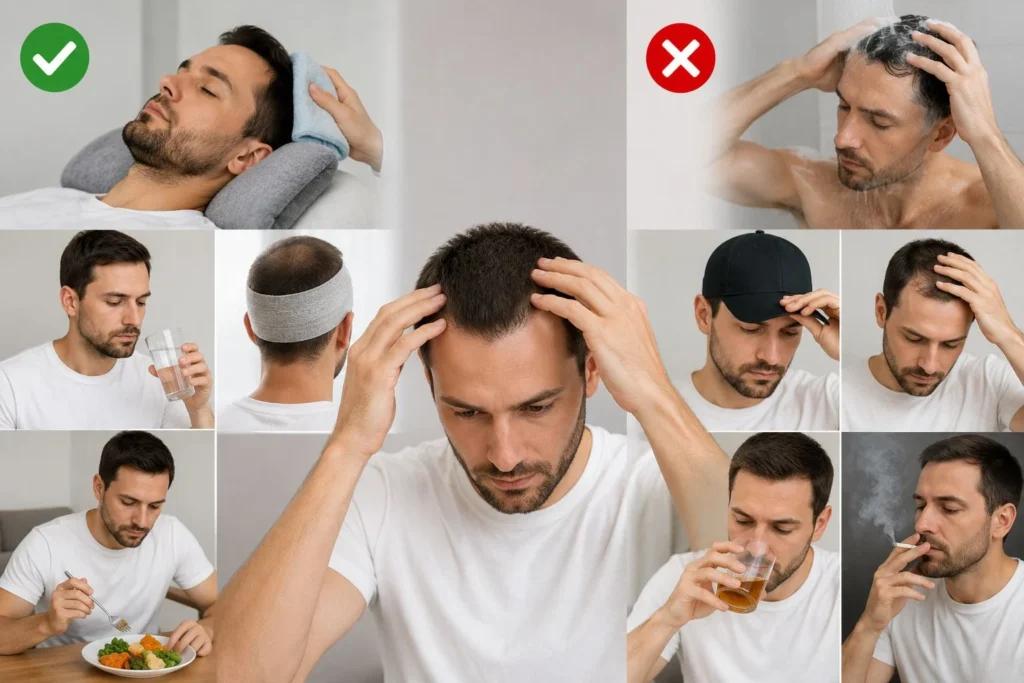
Let’s explore the 7 do’s and don’ts that will help your hair grow back strong and healthy.
How to Recover From a Hair Transplant
Do’s after a hair transplant
1. Follow Your Surgeon’s Aftercare Instructions
Every clinic gives slightly different advice, so stick to what your surgeon tells you, not what you read on some random forum. Your hair transplant aftercare plan is made for your scalp, your graft count, and your healing pattern. Skipping steps or changing the routine on your own can slow things down. If something feels off during your hair transplant recovery process, call your clinic first instead of guessing.
2. Sleep With Your Head Raised
For the first week, try to sleep on your back with your head slightly elevated. Use two or three pillows, or a travel neck pillow if that’s easier.
- Reduces swelling around the forehead and eyes
- Keeps grafts safe from accidental rubbing
- Helps you avoid rolling onto the treated area at night
This one small habit makes a real difference in how smooth your hair transplant recovery time feels.
3. Take Your Medications on Time
Your clinic will likely give you antibiotics, pain relief, and sometimes anti-inflammatory tablets. Take these exactly as prescribed, even if you’re feeling fine. A lot of pain after a hair transplant can actually be managed well if you don’t skip doses. Set reminders on your phone if you tend to forget things. This isn’t the time to “tough it out” without medicine, since staying ahead of discomfort is far easier than trying to catch up once it builds.
4. Keep the Area Clean, But Gently
Washing matters more than people expect.
- Wait until your clinic says it’s safe to wash
- Use lukewarm water, never hot
- Apply shampoo with your fingertips, not nails
- Let water run over the scalp instead of scrubbing
Good post care after hair transplant surgery isn’t about being extra careful forever, just during the early fragile days while grafts settle in.
5. Eat Well and Stay Hydrated
Your body is healing, and healing needs fuel. Focus on protein-rich meals, plenty of water, and foods that support blood flow to the scalp. Some clinics even pair this with treatments like PRP hair loss treatment to boost results further. Avoid crash diets or skipping meals during this stage. What you eat after an FUE hair transplant can genuinely affect how fast new hair starts to grow.
6. Attend All Follow-Up Appointments
Don’t treat these as optional. Follow-ups let your surgeon check graft survival, spot early problems, and confirm your hair implant recovery is on track.
- Usually scheduled at set intervals after surgery
- A chance to ask questions in person
- Helps catch issues before they become bigger ones
Missing appointments is one of the easiest ways to end up unsure how long to recover from a hair transplant properly.
7. Be Patient With the Process
This is probably the hardest one. Growth doesn’t happen overnight, and shedding in the early weeks is normal, not a failure. So how long is hair transplant recovery, really? Full results often take many months to show. Comparing your progress to other people’s timelines online will only stress you out. Trust the process, stay consistent with care after hair transplant surgery, and give your hair the time it actually needs.
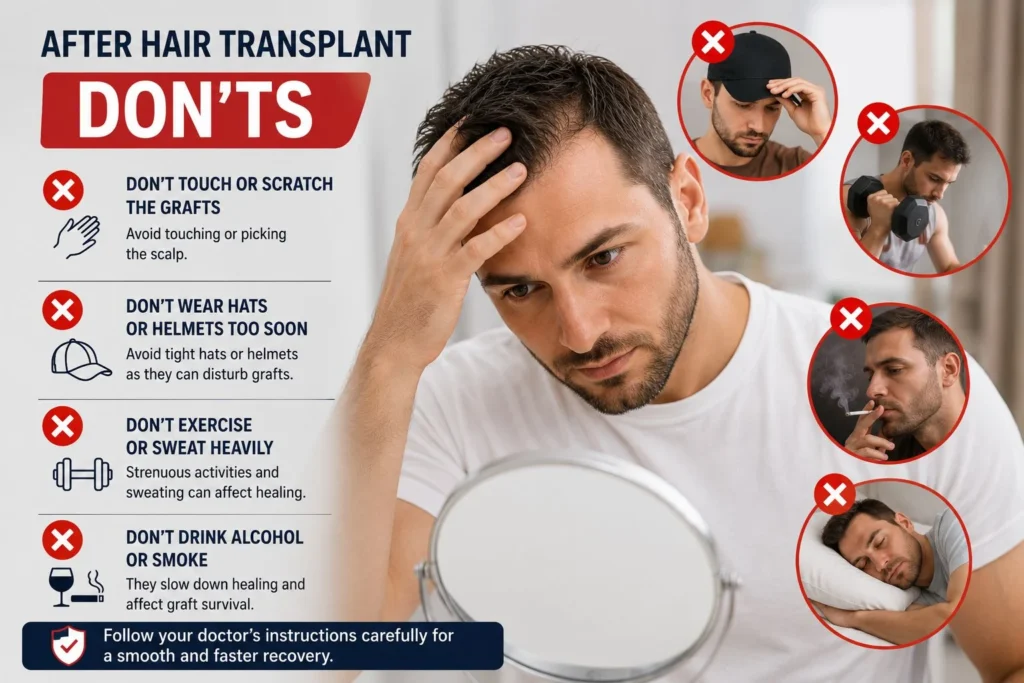
Don’ts after a hair transplant
1. Don’t Touch or Scratch the Grafts
This one sounds obvious, but it’s the mistake people make the most. Your scalp will feel itchy and tight as it heals, and your fingers will want to go straight there. Resist it. Touching or picking at the grafts too early can pull them out before they’ve settled in properly. If the itching gets bad, ask your clinic for a safe spray instead of scratching. This single habit alone can make or break your hair transplant recovery.
2. Don’t Wear Hats or Helmets Too Soon
Covering your head might feel like the easy fix for hiding redness, but it’s risky in the early days.
- Fabric can rub against fresh grafts
- Tight hats trap sweat and heat
- Helmets press directly on the treated area
Wait until your surgeon gives the go-ahead. Most clinics will tell you exactly when it’s safe as part of your hair transplant aftercare plan.
3. Don’t Exercise or Sweat Heavily
Gym sessions, running, and any heavy workout need to wait. Sweat can irritate the scalp, and increased blood pressure from intense activity can affect healing grafts. Even bending down too fast to pick something up isn’t ideal in the first week. Give your body proper rest instead. Rushing back to your normal routine is one of the quickest ways to slow down your hair transplant recovery time.
4. Don’t Drink Alcohol or Smoke
Both of these affect blood flow and slow down healing in ways people don’t expect.
- Alcohol thins the blood and can increase swelling
- Smoking reduces oxygen supply to the scalp
- Both can affect how well grafts survive
Try to avoid them for at least a couple of weeks. Your body needs steady blood flow, not extra strain, during post hair transplant care.
5. Don’t Expose Your Scalp to Direct Sunlight
Sun and fresh grafts don’t mix well. UV rays can damage healing skin and even affect how the transplanted hair grows in. If you’re stepping out, wear a loose cap once your clinic approves it, or simply stay in shaded areas. This matters even more if you’re combining your surgery with something like PRP hair loss treatment, since sun exposure can interfere with results from both procedures.
6. Don’t Sleep on Your Side or Stomach
Rolling over at night is something you can’t fully control, but try your best to avoid it early on.
- Side sleeping presses grafts against the pillow
- Stomach sleeping puts pressure on the whole scalp
- Both increase the risk of dislodging fresh grafts
Back sleeping with your head raised is safer. It’s a small change, but one that genuinely protects your hair implant recovery.
7. Don’t Skip Your Clinic’s Check-In Calls or Visits
It’s tempting to think everything’s fine once the pain fades, but healing isn’t always visible on the surface. Skipping check-ins means small problems can go unnoticed until they get worse. This is especially true if you’re wondering how long to recover from a hair transplant, since your surgeon can only track progress if they actually see you. Regular care after hair transplant surgery is what keeps the whole hair transplant recovery process on track.
Experience Trusted Hair Restoration with The Skin & Hair Clinic
Stick to these basics and your grafts get the best shot at settling in properly, growing the way they’re supposed to.
Here’s the thing though – recovery isn’t something you should figure out alone. At The Skin & Hair Clinic, we sit with our patients through the whole process, not just the surgery day. Got questions about your FUE hair transplant or wondering if PRP hair loss treatment is worth adding? Ask us. We’ve seen enough recoveries to know what’s normal and what isn’t. Book your consultation and let’s get your hair growing again.
Frequently Asked Questions
1. Why does my head still hurt after a week?
Some soreness lasting 5-7 days is normal. It’s mostly swelling doing its thing. What you shouldn’t ignore is pain that’s getting worse, not better, or shows up with a fever – that’s a “call the clinic” situation, not a “wait it out” one.
2. Can I just dye my hair to hide the redness?
Hold off. Hair dye has chemicals that can irritate healing skin, and your grafts are still settling. Give it 4-6 weeks minimum before you touch any colour, even root touch-ups.
3. My hair is falling out – did the transplant fail?
No, and this trips up almost everyone. It’s called shock loss, and it’s a normal part of the hair transplant recovery process. The transplanted hairs shed first, then come back for good later.
4. How long is hair transplant recovery?
The scalp itself looks healed in about 2 weeks. But if you’re asking about actual hair transplant recovery time – like real, visible results – that’s closer to 10-12 months. New growth usually kicks in around month 3 or 4.
5. When can I get back to work?
You could probably go back in 3-5 days if you’re careful. Something physical, dusty, or sweaty? Give it 10 days at least. This is basically the golden rule of post hair transplant care – don’t rush the physical stuff.
6. Is PRP actually worth doing with the transplant?
A lot of patients pair it in. PRP hair loss treatment won’t replace the surgery itself, but it can genuinely help with thickness down the line. Worth asking your surgeon if it makes sense for your hair implant recovery specifically – not everyone needs it.