Reviewed by Dr. Jyotsna Kumari
If you’re researching hair implant surgery for the first time, you probably have a dozen questions running through your head at once: How does it actually work? Will it look natural? How long until you’re back to normal life?
Did you know? According to NIH/StatPearls some shedding of transplanted hair in the first few weeks is normal and expected new growth typically begins 3 to 6 months later, with full results assessed at 6–12 months.
This guide walks you through everything a first-timer needs to know from what happens on the day of surgery to what your hairline will look like a year later so you can walk into a consultation feeling informed rather than overwhelmed.
Key Takeaways
- Hair implant surgery (medically known as hair transplantation) moves your own healthy follicles from a donor area to thinning or bald areas; it doesn’t use synthetic implants or someone else’s hair.
- The two main hair implant procedure types are FUE (Follicular Unit Extraction) and FUT (strip harvesting); FUE is now the more widely used approach because it leaves no linear scar.
- Full hair implant recovery happens in stages: initial healing in 10–14 days, shedding of transplanted hair by week 3–4, and new growth beginning around month 3–4.
- Visible, matured results typically take 9–12 months to fully develop as grafts thicken and settle into their natural growth cycle.
- The clearest hair implant benefits are permanent, natural-looking coverage using your own hair, with no ongoing daily treatment required once healed.
What Is Hair Implant Surgery?
Hair implant surgery is a surgical procedure that relocates hair follicles from a “donor” area, usually the back or sides of the scalp, where hair is genetically resistant to balding to areas experiencing thinning or baldness. Because the transplanted follicles keep their original genetic properties, they generally continue growing normally in their new location for life.
It’s worth clearing up a common misconception early: nothing artificial is implanted. The word “implant” in everyday conversation is often used interchangeably with “transplant,” but clinically, the procedure uses only your own living hair follicles, not synthetic fibres or donor hair from another person.
The Hair Implant Procedure: Step by Step
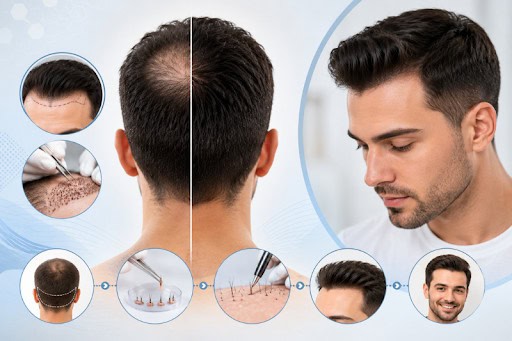
Understanding the hair implant procedure itself helps demystify what happens in the clinic. Most modern procedures follow a similar sequence:
- Consultation and donor assessment the surgeon evaluates your scalp, hair density, and the extent of thinning to determine how many grafts you’ll need.
- Trimming and local anaesthesia the donor area is trimmed short, and both donor and recipient sites are numbed.
- Graft extraction using FUE, individual follicular units are removed one at a time with a small punch tool, leaving tiny, virtually invisible marks rather than a linear scar. FUT instead removes a thin strip of scalp, which is then dissected into individual grafts.
- Recipient site creation the surgeon makes tiny incisions in the balding area, angled to match your natural hair growth direction for a realistic finish.
- Graft placement of each follicular unit is carefully implanted into the recipient sites, working from the hairline inward for a natural density gradient.
A full session usually takes between four and eight hours, depending on the number of grafts required. For a more detailed breakdown of what happens on the day, our step-by-step hair transplant guide covers each stage in more depth.
Benefits of Hair Implant Surgery
People considering this procedure are usually weighing it against topical treatments, medication, or simply living with hair loss. The core hair implant benefits that set surgery apart include:
- Permanent results of transplanted follicles are resistant to the hormone (DHT) responsible for pattern baldness, so they don’t thin out the way surrounding native hair might.
- Natural appearance because it’s your own hair, colour, texture, and growth pattern match seamlessly.
- Low daily maintenance once healed, transplanted hair is washed, cut, and styled exactly like the rest of your hair.
- One-time investment for most patients, unlike medication, which needs to be taken indefinitely to maintain results, surgery is typically a single procedure (sometimes two, for more extensive loss).
- Psychological and confidence benefits restoring a fuller hairline is consistently linked to improved self-image for patients dealing with hair loss.
A full breakdown of how these benefits compare to non-surgical options is available on our benefits of hair transplant surgery.
Hair Implant Recovery: What to Expect Week by Week
Hair implant recovery is gradual, and knowing what’s normal at each stage prevents unnecessary worry.
- Days 1–3: Mild swelling, redness, and tenderness around the recipient and donor areas. Small scabs form around each graft.
- Days 4–10: Scabs begin to flake off naturally; most people return to desk-based work within a week.
- Weeks 2–4: “Shock loss” occurs at the transplanted hairs shed. This is completely normal and doesn’t mean the follicles have failed; the follicle itself remains embedded and healthy.
- Months 3–4: New, finer hair growth begins to emerge from the transplanted follicles.
- Months 6–12: Hair gradually thickens and matures into its final texture and density.
Following your clinic’s aftercare instructions closely including avoiding strenuous exercise, direct sun exposure, and tight headwear in the early weeks has a measurable impact on how smoothly this process goes. For the full list of do’s and don’ts by week, see our detailed hair transplant recovery guide.
Hair Implant Results: How Long Until You See the Full Picture?
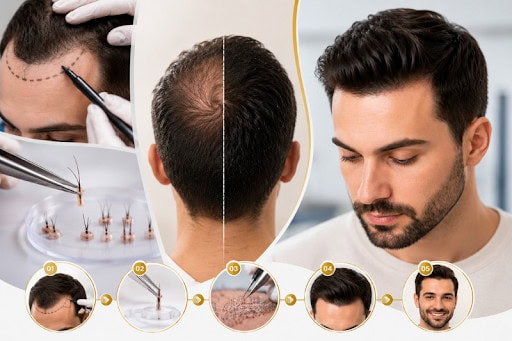
Patience is the most underrated part of this process. Because transplanted hair follows the natural growth cycle, results build gradually rather than appearing overnight:
- 3 months: Early, thin regrowth is often visible.
- 6 months: Noticeably thicker coverage; hairline shape becomes clearer.
- 9–12 months: The majority of patients reach their final density and can style the new hair like the rest of their scalp.
Results are considered permanent once the transplanted follicles are established, though it’s worth noting that surrounding native hair can continue to thin naturally over time many surgeons recommend maintenance treatments (such as finasteride or minoxidil) to protect existing hair alongside the transplant. You can see a fuller timeline breakdown, including photo milestones, on our hair transplant results timeline.
Am I a Good Candidate for Hair Implant Surgery?
Not everyone experiencing hair loss is an immediate candidate. Generally, the best outcomes are seen in people who have:
- A stable, well-defined pattern of hair loss rather than rapid, ongoing shedding
- Sufficient donor hair density at the back or sides of the scalp
- Realistic expectations about coverage and density
- No active scalp conditions that could interfere with healing
If you’re unsure whether you fit this profile, a consultation is the fastest way to find out. Our hair transplant candidate guide walks through the main criteria surgeons assess in more detail.
Ready to Find Out If Hair Implant Surgery Is Right for You?
Every scalp, hairline, and hair loss pattern is different; the only way to get an accurate plan, graft estimate, and cost is through a one-to-one consultation with a qualified specialist. Book a consultation with our team today to get a personalised assessment and honest advice on whether hair implant surgery is the right next step for you.
Frequently Asked Questions
Q: Is hair implant surgery painful?
Most patients report only mild discomfort, similar to a tight or sunburned scalp, thanks to local anaesthesia during the procedure and pain relief afterward.
Q: How many grafts will I need?
This depends entirely on the extent of your hair loss and desired density anywhere from a few hundred grafts for a hairline touch-up to 3,000+ for more extensive coverage.
Q: Does hair implant surgery leave scars?
FUE typically leaves only tiny, dot-like marks that are virtually undetectable once hair grows back over them. FUT leaves a thin linear scar in the donor area, usually hidden by surrounding hair.
Q: Can women get hair implant surgery?
Yes. While historically more common among men, hair transplantation is increasingly used to treat female pattern hair loss, provided there’s a suitable donor area.
Q: When can I exercise again after surgery?
Most surgeons recommend avoiding strenuous exercise and heavy sweating for around 7–10 days to protect healing grafts.
Q: Is the result permanent?
Transplanted follicles are generally resistant to the hormone that causes pattern baldness, so results are considered long-lasting, though maintaining surrounding native hair may still require additional treatment over time.