Table of Contents
Yes, a hair transplant does leave scars, but modern FUE techniques make them tiny and barely visible. Most fade within months and stay hidden, even under short hair.
Did you know? The International Society of Hair Restoration Surgery states that modern FUE scars often measure under 1mm. That’s about the size of a pinhead. Older surgical methods used to be far more obvious. Things have moved on a lot since then.
If you’re worried about a hair transplant scar before you book your hair transplant, you’re definitely not the only one asking. At The Skin and Hair Clinic, this comes up in almost every consultation. Read until the end to understand whether a hair transplant leaves scars.
Key Takeaways
- FUE leaves tiny, dot-like scars, while FUT leaves one longer, linear scar behind.
- A hair transplant scar tends to fade noticeably within three to four months.
- Sticking to aftercare instructions lowers your chances of visible, long-term scarring.
- FUE scar repair options like micropigmentation help if scars stay noticeable.
- A skilled surgeon matters more than the technique itself for hiding scars.
What Causes Scarring After a Hair Transplant?
Scarring occurs because follicles get lifted and moved elsewhere. That process leaves some mark on the skin, however small. How visible it ends up depends heavily on the technique your surgeon uses.
Two main methods exist:
- FUT (Follicular Unit Transplantation): Leaves a linear scar
- FUE (Follicular Unit Extraction): Leaves tiny, dot-like scars
Clinics lean toward FUE these days. It’s gentler on the scalp and heals quicker. Knowing what fue scarring actually looks like helps you have the right expectations.
Understanding FUE Hair Transplant Scars
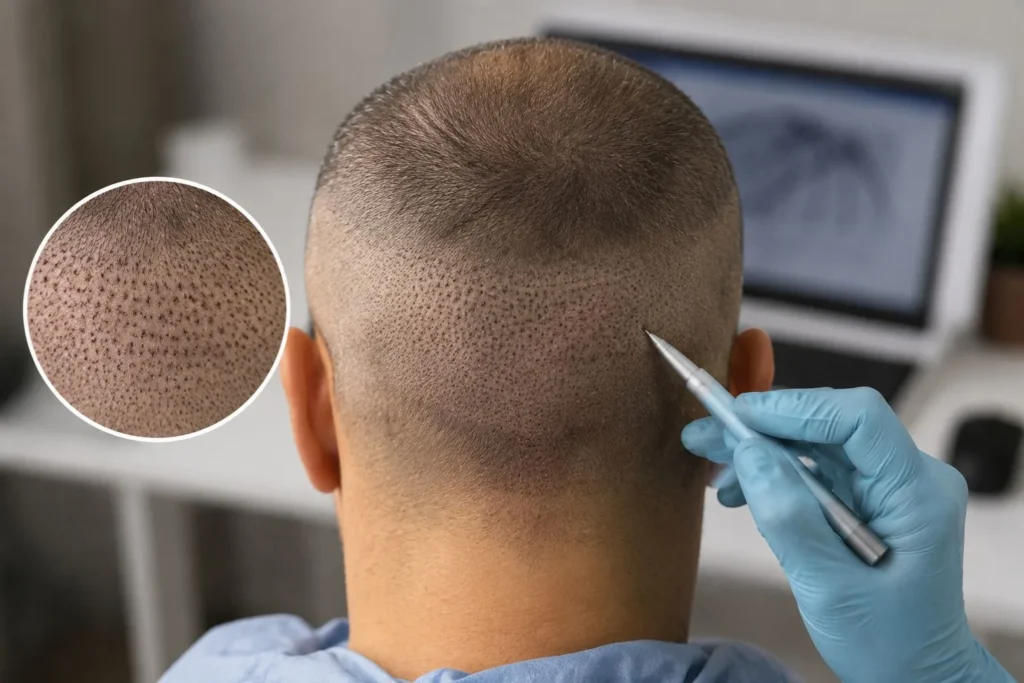
A fue hair transplant works by extracting single follicles with a small punch tool. Each one leaves behind a tiny round mark.
These fue hair transplant scars typically stay under 1mm wide. They soften a lot within a few months. Plenty of patients go short with their hair afterward, and nobody notices a thing.
Genetics, skin type, and how well you follow aftercare all shape the outcome. Some people barely show a trace. Others get a bit more texture change than expected.
FUT vs FUE Scarring: A Quick Comparison
| Feature | FUT | FUE |
| Scar type | Linear line | Tiny dots |
| Visibility | More noticeable | Barely visible |
| Healing time | Longer | Shorter |
| Hairstyle flexibility | Limited with short hair | Works with short hair |
| Pain during recovery | Higher | Lower |
The table above explains why so many people search for a hair transplant without scar visibility these days. FUE gets you close to that, even though some minimal scarring is always part of the deal.
Does Hair Transplant Leave Scars That Are Permanent?
Technically, yes. But permanent doesn’t have to mean obvious. Once healing wraps up, most fue scars settle into the scalp and stop standing out. Hair grows back around them and does the rest of the work.
So if you’re wondering whether does hair transplant leave scars that wreck your look, the short answer is no. Not when a skilled surgeon handles the procedure properly.
Surgeons with expertise control both the depth and the angle of each extraction. Less trauma to the tissue around it means less scarring you’ll ever notice later.
Common Mistakes That Worsen Scarring
A lot of patients make recovery harder without even realising it. Some common mistakes that worsen scarring include:
- Scratching or picking at scabs too soon
- Ignoring the aftercare instructions from your surgeon
- Leaving your scalp exposed to direct sun
- Picking an inexperienced or unqualified provider
- Overlooking early signs of infection
Sticking to proper aftercare makes a genuine difference to your results.
FUE Scar Repair: What Are Your Options?
Sometimes a scar ends up more visible than anyone expected. That’s where fue scar repair steps in. A few common options:
- Scalp micropigmentation: Tattooing tiny dots to mimic real follicles
- Follow-up FUE grafts: Transplanting fresh hair directly into the scarred patch
- Laser therapy: Smoothing out skin texture around the area
- Topical treatments: Calming redness and speeding up healing
A fue hair transplant scar repair session can bring confidence back fairly quickly. Most people notice a real difference within just a few weeks.
Pro Tips to Minimise Scarring Naturally
Looking for the best possible result? A few things help:
- Keep your scalp clean and moisturised while it heals
- Skip intense exercise for at least ten days
- Sleep with your head slightly propped up
- Show up for every follow-up appointment
- Drink enough water to support your skin’s recovery
Hair transplant recovery tips like these add up to a big difference in how scars settle.
Your Hair Restoration Journey Starts Here!
Still worried scars will hold you back? They really shouldn’t. Modern methods have made hair transplant scarring minimal and easy to manage. Thousands of patients now walk away with natural results and no visible marks to speak of.
Book a consultation with The Skin and Hair Clinic and take that first step toward the look you actually want. Visit our website to find out more.
Frequently Asked Questions
1. Does a hair transplant leave scars permanently?
Technically, yes, the marks don’t disappear completely. But with FUE, they’re usually so small they blend right into the scalp and go unnoticed.
2. Are FUE scars visible with short hair?
Rarely. Most fue scars sit under 1mm across. Even with a buzzed or very short cut, these dot-like marks tend to stay well hidden.
3. Can FUE scars be fixed if they’re noticeable?
Yes, definitely. Scalp micropigmentation and follow-up FUE grafts can camouflage or repair visible scarring, leaving the scalp looking smoother and more natural overall.
4. How long does it take for hair transplant scars to heal?
Most scars visibly settle within three to four months. That said, full fading and texture recovery can sometimes stretch closer to a year.
5. Which causes less scarring, FUT or FUE?
FUE leaves far less noticeable scarring than FUT. Rather than one long line, you get scattered tiny dots that are much easier to hide.