
Table of Contents
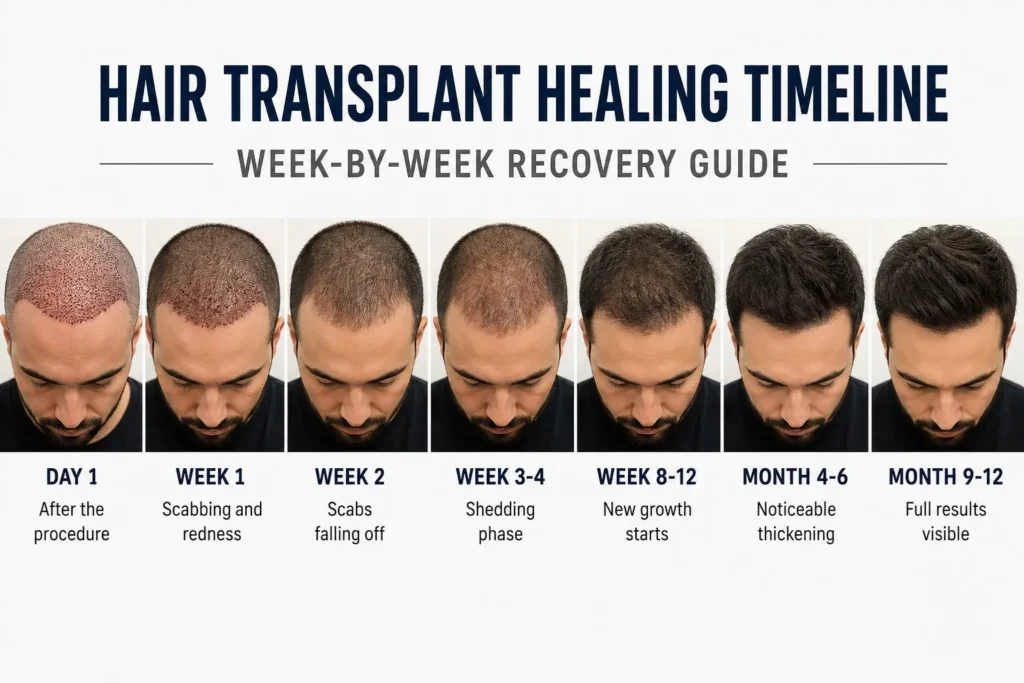
Understanding the recovery process is essential for achieving the best aesthetic outcomes after your procedure. Many patients find that familiarizing themselves with the hair transplant healing timeline helps manage expectations and reduces anxiety during the initial weeks. Clinical growth‑timeline data indicate that, when patients follow recommended post‑operative care, 85–95% of transplanted hair follicles survive and go on to establish long‑lasting hair growth over the 9–12 month recovery period.
At The Skin & Hair Clinic, we strive to be the professionals whom you can depend on to guide and support you confidently, step by step of the way. This time of healing rarely gets talked about, but it is an important chapter of your story that will yield the best version of you and should be seen as an investment. Trusting our advice and making healthy lifestyle choices will set you up for getting the stunning and natural hair growth that you have wished for all your life, which comes from your surgery.
Key Takeaways
- The first two weeks are critical for graft stabilisation.
- “Shock loss” or shedding is a normal part of the process.
- Following strict aftercare protocols significantly influences your final density.
- Full results typically become visible between 12 and 18 months post-surgery.
Understanding the Hair Transplant Healing Timeline
The hair transplant healing timeline provides a structured way to track your recovery progress. While individual experiences vary, knowing what to expect during each phase is helpful for your peace of mind. Proper hair transplant healing depends on following your surgeon’s specific instructions during the first few weeks. Generally, the hair transplant healing process involves initial scabbing, a shedding phase, and eventual new growth. Many patients ask how long a hair transplant takes to heal, and while surface skin heals quickly, full follicle maturation takes several months. It is important to stay patient, as recovery time from a hair transplant is a gradual journey. Staying informed allows you to navigate these stages with confidence and care.
Immediate Post-Operative Period
The scalp will be sensitive and slightly swollen right after the surgery. Actually, the recovery after hair transplant surgery starts when you leave the clinic. You could get minimal swelling or some redness, but that is very normal. Our staff will make sure that your instructions on how to take care of the donor and recipient areas are very clear.
Following the dos and don’ts after a hair transplant is vital during these first few days:
- Keep your head elevated while sleeping for the first 3 nights.
- Avoid direct sunlight on the scalp.
- Do not engage in strenuous physical exercise or heavy lifting.
- Avoid alcohol and smoking as they can impede blood flow.
- Take prescribed medications exactly as directed by your surgeon.
We usually suggest a special FUE hair transplant method to those who want a precise and low downtime, which also helps with the speed of the initial recovery.
Weeks 1–4: The Foundation of Recovery
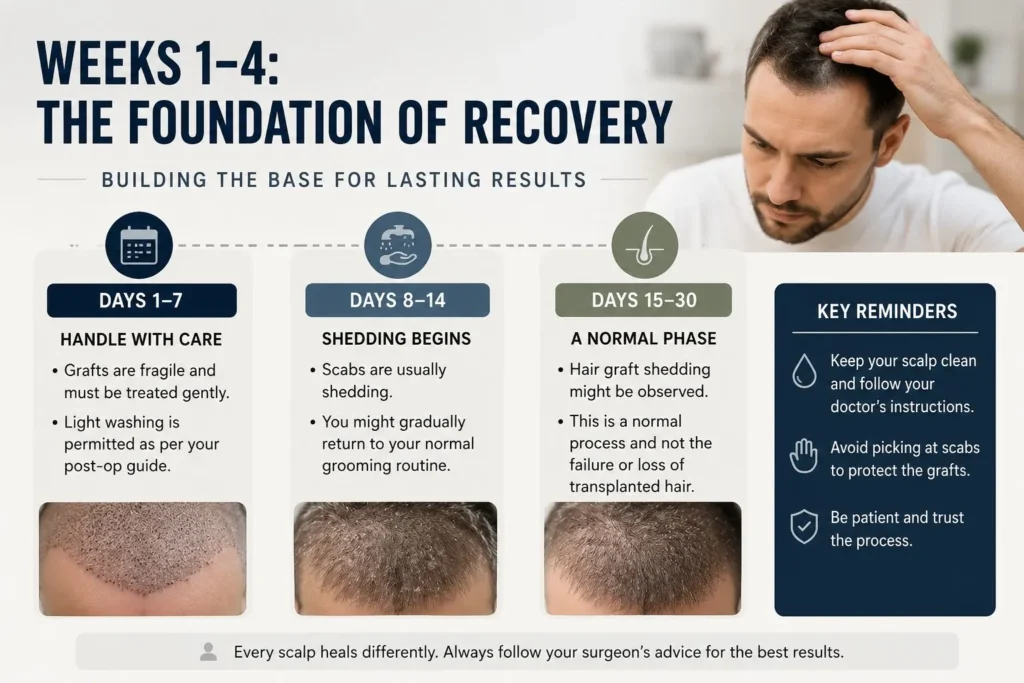
During the first month, your scalp undergoes significant changes. You may notice tiny crusts forming around the newly transplanted follicles. It is important to let these fall off naturally. Many patients are curious about the hair transplant healing time during this period.
- Days 1–7: The grafts are fragile and must be treated gently. Light washing is permitted as per your post-op guide.
- Days 8–14: Scabs are usually shedding. You might gradually return to your normal grooming routine.
- Days 15–30: The hair graft shedding might be observed, which is a normal process and is not the failure or loss of transplanted hair.
If your hair loss pattern needs a particular surgical approach, you may want to go for a FUT hair transplant. You should talk to your specialist about your worries.
When you are dealing with the post-hair transplant recovery, factors to consider include keeping the scalp clean and following the advice of your medical team; also, it is a big no-no to pick at the scabs, as that can displace the grafts.
Months 2–6: The Dormant Phase
This is generally the most challenging stage. You might notice the transplanted hairs shedding, which is a standard part of the hair transplant healing process. The follicles are simply entering a resting phase before new growth begins. During this time, the hair transplant time to heal refers more to the underlying skin than the external appearance.
- Patience is Key: At first, shedding may make you want to give up, but under that skin are roots that are ready to make hair.
- Gradual Changes: Around the fourth or fifth month, you will be able to see tiny new hairs.
- Routine Care: Keep using mild shampoos and listening to clinic advice.
Consider getting a DHI hair transplant in case you want to achieve the best graft survival and density, plus you can have continuous peace of mind during the dormant period.
Months 6–12: Achieving Results
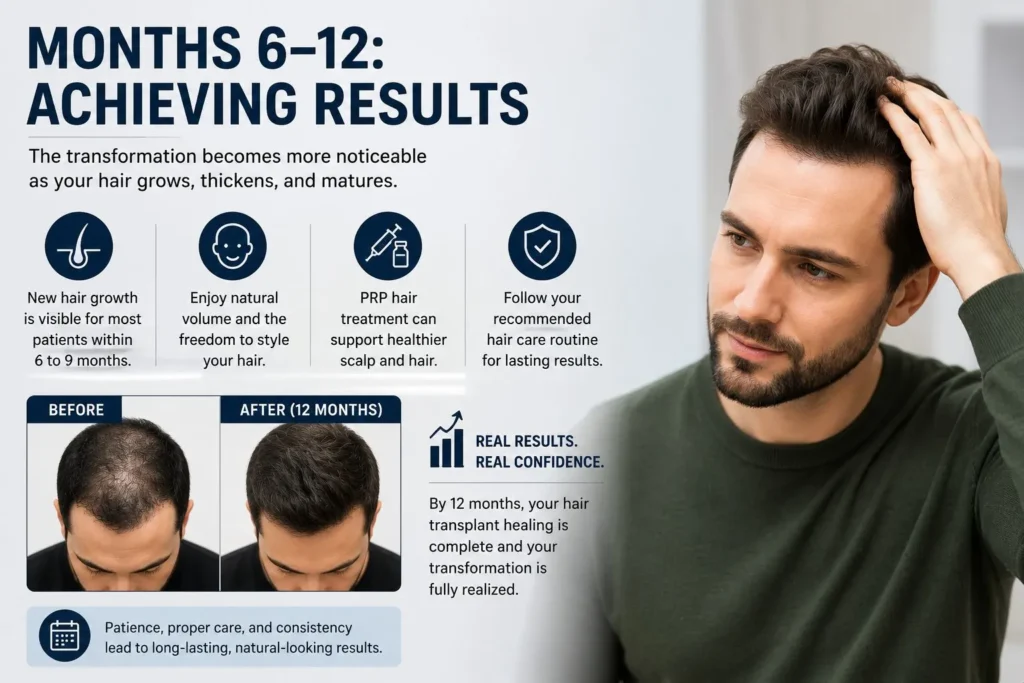
By the six-month mark, you will start seeing significant changes. This is the stage where you begin to compare your hair transplant before and after results. The density will gradually improve as the hair thickens and gains color.
- New hair growth becomes easy to spot by the majority of patients within six to nine months.
- Hair styling becomes a source of great pleasure and naturalness with the increased volume of hair.
- Some people choose PRP hair treatment to help their scalp and hair.
Continue to follow the recommended hair care routine. You will notice that the hair transplant healing is essentially complete, and you are now enjoying the benefits of your investment.
Let Our Specialists Help You Every Step of the Way
Only with your commitment can you have a successful result. Even if you are obsessing over how long a hair transplant takes to heal or finding tips to promote hair growth, the truth is that patience will be your best companion. Recovery time after a hair transplant is a very small price to pay for a lifetime of increased confidence and self-esteem. To create a safe and effective hair transplant healing environment, always follow the dos and don’ts after a hair transplant given by your hair transplant clinic staff.
If you ever have any kind of doubt, do not hesitate to reach out to your medical team. Remember, the hair transplant healing timeline is teamwork at a high level. When you add a healthy lifestyle to your hair transplant before and after results, you will see the results of your grafts even faster and more beautifully.
Our team at The Skin & Hair Clinic is committed to serving you with 15 years of experience and medical excellence that will help you restore your confidence. Our services include personalised aftercare to cover the complete spectrum of your hair restoration journey and your success as a result of it.
If you want to know more about recovery, please contact us to speak with our experts.
Frequently Asked Questions
1. How does the Hair Transplant Healing Timeline change with age?
Mainly skin elasticity and blood circulation depression are among the reasons for slow recovery in seniors. As far as the essential stages are concerned, the same ones that older people are able to maintain scalp hydration will have to be focused on for optimal graft health.
2. Can my diet improve recovery time from a hair transplant?
While you cannot rush biology, a nutrient-dense diet supports tissue repair. Consuming adequate protein and zinc is crucial for long-term scalp strength during the healing phase.
3. Will my hair texture change during the hair transplant healing time?
At first, the new hair may be finer or possibly wavier. This is usually the case, and normalisation takes place as the follicles progress toward maturity, most often presenting one’s natural texture within a year.
4. How do I manage itching during post-hair transplant recovery?
Be extra careful not to scratch or dislodge the grafts. It is very effective to apply the saline spray that was recommended or use the gentle ointments that are prescribed.
5. Are there risks to the hair transplant healing process if I travel?
Pressure changes during flights or extreme climates can affect swelling. Always consult your surgeon before planning travel to ensure your progress stays on track.