Reviewed by Dr. Jyotsna Kumari
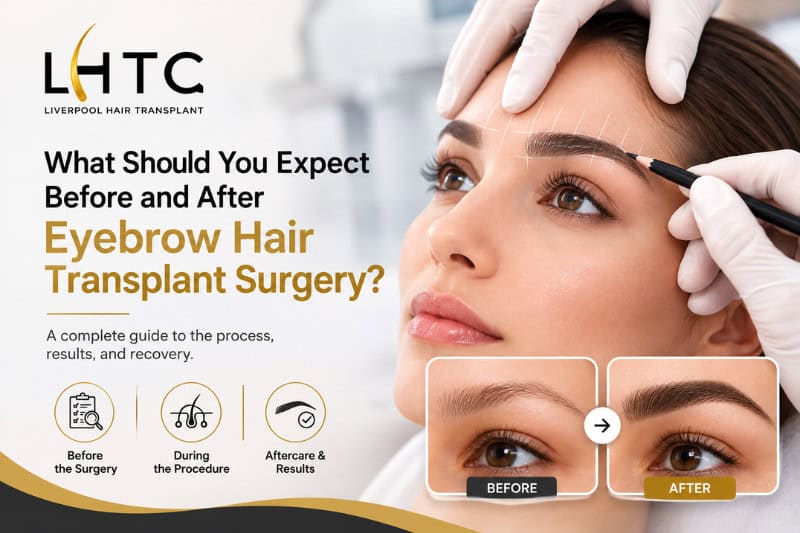
Thin, sparse, or missing eyebrows can affect how confident you feel every time you look in the mirror. Eyebrow hair transplant surgery has become one of the fastest-growing forms of hair restoration, offering a permanent, natural-looking way to rebuild brows lost to over-plucking, alopecia, scarring, or trauma. Because eyebrow hairs are finer, angled far more acutely than scalp hair, and grow in several directions at once, the procedure calls for a different level of surgical precision and a different recovery journey to standard scalp transplants.
Did you know? A clinical study published in the U.S. National Library of Medicine’s PubMed Central (NCBI) database followed 205 reconstructed eyebrows and recorded an average graft survival rate of 85% (range 70–90%), with 95% of patients highly satisfied with the density and natural appearance of their results after the first procedure. Source: National Library of Medicine (NCBI).
This guide walks you through exactly what to expect before and after eyebrow hair transplant surgery, from your first consultation to the point your new brows fully mature, so you can approach the process informed, realistic, and prepared.
Key Takeaways
- Eyebrow hair transplant surgery uses individual hair follicles, usually harvested from the scalp, implanted one at a time at a shallow 10–15° angle to recreate a natural, directional brow.
- A thorough, surgeon-led consultation and medical assessment always comes first; this is where candidacy, graft count, and brow design are agreed before any procedure date is set.
- Most patients return to normal daily activities within 5–7 days, although mild scabbing, redness, and swelling can take up to two weeks to fully settle.
- Transplanted eyebrow hairs typically shed within 2–4 weeks; this is a normal, expected phase before regrowing permanently from around month 3, with full results visible between 9 and 12 months.
- Surgeon experience matters more in eyebrow restoration than in almost any other hair transplant procedure, because of the precision the eyebrow’s natural angles and multi-directional growth pattern demand.
- Following your clinic’s personalised aftercare plan closely is one of the biggest factors in how natural, dense, and symmetrical your final results look.
What Is Eyebrow Hair Transplant Surgery?
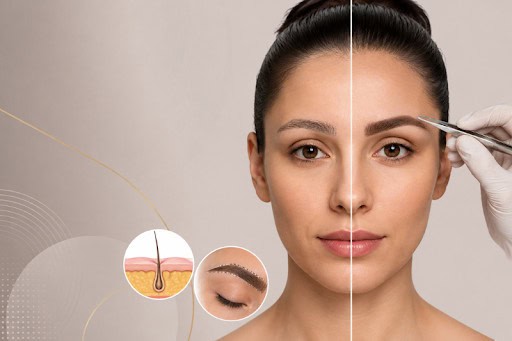
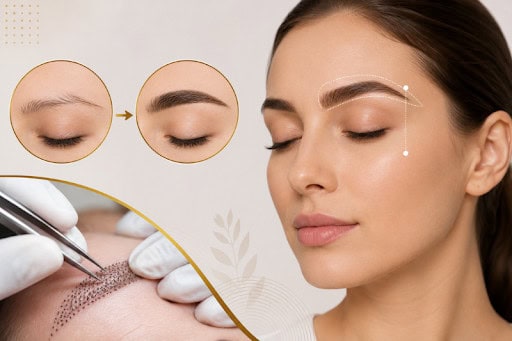
Eyebrow hair transplant surgery is a minor surgical procedure in which individual hair follicles most commonly extracted from the back or sides of the scalp using Follicular Unit Extraction (FUE) are transplanted into the eyebrow area. Unlike scalp restoration, where density is the main goal, eyebrow transplantation is closer to artistic reconstruction: each graft is placed by hand, one at a time, at a shallow angle and specific direction to mimic the natural sweep and taper of a real brow. Surgeons typically select the finest single-hair grafts available, since coarser scalp hair can look unnatural if placed without care.
Are You a Good Candidate for Eyebrow Hair Restoration?
Most people considering eyebrow hair transplant surgery fall into one of a few categories: long-term over-plucking or waxing damage, alopecia areata, thyroid-related hair thinning, scarring from burns or trauma, or a desire to reverse the fading, unnatural results of old microblading or tattooing. Good candidates are generally in good general health, have realistic expectations about density and shape, and have enough donor hair available on the scalp to support the graft count needed. If you’re not sure whether your thinning brows are down to over-plucking, hormonal changes, or an underlying condition, our guide to the common causes of eyebrow hair loss can help you work out what’s happening before you book a consultation.
Before Your Eyebrow Hair Transplant Surgery: What to Expect
The Consultation
Every reputable clinic starts with a detailed, in-person or video consultation. Your surgeon will assess your donor hair density, discuss the brow shape and density you want, take clinical photographs, and review your medical history including any medications that thin the blood, skin conditions, or previous cosmetic procedures around the brow. This is also when the estimated graft count (typically 250–600 grafts for a full eyebrow restoration) and total procedure time are confirmed.
Preparing for Procedure Day
In the days leading up to surgery, most clinics will ask you to avoid alcohol, smoking, blood-thinning medication such as aspirin or ibuprofen, and any retinol or exfoliating skincare near the brow area. You’ll usually be advised to arrive with a clean face, free of make-up, and to wear comfortable clothing you don’t need to pull over your head afterwards. For a full walkthrough of what happens from arrival to discharge, see our guide on what to expect on the day of your hair transplant.
What Happens on the Day of the Procedure?
Eyebrow hair transplant surgery is performed under local anaesthetic, so you’ll be awake and comfortable throughout, with no need for a general anaesthetic or overnight stay. The surgeon first extracts individual follicular units from the donor area, then prepares each graft under magnification before implanting them one by one into tiny recipient sites in the brow, carefully controlling the angle, direction, and density as they go. Depending on graft count, the full procedure usually takes between three and five hours, and you’ll be free to go home the same day.
After Your Eyebrow Hair Transplant Surgery: The Recovery Process
The First Week
Mild redness, tiny scabs around each graft, and some swelling occasionally extending to the forehead or around the eyes are all normal in the first few days. Most clinics advise sleeping slightly elevated, avoiding touching or rubbing the brows, staying out of direct sun, and skipping strenuous exercise or swimming until the area has settled, usually around 7–10 days.
Weeks 2 to 4
By the second week, the small scabs will have naturally flaked away and any visible redness typically fades. It’s completely normal and expected for the newly transplanted hairs to shed during weeks two to four; this is known as ‘shock loss’ and simply means the follicle is entering a resting phase before regrowing permanently. Our detailed hair transplant recovery dos and don’ts guide covers exactly what to avoid, and when, if you want the smoothest possible healing.
Eyebrow Transplant Results: What to Expect, Month by Month
Because transplanted hair keeps growing on its original scalp-hair cycle, eyebrow transplant results emerge gradually rather than overnight. Most patients notice little change in months one and two while the shed follicles rest, followed by the first fine regrowth from around month three. Thickening and improved density continue steadily through months six to nine, with the final, mature result typically visible between months nine and twelve. Because these are genuine hair follicles, you may need to trim your new brows occasionally, as they can grow faster and longer than natural eyebrow hair. For a fuller month-by-month breakdown of how results progress after surgery, take a look at our hair transplant results timeline.
Risks and Side Effects to Be Aware Of
As with any surgical procedure, eyebrow hair transplant surgery carries some risk, though serious complications are uncommon when performed by an experienced, appropriately trained surgeon. Possible side effects include:
- Temporary swelling or bruising around the forehead and eye area
- Mild bleeding or pinpoint scabbing at graft sites
- Temporary numbness in the donor or recipient area
- Folliculitis (small, inflamed bumps around new grafts), usually resolving on its own
- A risk of unnatural angling, asymmetry, or over-density if the surgeon lacks specific eyebrow restoration experience
Choosing a registered, experienced surgeon and following your aftercare instructions carefully significantly reduces these risks.
How Much Does Eyebrow Hair Transplant Surgery Cost in the UK?
Pricing varies from clinic to clinic and depends mainly on the number of grafts required, the technique used, and the experience of the surgeon performing the procedure. Because eyebrow restoration is more technically demanding than scalp transplantation despite the smaller graft count, cost per graft is often higher than for scalp procedures. The most reliable way to get an accurate figure for your own case is a personalised, in-person or video consultation, where your donor supply and desired brow density can be properly assessed.
Ready to Restore Fuller, Natural-Looking Eyebrows?
Every brow is different, which is why the right next step is a personalised, one-to-one consultation rather than guesswork from a blog post. Our team can assess your donor hair, talk through realistic results for your goals, and build a plan tailored to your face shape and lifestyle. Get in touch with The Skin & Hair Clinic today to book your eyebrow hair transplant consultation and take the first step toward brows you don’t have to think twice about.
Frequently Asked Questions
Q: Is eyebrow hair transplant surgery painful?
The procedure itself is performed under local anaesthetic, so most patients feel little more than mild pressure or a slight scratching sensation during the extraction and implantation stages. Some tenderness and tightness in the days afterwards is normal and usually manageable with over-the-counter pain relief. You can read more in our detailed guide on whether hair transplant surgery is painful.
Q: How long do eyebrow transplant results last?
Because transplanted follicles are usually taken from a genetically permanent donor area, eyebrow transplant results are considered permanent. Some patients choose a light top-up years later simply to refresh density as the face and skin naturally change with age.
Q: Will my transplanted eyebrow hair need trimming?
Often, yes. Since the grafts originate from scalp hair, they can grow faster and coarser than your natural brow hair, so occasional gentle trimming keeps the shape looking neat.
Q: Can an eyebrow transplant fix over-plucked or thin brows?
Yes, over-plucking is one of the most common reasons patients seek eyebrow hair restoration, and it typically responds very well to transplantation, since the underlying follicles usually just need to be replaced rather than treated for an underlying medical condition.
Q: How many grafts are needed for a full eyebrow restoration?
Most full eyebrow transplants use somewhere between 250 and 600 grafts in total (roughly 150–300 per brow), depending on your current density, desired thickness, and the natural size of your brow area.
Q: Is eyebrow hair transplant surgery safe?
Yes, when performed by a suitably trained and experienced surgeon in a properly regulated clinical setting. As with any procedure, choosing a provider with specific eyebrow restoration experience, not just general scalp hair transplant experience is one of the most important safety factors.
{
“@context”: “https://schema.org”,
“@type”: “FAQPage”,
“mainEntity”: [
{
“@type”: “Question”,
“name”: “Is eyebrow hair transplant surgery painful?”,
“acceptedAnswer”: {
“@type”: “Answer”,
“text”: “The procedure itself is performed under local anaesthetic, so most patients feel little more than mild pressure or a slight scratching sensation during the extraction and implantation stages. Some tenderness and tightness in the days afterwards is normal and usually manageable with over-the-counter pain relief. You can read more in our detailed guide on whether hair transplant surgery is painful.”
}
},
{
“@type”: “Question”,
“name”: “How long do eyebrow transplant results last?”,
“acceptedAnswer”: {
“@type”: “Answer”,
“text”: “Because transplanted follicles are usually taken from a genetically permanent donor area, eyebrow transplant results are considered permanent. Some patients choose a light top-up years later simply to refresh density as the face and skin naturally change with age.”
}
},
{
“@type”: “Question”,
“name”: “Will my transplanted eyebrow hair need trimming?”,
“acceptedAnswer”: {
“@type”: “Answer”,
“text”: “Often, yes. Since the grafts originate from scalp hair, they can grow faster and coarser than your natural brow hair, so occasional gentle trimming keeps the shape looking neat.”
}
},
{
“@type”: “Question”,
“name”: “Can an eyebrow transplant fix over-plucked or thin brows?”,
“acceptedAnswer”: {
“@type”: “Answer”,
“text”: “Yes, over-plucking is one of the most common reasons patients seek eyebrow hair restoration, and it typically responds very well to transplantation, since the underlying follicles usually just need to be replaced rather than treated for an underlying medical condition.”
}
},
{
“@type”: “Question”,
“name”: “How many grafts are needed for a full eyebrow restoration?”,
“acceptedAnswer”: {
“@type”: “Answer”,
“text”: “Most full eyebrow transplants use somewhere between 250 and 600 grafts in total (roughly 150–300 per brow), depending on your current density, desired thickness, and the natural size of your brow area.”
}
},
{
“@type”: “Question”,
“name”: “Is eyebrow hair transplant surgery safe?”,
“acceptedAnswer”: {
“@type”: “Answer”,
“text”: “Yes, when performed by a suitably trained and experienced surgeon in a properly regulated clinical setting. As with any procedure, choosing a provider with specific eyebrow restoration experience, not just general scalp hair transplant experience is one of the most important safety factors.”
}
}
]
}