Table of Contents
Why nutrition matters more than most patients expect
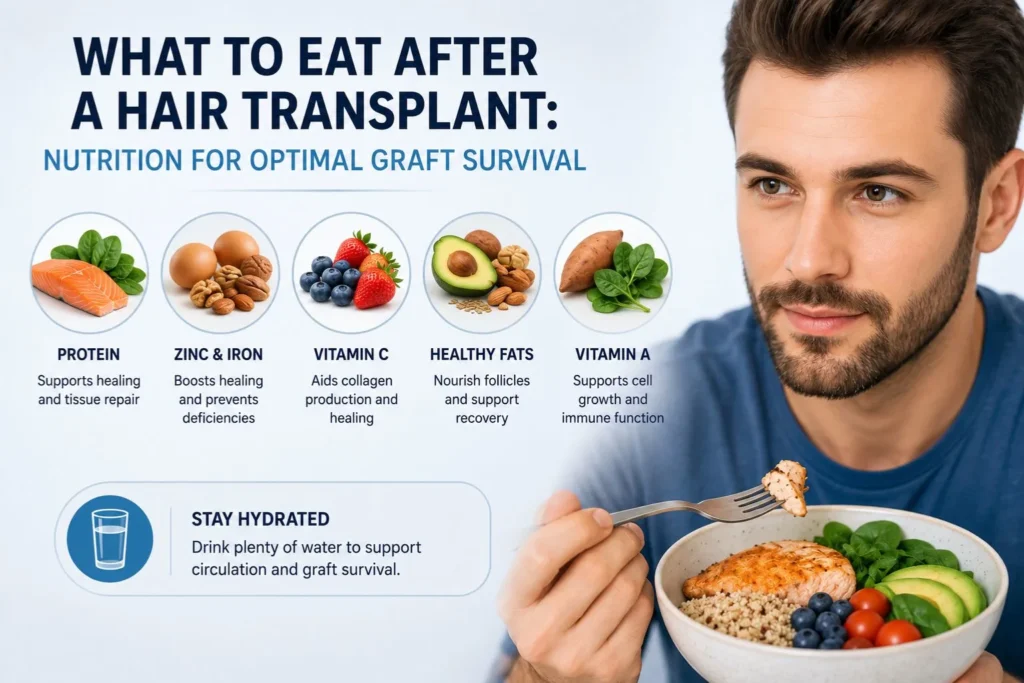
Hair transplant clinics spend a great deal of time advising patients on what to avoid touching, how to sleep, and when to wash their scalp. Nutrition, by comparison, is often mentioned briefly at the end of a discharge appointment. That is a missed opportunity, because what you eat in the weeks following surgery has a measurable impact on graft outcomes.
Newly implanted follicles depend on a process called neovascularisation, the formation of new blood vessels around the graft to establish their blood supply. This process, which begins in earnest around days three to five post-surgery, requires adequate protein, zinc, vitamin C, and iron to proceed efficiently. In an FUE hair transplant, where each follicle is individually extracted and placed, every single graft goes through this process independently, making nutritional support all the more important. Deficiencies in any of these nutrients can slow the process and reduce the proportion of grafts that survive.
Beyond the grafts themselves, your scalp is essentially a wound site with dozens or hundreds of small incisions. Like any wound, it heals faster and more cleanly when the body has the raw materials it needs. Inflammation, infection risk, and tissue repair all respond to nutritional status.
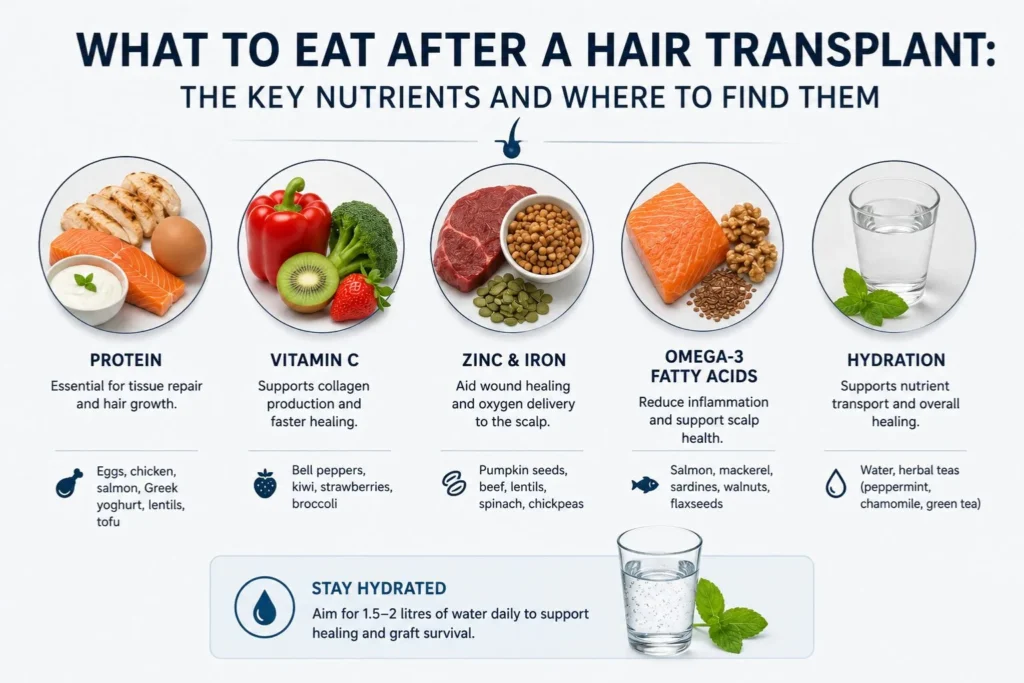
What to eat after hair transplant: the key nutrients and where to find them
Protein: the non-negotiable foundation
Hair is made almost entirely of keratin, a structural protein. After a transplant, your body needs dietary protein both to repair scalp tissue and to support the anagen (growth) phase of your new follicles once they begin producing hair typically from three to four months post-surgery.
Aim for at least 1.2–1.6g of protein per kilogram of body weight daily in the first four to six weeks. Good sources include eggs, chicken, salmon, Greek yoghurt, lentils, and tofu. Eggs are particularly well suited to recovery eating; they provide both complete protein and biotin (vitamin B7), which plays a specific role in keratin infrastructure. A patient at our clinic once described switching to two eggs at breakfast as the one dietary change she committed to consistently, and her surgeon noted unusually rapid graft anchoring at her two-week check. Anecdotal, yes but biology supports the habit.
Vitamin C: more than an immunity booster
Most people associate vitamin C with colds, but for hair transplant recovery its most relevant role is collagen synthesis. Collagen forms the structural matrix of skin, and your scalp needs to rebuild it around each transplanted graft. Vitamin C is a co-factor in the enzyme reactions that produce collagen without adequate levels, wound healing slows noticeably.
The UK’s NHS recommends 40mg of vitamin C daily for adults, but post-surgical requirements are often higher. Bell peppers (particularly red ones), kiwi, strawberries, and broccoli are among the richest dietary sources. A single red bell pepper contains roughly 190mg nearly five times the recommended daily amount. Including one or two of these foods daily during the first month is a straightforward way to support healing without supplementation.
Zinc and iron: the underappreciated wound-healing pair
Zinc and iron are both critical to tissue repair, and both are commonly suboptimal in UK adults. Zinc supports cell division and immune function both directly relevant to graft healing while iron facilitates oxygen transport to the healing scalp via haemoglobin. Iron deficiency, in particular, is one of the most commonly cited nutritional contributors to hair loss, making adequate intake after a transplant especially important.
Foods rich in zinc include pumpkin seeds, beef, chickpeas, and cashews. For iron, lean red meat provides the most bioavailable form (haem iron), while spinach, lentils, and fortified cereals offer non-haem iron less easily absorbed, but more practical for those who limit red meat. Pairing non-haem iron sources with vitamin C at the same meal significantly improves absorption. A bowl of lentil soup with a squeeze of lemon is a simple example of this principle in practice.
Omega-3 fatty acids: reducing scalp inflammation
Post-surgical inflammation is a normal part of healing, but excessive or prolonged inflammation can impair graft survival. Omega-3 fatty acids found in oily fish such as salmon, mackerel, and sardines, as well as in walnuts and flaxseeds have well-documented anti-inflammatory properties. The British Dietetic Association recommends at least two portions of oily fish per week for general health; for post-transplant recovery, this is a particularly useful target to hit.
One important caveat: very high-dose omega-3 supplements (above 3g per day) can have mild blood-thinning effects. In the first week after surgery, when bleeding risk is still a concern, stick to dietary sources rather than high-dose supplements unless your surgeon has explicitly approved them.
Hydration: the often-overlooked variable
Adequate hydration supports every aspect of healing from nutrient transport in the blood to maintaining skin elasticity around new grafts. Aim for 1.5-2 litres of water daily, and more if you are in a warm environment or experiencing any medication-related side effects that increase fluid loss.
Herbal teas (peppermint, chamomile, green tea in moderate amounts) are reasonable alternatives to plain water. Avoid high-sugar fruit juices, which provide less hydration per calorie and can cause blood sugar spikes that promote inflammation.
Foods and drinks to avoid after a hair transplant
Understanding food for hair growth after transplant is only half the picture. What you avoid is equally important in the critical first two weeks.
Alcohol
Alcohol has several mechanisms that directly interfere with hair transplant recovery. It acts as a vasodilator, increasing blood flow to the scalp and raising the risk of minor bleeding around graft sites. It also interacts adversely with antibiotics and anti-inflammatory medications commonly prescribed post-procedure, and impairs immune function at a time when your scalp is vulnerable to infection. Most surgeons advise complete abstinence for at least two weeks, and ideally four.
Caffeine in excess
Moderate caffeine one to two cups of coffee or tea per day is generally considered acceptable after the first 48 hours. High caffeine intake, however, elevates blood pressure, which is a risk factor for graft disruption in the early post-operative period. Energy drinks, strong espressos, and caffeine supplements are best avoided for the first week at minimum.
Salty and heavily processed foods
High sodium promotes fluid retention and swelling. Given that post-transplant swelling around the forehead and temples is already common in the first three to five days, a diet high in processed foods during this period can worsen discomfort and may prolong oedema. Fast food, ready meals, crisps, and processed meats are all worth avoiding for at least the first week.
Spicy foods
Spicy foods can cause sweating, raise body temperature, and increase scalp blood flow all of which are risks in the early post-operative window. They can also irritate the stomach when combined with post-op antibiotics or painkillers. Most clinics advise avoiding them for the first three to five days as a precaution.
A practical 7-day post-transplant meal framework
This is not a rigid meal plan it is a framework to illustrate how the nutritional principles above translate to actual eating. Vitamins for hair transplant recovery do not need to come from an expensive supplement stack; most can be obtained through everyday foods.
| Day | Focus | Example meals |
| Days 1–3 | Gentle, anti-inflammatory | Scrambled eggs, vegetable soup, grilled salmon with steamed greens |
| Days 4–7 | Protein + micronutrients | Chicken with quinoa, lentil dhal, Greek yoghurt with berries |
| Week 2 | Full nutritional support | Any balanced whole-food diet; prioritise iron, zinc, vitamin C daily |
| Weeks 3–4+ | Sustained nutrition for hair growth | Oily fish 2x/week, continue protein target, add biotin-rich foods |
You do not need to follow a special hair transplant diet, you need to eat well in a way that supports healing. The framework above is achievable, affordable, and consistent with standard NHS dietary guidance for post-surgical recovery.
Should you take supplements after a hair transplant?
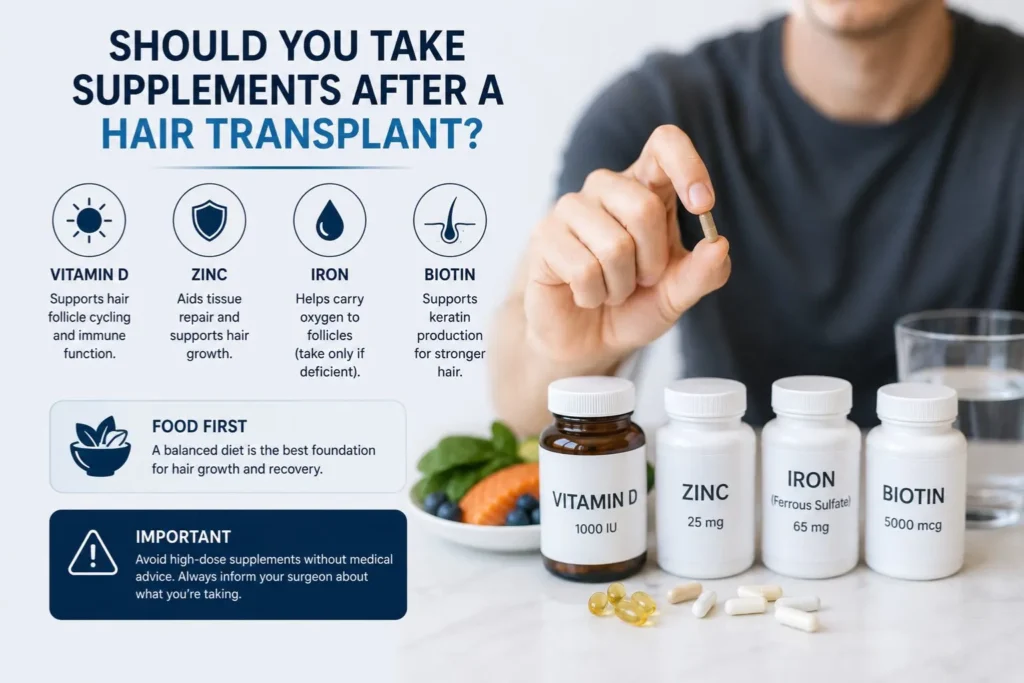
This is really one of the top questions that patients come in with. The honest response is: it is really dependent on your original nutritional condition. People who have diverse diets with plenty of whole foods will see barely any benefits from supplements. People who cannot eat certain foods, who know that they have some deficiencies or who have limited access to nutritious foods can use specific supplements to fill their real nutritional gaps.
Nutrition for hair growth is best supported through food first. If supplementation is appropriate, the most evidence-supported options for post-transplant recovery include vitamin D (particularly relevant in the UK, where deficiency is widespread), zinc, iron (only if deficient excess iron is harmful), and biotin. Avoid high-dose supplements without clinical guidance, and always inform your surgeon of anything you are taking, as some supplements interact with medications.
A broad-spectrum multivitamin designed for hair health such as those containing the Marilyn Monroe formula (iron, zinc, B vitamins, vitamin C, biotin) can be a reasonable baseline, but is not a substitute for addressing diet as a whole.
Common myths about diet after hair transplant
Myth: You need to take a biotin supplement immediately after surgery for grafts to survive.
Reality: Biotin supports hair structure but does not directly affect graft survival in the acute post-operative period. Unless you have a diagnosed biotin deficiency (rare in UK adults eating a normal diet), supplementation is unlikely to make a meaningful difference in the first few weeks. Its value is more relevant three to six months post-transplant, when new hair begins to grow.
Myth: Eating more protein will make transplanted grafts grow faster.
Reality: Protein brings the building blocks for healthy growth but it does not have the power to speed up the biological hours. Hair follicles that are transplanted will have to go through a shedding phase that can be expected (shock loss) at 2 to 6 weeks, then a dormancy phase, and finally new growth which will be seen at 3 to 4 months. No food or nutrition-related measures can change this particular course of events but good nutrition will be there to support the growth to be as healthy as possible when it eventually starts.
Myth: Green tea is good for hair growth, so drinking lots of it will help.
Reality: Green tea contains epigallocatechin gallate (EGCG), which has shown some hair-growth properties in laboratory studies. However, a very high intake of green tea can inhibit iron absorption, which is counterproductive given iron’s role in post-transplant recovery. One to two cups per day is fine; more than that is worth moderating, especially if you are relying on plant-based iron sources.
Healthy Eating Habits for Better Hair Transplant Recovery
What you eat after a hair transplant will not single-handedly determine whether your grafts succeed but it is one of the few variables entirely within your control. Focus on protein, anti-inflammatory foods, and key micronutrients in the first four weeks, avoid alcohol and processed foods during the critical healing window, and maintain a nutrient-dense diet throughout the full growth cycle.
If you have specific dietary restrictions, existing health conditions, or concerns about deficiencies, speak to your surgeon or a registered dietitian before making significant changes. At The Skin and Hair Clinic, our post-operative care team can advise on personalised nutrition support as part of your recovery plan.
Frequently Asked Questions
Q: What should I eat the day after a hair transplant?
A: Within the first 24 to 48 hours, it’s best to eat simple and bland foods which are easy to digest: scrambled eggs, plain yoghurt, cooked vegetables, and lean protein like grilled fish or chicken. Stay away from any spicy, salty, or alcohol-containing food. Healing is your main goal and you also need to be careful not to give yourself stomach discomfort In particular if you are on antibiotic or pain reliever medications that can irritate the stomach lining.
Q: What to eat after hair transplant to speed up recovery?
A: Naturally, no one food can somehow drastically speed up the recovery process, but a mixture of sufficient protein intake (1.2-1.6g per kg body weight), foods high in vitamin C (bel peppers kiwi citrus), zinc (pumpkin seeds beef chickpeas), and omega-3 fats (salmon mackerel walnuts) supplies the nutrients needed for fast recovery and graft survival. Regular drinking of water is just as important as any single item of food.
Q: How long should I follow a special diet after hair transplant?
A: The most critical dietary window is the first two to four weeks, when grafts are establishing their blood supply and the scalp is most vulnerable to infection. That said, nutrition for hair growth is a long-term consideration; the foods that support healthy hair continue to matter through the full twelve-month growth cycle post-transplant. A balanced whole-food diet is worth sustaining beyond the initial recovery period.
Q: Are there specific vitamins for hair transplant recovery I should take?
A: The vitamins most relevant to post-transplant recovery are vitamin C (collagen synthesis and wound healing), vitamin D (immune regulation; commonly deficient in the UK), biotin (keratin structure), and B vitamins generally. Whether you need to supplement depends on your existing dietary intake. If you eat a varied diet, food sources are usually sufficient; if you have restrictions or known deficiencies, supplementation under clinical guidance is appropriate.
Q: Can I drink alcohol after a hair transplant?
A: No alcohol should be avoided for at least two weeks after a hair transplant, and ideally four. It dilates blood vessels (raising bleeding risk at graft sites), interacts with post-op antibiotics and anti-inflammatories, and impairs immune function. Even moderate drinking during this period carries genuine risks to your outcome.
Q: Do foods that promote hair growth help transplanted follicles specifically?
A: Foods that promote hair growth oily fish, eggs, seeds, leafy greens, and legumes support the conditions for healthy follicle function across the scalp, including transplanted follicles. They do not change the biological timeline of graft recovery, but they create the nutritional environment in which newly established follicles are most likely to thrive once the growth phase begins at three to four months.
Q: Is there a diet after hair transplant I should follow long-term?
A: There is no specific branded “hair transplant diet” that is clinically mandated long-term. What the evidence supports is a broadly anti-inflammatory, nutrient-dense diet rich in protein, healthy fats, iron, zinc, and vitamins C and D sustained throughout the twelve-month post-transplant period. This aligns closely with standard UK dietary guidelines for overall health.