
Reviewed by Dr. Jyotsna Kumari
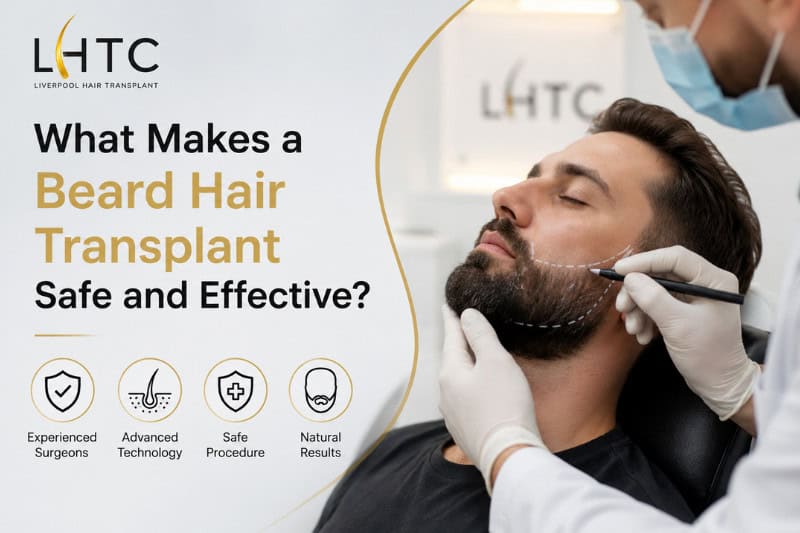
A fuller beard can change the way the face looks, especially when growth is uneven or some areas have little or no hair. A beard transplant can help restore hair in selected areas using follicles taken from another part of the body. If you are wondering, Is a beard hair transplant safe? The answer depends on factors such as the surgeon’s experience, the technique used, your health and how well you follow aftercare instructions.
Did you know? Hair transplants are usually carried out under local anaesthetic, which means the treatment area is numbed during the procedure. The NHS also recommends checking that the surgeon is suitably qualified and experienced and that a cosmetic surgery clinic in England is registered with the Care Quality Commission (CQC).
The Skin & Hair Clinic provides hair restoration treatments, including beard transplantation, with procedures carried out by qualified medical professionals.
Key Takeaways
- Beard transplantation uses hair follicles from a donor area to improve sparse or missing beard growth.
- Safety depends on proper patient assessment, sterile treatment conditions and an experienced medical team.
- Choosing the right hairline, direction and density can help create a more natural appearance.
- Aftercare plays an important role during healing and early hair growth.
- A consultation can help determine whether a beard transplant is suitable for your needs and expectations.
What Makes a Beard Transplant Safe?
Safety begins much earlier than the actual treatment. The condition of the skin and the existing beard growth needs to be checked and a suitable donor area needs to be assessed. You may also have to talk about your medical history and any medicines you take before treatment.
A qualified surgeon should discuss the procedure, potential risks, expected recovery and what results may be realistic for you. The consultation also allows you to ask questions before making a choice.
Several factors can help support a safe treatment:
- A qualified and experienced hair transplant surgeon.
- A clean and properly equipped clinical setting.
- Careful assessment of the donor and recipient areas.
- Appropriate planning for follicle extraction and placement.
- Clear instructions for looking after the treated area after surgery.
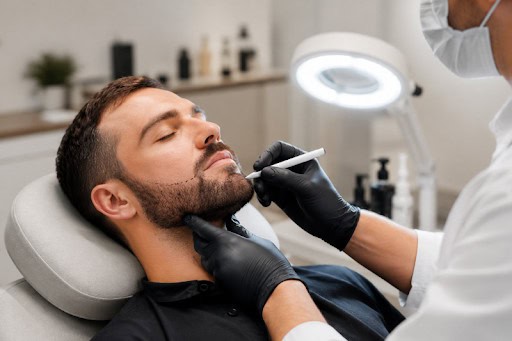
The hair transplant procedure should be planned around the natural pattern of your beard. Hair follicles need to be placed at suitable angles and directions so that the new growth follows the appearance of your existing facial hair.
What Are the Risks of a Beard Hair Transplant?
Even with an experienced medical team, all surgical procedures are not without risk. Knowing beard transplant risks before treatment can help you know what to expect.
Temporary redness, swelling, sensitivity and small scabs may occur after transplantation. Some patients may also have itching in the healing process. Risks include infection, bleeding, scarring or poor graft growth, but these risks can be minimized with careful clinical care.
Your surgeon should discuss potential side effects with you at your consultation and advise you on when you should seek medical advice.
Factors that may affect safety and healing include:
- Your general health and skin condition.
- The quality and availability of donor hair.
- The number of grafts required.
- The experience of the surgeon performing the treatment.
- How closely aftercare instructions are followed.
What Happens During a Beard Hair Transplant?
A beard transplant typically consists of harvesting individual hair follicles from a donor area of the body, usually the scalp, and transplanting them into areas where beard growth is sparse or non-existent.
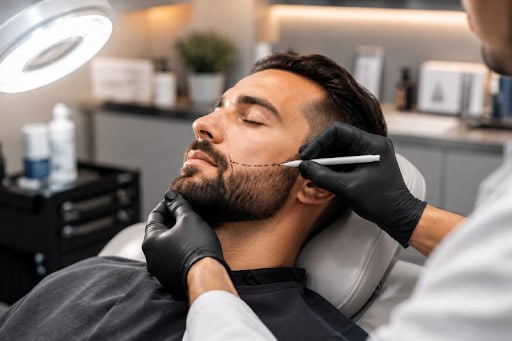
Facial hair grows in a particular pattern and direction and so treatment needs to be carefully planned. A surgeon will need to consider the shape of your face, your existing beard growth and what areas you want to improve.
The process may involve:
- Evaluation of the donor site and beard growth.
- Planning of the zones which need to be densified.
- Hair follicle extraction.
- Preparation of the hair follicles for transplantation.
- Placement of hair follicles at appropriate angles and directions.
The number of grafts needed depends on individual cases. You can get a better idea of this at your hair transplant consultation.
What Should You Expect During Beard Transplant Recovery?
Healing takes time, so patients should expect some temporary changes after treatment. Redness, mild swelling and small crusts may appear during the first few days.
During beard transplant recovery, it is important to protect the newly implanted follicles and follow the aftercare instructions provided by your clinical team. Washing, touching, exercise and other daily activities may need to be adjusted for a short period.
Newly transplanted hairs can also shed before fresh growth appears. This does not necessarily mean that the treatment has failed. Hair growth takes place gradually, and the final appearance develops over several months.
What Can Affect Natural Beard Transplant Results?
The final outcome depends on several factors. This can be caused by the quality of the donor hair, the number of available follicles, the beard density and the placement of the grafts.
Your expectations are important too. It can help with those areas that are not growing much. The amount of coverage that can be achieved depends on how much hair is available for the donor.
Good aftercare is important also. During the healing period following medical advice will help protect the transplanted follicles as the skin heals.
Ready to Take the Next Step With Your Beard Transplant?
Understanding whether a beard hair transplant is safe is crucial in deciding if the treatment is right for you. A personal assessment can help you understand your donor hair, treatment options, expected healing and the results you may be able to achieve.
If you are considering a beard transplant, The Skin & Hair Clinic can help you explore your options with a qualified medical team. Book a consultation to discuss your goals and find out whether beard transplantation could be suitable for you.
Call us on 0151 280 3248 or visit the clinic at 7 Hatton Garden, Eden Square, Liverpool L3 2FE to discuss your beard restoration needs.
FAQs
Q: Is a beard hair transplant safe for everyone?
A beard transplant may not be suitable for every person. Your donor hair, skin condition, medical history and expectations should be assessed before treatment.
Q: Where does the hair for a beard transplant come from?
Hair is commonly taken from a suitable donor area, often the back or sides of the scalp. The surgeon will assess whether the available follicles are suitable.
Q: How long does it take to recover from a beard transplant?
The early healing period usually takes around one to two weeks, although the complete growth process takes much longer. Your clinical team can provide guidance based on your treatment.
Q: Will transplanted beard hair grow naturally?
Transplanted follicles can produce hair that grows like natural facial hair once they have established. The direction and placement of the follicles are important for creating natural-looking growth.
Q: What should I ask before having a beard transplant?
Ask about the surgeon’s qualifications and experience, the treatment plan, possible risks, expected recovery, aftercare and the results you may reasonably expect.
{
“@context”: “https://schema.org”,
“@type”: “FAQPage”,
“mainEntity”: [
{
“@type”: “Question”,
“name”: “Is a beard hair transplant safe for everyone?”,
“acceptedAnswer”: {
“@type”: “Answer”,
“text”: “A beard transplant may not be suitable for every person. Your donor hair, skin condition, medical history and expectations should be assessed before treatment.”
}
},
{
“@type”: “Question”,
“name”: “Where does the hair for a beard transplant come from?”,
“acceptedAnswer”: {
“@type”: “Answer”,
“text”: “Hair is commonly taken from a suitable donor area, often the back or sides of the scalp. The surgeon will assess whether the available follicles are suitable.”
}
},
{
“@type”: “Question”,
“name”: “How long does it take to recover from a beard transplant?”,
“acceptedAnswer”: {
“@type”: “Answer”,
“text”: “The early healing period usually takes around one to two weeks, although the complete growth process takes much longer. Your clinical team can provide guidance based on your treatment.”
}
},
{
“@type”: “Question”,
“name”: “Will transplanted beard hair grow naturally?”,
“acceptedAnswer”: {
“@type”: “Answer”,
“text”: “Transplanted follicles can produce hair that grows like natural facial hair once they have established. The direction and placement of the follicles are important for creating natural-looking growth.”
}
},
{
“@type”: “Question”,
“name”: “What should I ask before having a beard transplant?”,
“acceptedAnswer”: {
“@type”: “Answer”,
“text”: “Ask about the surgeon’s qualifications and experience, the treatment plan, possible risks, expected recovery, aftercare and the results you may reasonably expect.”
}
}
]
}