Table of Contents
A hair transplant is generally worth it if your hair loss has stabilised, you have a healthy donor area, and you go in with realistic expectations about density rather than a full head of teenage hair. It’s rarely worth it in your early twenties, when your hairline may still be moving and the pattern hasn’t settled. Age, donor quality, and the surgeon’s skill matter more to the outcome than the technique used. Here’s what actually determines success, what it costs in the UK, and how to spot whether you’re a good candidate.
How does hair transplant work, and why does technique matter?
Both main methods move follicles from a “donor area,” usually the back and sides of the scalp, into thinning patches.FUE removes individual follicles, leaving tiny dot scars; FUT removes a thin strip of scalp and dissects it into grafts, leaving a fine linear scar instead. Neither approach grows new hair. Both relocate hair that’s genetically resistant to the hormone behind pattern baldness, which is why donor quality, not the method, usually decides how natural the result looks.
What is the actual success rate for hair transplants?
Graft survival is the real measure of success, not “did I get more hair.” According to the International Society of Hair Restoration Surgery’s practice census data, well-performed procedures typically achieve graft survival rates of 85% to 95%, depending on surgeon experience and aftercare, though that doesn’t guarantee a high satisfaction rate. Patients expecting their density at 18 are usually disappointed; patients wanting a denser, natural-looking hairline tend to report being genuinely happy with the result.
Is hair transplant worth it at every age?
Age changes the calculation more than most clinics admit.
In your 20s, this is the trickiest call. Pattern baldness can still be progressing, so a transplant now might look mismatched against further loss later. Many surgeons suggest stabilising things with finasteride first.
In your 30s and 40s, you’re usually in the sweet spot: loss patterns have settled, donor hair is abundant, and most of the best long-term outcomes happen in this window.
In your 50s and beyond, it’s still worth it, but donor density naturally declines with age, so a proper scalp assessment matters more. Softening a hairline, rather than chasing 25-year-old density, tends to produce the happiest patients.
What does a hair transplant actually cost in the UK?
Hair transplant expenses in the UK typically range from around £3,000 for a smaller FUE session to £12,000+ for extensive coverage, depending on graft count and clinic. The NHS doesn’t fund transplants, since they’re classed as cosmetic rather than medically necessary, but it’s a one-off cost. Ongoing alternatives like minoxidil, finasteride, or repeated PRP hair treatment can quietly add up to several thousand pounds over a decade without ever giving a permanent result.
FUE vs FUT: which one is worth it for you?
| FUE | FUT | |
| Scarring | Tiny dot scars, easily hidden | Thin linear scar |
| Recovery | Faster | Slightly longer |
| Graft yield per session | Good | Often higher |
| Best suited for | Short hairstyles | Hair long enough to cover a scar |
FUE suits most people who wear their hair short. FUT can offer better value for larger sessions where a hidden scar isn’t a concern.
Hair grafting side effects you should actually expect
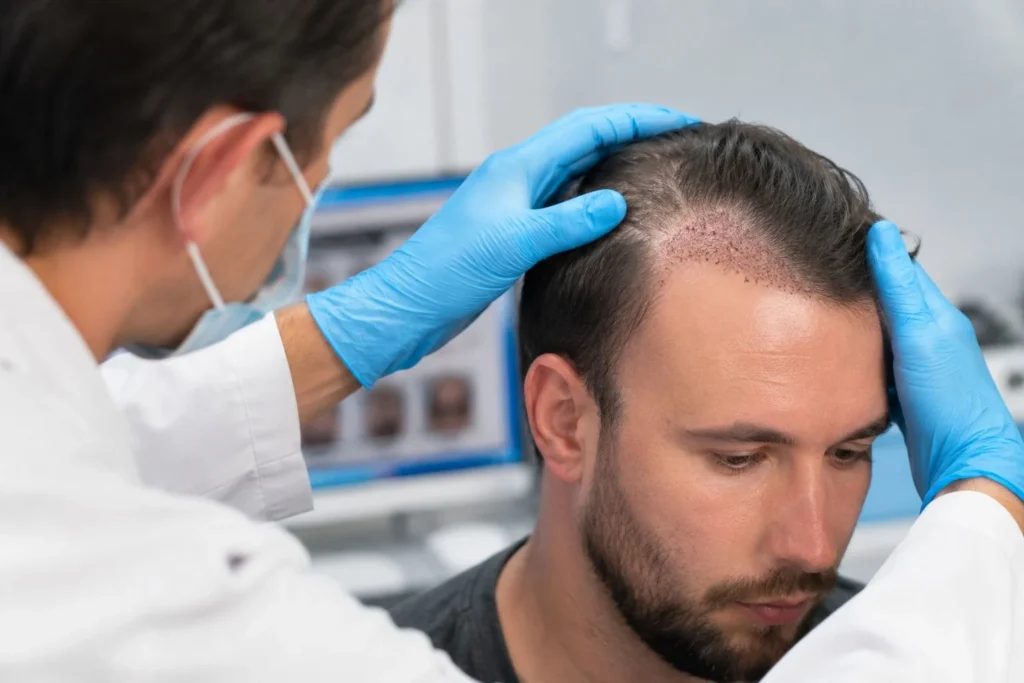
Mild swelling, scabbing, and tightness are normal for the first week to ten days, and temporary “shock loss” (existing hair shedding before regrowing) is common, not a sign of failure. More serious risks like infection or unnatural hairlines are almost always linked to inexperienced or unregulated clinics, so checking a clinic is CQC-registered is worth the five minutes it takes.
Do hair implants work, and is PRP worth trying first?
“Hair implants” sometimes gets used loosely for transplants, but true synthetic implants carry a real risk of rejection and infection, and most reputable surgeons won’t recommend them. PRP hair treatment, which involves injecting a concentrate of your own platelets into the scalp, can modestly support thickness in early thinning, but won’t restore density once follicles have stopped producing hair. In practice, what clinicians at The Skin and Hair Clinic tend to see is that PRP works best as maintenance alongside a transplant, not as a replacement for one once hair loss is established.
Common misconceptions about hair transplants
Myth: “A transplant gives you a full head of hair again.”
Reality: it redistributes your existing donor hair more densely. It can’t create follicles you don’t have, which is why a proper donor assessment matters before anyone promises a specific result.
Myth: “Once you’ve had a transplant, your hair loss is sorted for good.”
Reality: transplanted hair is permanent, but untreated areas around it can keep thinning naturally. Many patients pair their results with finasteride or minoxidil to protect what they didn’t transplant.
What real outcomes tend to look like
Patients who do best treat the consultation as a two-way assessment, not a sales pitch, and ask to see real before and after results from people with a similar hair type. At The Skin and Hair Clinic, the most common feedback after the 10-to-18-month growth window isn’t “I look 20 again.” It’s that a hairline finally looks proportionate to the face.
Frequently Asked Questions
Q: Is hair transplant worth it if I’m only in my early 20s?
A: It can be, but most surgeons recommend caution if your hair loss is still progressing, since an early transplant can end up mismatched against further loss within a few years.
Q: What’s a realistic hair transplant success rate?
A: Most well-performed procedures achieve graft survival rates of 85% to 95%, based on industry practice data, though the figure depends on aftercare and surgeon experience.
Q: Is FUT hair transplant better than FUE?
A: Neither is universally “better.” FUT can yield more grafts per session, while FUE leaves less visible scarring, which matters more if you wear your hair short.
Q: Do hair implants actually work long-term?
A: Transplanted natural hair grows permanently once it takes root, but synthetic implants carry meaningful rejection risk and aren’t widely recommended.
Q: Is hair replacement worth it instead of a transplant?
A: Non-surgical options like wigs avoid surgery but need ongoing maintenance costs indefinitely, while a transplant costs more upfront but delivers a one-time, permanent result.