
Reviewed by Dr. Jyotsna Kumari
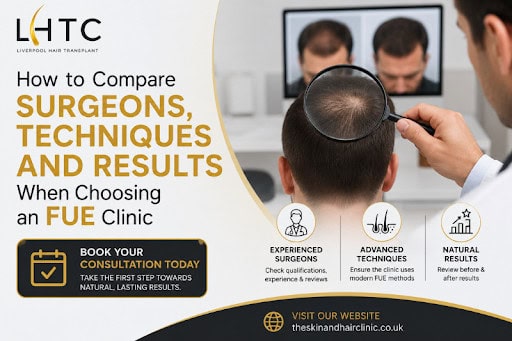
Choosing a clinic for hair restoration involves more than comparing prices or looking at a few before-and-after photographs. The surgeon’s experience, treatment method, medical standards and the quality of previous results can all affect your decision. Knowing what to check before booking can help you avoid choosing a clinic based only on advertising or cost.
Did You Know? The NHS recommends checking a cosmetic practitioner’s qualifications, training and experience before treatment. It also advises asking how many procedures they have performed, what aftercare is available and what support is provided if complications occur.
The Skin & Hair Clinic provides FUE, FUT and DHI hair transplant treatments in Liverpool, with GMC-registered doctors and structured follow-up care.
Key Takeaways
- Check the surgeon’s medical qualifications and experience with FUE procedures.
- Compare how each clinic plans the hairline, graft placement and donor area.
- Look at genuine before-and-after results from patients with similar hair loss.
- Ask what is included in the treatment price and aftercare programme.
- Use a consultation to discuss suitability, expected growth and possible limitations.
What Should You Check When Comparing FUE Clinics?
Finding the best clinic for FUE hair transplant treatment starts with looking beyond the clinic’s website claims. A reliable provider should give you enough information to understand who will perform your treatment and how your procedure will be planned.
Check:
- Whether the doctors are appropriately registered and qualified.
- How much experience the surgical team has with FUE.
- Whether the clinic follows recognised safety and regulatory standards.
- How the donor area and existing hair are assessed.
- Whether you receive clear information before agreeing to treatment.
A hair transplant consultation should give you an opportunity to ask questions rather than simply receive a treatment price. You should understand why FUE has been recommended and what level of density may be achievable.
How Important Is the FUE Surgeon’s Experience?
The person carrying out your procedure can have a significant role in the final appearance. FUE involves removing individual follicular units from a donor area and placing them into areas affected by hair loss.
When comparing an FUE surgeon, ask about their qualifications, surgical experience and the number of procedures they have performed. It can also be useful to ask who will carry out each stage of your treatment rather than assuming that the person conducting your consultation will perform the surgery.
The Skin & Hair Clinic lists Dr Jyotsna Kumari as its Founder, Medical Director and Lead Hair Transplant Surgeon. The clinic states that she is GMC registered and has more than 20 years of medical experience, including over 4,000 hair restoration procedures.

Compare Techniques Before Choosing FUE
FUE is not the only surgical hair restoration option. FUT and DHI are also used for hair loss, and the right procedure depends on factors such as donor hair, the area being treated and the patient’s goals.
During your assessment, ask:
- Why FUE is suitable for your pattern of hair loss.
- How many grafts may be needed.
- Where the donor follicles will be taken from.
- How the new hairline will be planned.
- What you can expect during healing and growth.
Understanding these points makes it easier to compare clinics on the treatment they actually provide rather than simply comparing procedure names.
How Can You Judge Hair Transplant Results?
Photographs can provide useful information, but they should be reviewed carefully. Look for results from several patients and, where possible, people with a similar degree of hair loss, hair type and treatment area.
Pay attention to the hairline, density and how naturally the transplanted hair blends with existing hair. A clinic should also be willing to explain how long after surgery each photograph was taken.
The FUE hair transplant clinic you choose should be able to show genuine patient results and explain what influenced those outcomes. The Skin & Hair Clinic has a dedicated results gallery showing before-and-after cases at different stages.
What Should You Ask About Aftercare and Follow-Up?
Surgery is only one part of the process. Following the clinic’s instructions after treatment can help protect the transplanted grafts while the scalp heals.
Ask whether your package includes:
- Post-operative medication and supplies.
- Instructions for washing and caring for the scalp.
- Early follow-up appointments.
- Support if you have concerns during recovery.
- Longer-term reviews to monitor growth.
The clinic states that its FUE package includes 12-month aftercare, with reviews at 3, 6, 9 and 12 months.
How Can You Compare Clinics Before Making a Decision?
A useful comparison should consider medical credentials, treatment planning, results, pricing and aftercare together. Avoid choosing a provider simply because it advertises a low price or promises a particular result.
Look at whether the clinic gives clear answers to your questions and provides realistic information about what surgery can and cannot achieve.
For anyone searching for the best clinic for FUE hair transplant treatment, taking time to compare these areas can make the decision much clearer.
Ready to Compare Your FUE Treatment Options?
Choosing an FUE clinic is easier when you know what to look for. Surgeon qualifications, treatment planning, genuine results and aftercare all deserve attention before you commit to surgery.
The Skin & Hair Clinic offers FUE hair restoration in Liverpool alongside FUT, DHI and other hair restoration services. If you are considering treatment, you can call 0151 280 3248 or visit 203-205 Rose Lane, Liverpool, L18 5EA to discuss your hair loss and treatment options with the clinical team.
Questions to Ask Before Booking an FUE Treatment
1. How many grafts will I need?
The number depends on your hair loss, treatment area, donor supply and desired coverage. A clinical assessment is needed to estimate graft requirements.
2. Who will perform my procedure?
Ask about the surgeon’s medical registration, qualifications and experience with FUE.
3. How long will it take to see growth?
New growth takes time. The timeline varies between patients, and final hair transplant results may take several months to develop.
4. What happens if I have concerns after surgery?
Find out how the clinic handles follow-up questions and whether post-operative reviews are included in your package.
5. How can I tell if my expectations are realistic?
A consultation should cover your current hair loss, donor supply, likely graft numbers and the level of coverage that may be achievable.