Reviewed by Dr. Jyotsna Kumari
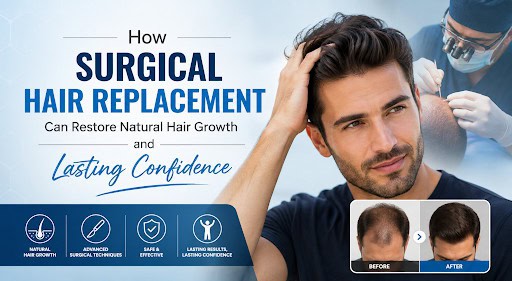
Hair loss can affect more than the way your hair looks. A receding hairline, thinning crown or visible bald areas can change how some people feel about their appearance and everyday interactions. For those looking for a longer-term option, surgery can provide a way to move healthy follicles into areas where hair has been lost.
Did You Know?According to the NHS, the full results of a hair transplant can take around 10 to 18 months to become visible. Transplanted hairs may shed a few weeks after surgery before new growth begins.
The Skin & Hair Clinic provides FUE, FUT and DHI hair transplant procedures in Liverpool. Understanding how surgical hair replacement works, who may be suitable and what results can realistically be expected can help you decide whether treatment is right for you.
Key Takeaways
- Surgical hair replacement moves healthy follicles from a donor area to areas affected by hair loss.
- FUE, FUT and DHI use different methods to extract and place hair follicles.
- A consultation can assess donor hair, hair-loss patterns and the number of grafts required.
- New hair growth takes several months, so results should not be judged too soon.
- Good aftercare and realistic expectations are important parts of the treatment journey.
What Is Surgical Hair Replacement?
Surgical hair replacement involves moving healthy hair follicles from a donor area, usually at the back or sides of the scalp, to areas affected by thinning or baldness. The follicles are placed into carefully selected areas so that new hair can grow there.
The result depends on factors such as donor hair availability, the pattern of hair loss, the number of grafts used and the patient’s natural hair characteristics.
A consultation is an important first step because permanent baldness is not the only type of hair loss people experience, and a transplant may not be suitable for every cause of thinning.

How Does Hair Restoration Surgery Work?
The hair restoration surgery process begins with an assessment of the scalp and donor area. The clinical team can then discuss the treatment area, expected graft numbers and suitable technique.
A hair transplant procedure may involve:
- Designing the hairline and treatment area
- Preparing and numbing the donor area
- Removing healthy follicular units
- Preparing the grafts for implantation
- Placing the grafts into areas of thinning or baldness
- Providing post-treatment care instructions
FUE removes individual grafts, while FUT uses a strip method. DHI uses a specialised implantation technique for placing follicles directly into the scalp.
Which Technique Could Be Right for You?
FUE, FUT and DHI have different surgical methods, so there is no single option that suits every patient.
FUE involves individual follicle extraction. FUT involves removing a strip of skin containing hair follicles before preparing the grafts. DHI uses an implanter pen to place extracted follicles directly into the recipient area.
The recommended technique can depend on your donor density, hair-loss pattern, treatment area and desired level of coverage.
How Can Treatment Create Natural-Looking Hair Growth?
Natural-looking results rely on more than simply placing follicles into empty areas. The design and placement need to work with the patient’s existing hair.
Important considerations include:
- Creating a hairline that suits the person’s facial features
- Placing follicles at suitable angles and directions
- Distributing grafts according to the level of thinning
- Working with the patient’s existing hair pattern
- Using the available donor hair carefully
The NHS also advises patients to ask their surgeon how the recommended procedure will create a natural result, as hair loss can carry on around the transplanted area.
Can Permanent Hair Replacement Last?
Transplanted follicles can provide long-term hair growth, but a transplant does not necessarily prevent existing, non-transplanted hair from thinning in the future.
This means permanent hair replacement should not be viewed as a promise that every hair on the scalp will remain unchanged. Your surgeon can assess your current hair-loss pattern and donor supply when discussing the likely long-term result.
What Should You Expect During Recovery?
Recovery happens in stages. Redness, swelling, tenderness and scabbing can occur during the early period. Some transplanted hairs may also shed before new growth starts.
During the early stages, patients may be advised to:
- Follow the recommended scalp-washing instructions
- Avoid touching or scratching newly transplanted grafts
- Limit strenuous exercise for the period advised
- Protect the scalp while it heals
- Attend scheduled follow-up appointments
The Skin & Hair Clinic provides aftercare guidance, a day-two surgical wash, a day-14 scab removal appointment and reviews at three, six, nine and 12 months.
What Can Affect Your Final Hair Transplant Result?
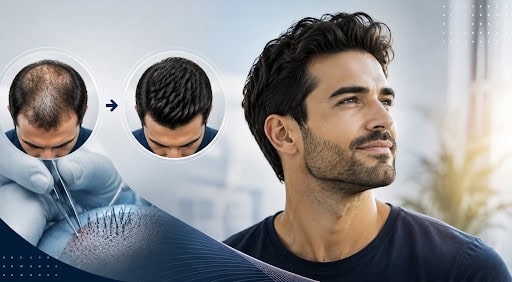
Every patient has different hair characteristics so that results can vary.
Factors that can influence the outcome include:
- The amount and quality of donor hair
- The extent of existing hair loss
- Number of grafts available
- Hair thickness and texture
- Hairline design and graft placement
- Individual healing
- Following post-operative instructions
A suitable treatment plan should take future hair loss into account rather than focusing only on the areas that are currently thin.
How Should You Choose a Clinic?
Choosing a clinic involves more than comparing treatment prices. Look at the qualifications and experience of the medical team, the techniques offered, patient results, consultation process and aftercare arrangements.
The NHS recommends checking the surgeon’s qualifications and experience and, in England, checking whether the clinic or hospital is registered with the Care Quality Commission where applicable.
Patients can also ask:
- Who will perform the surgery?
- How many grafts may be required?
- Which technique is being recommended?
- What does the quoted price include?
- What aftercare is provided?
- When should new growth be expected?
Ready to Explore Your Hair Restoration Options?
Surgical treatment can offer a longer-term option for suitable patients experiencing permanent hair loss. Understanding the procedure, recovery period, expected growth and factors that can affect the outcome can help you decide what to do next.
If you are considering surgical hair replacement, understanding your suitability and available treatment choices can help you decide on your next step.
The Skin & Hair Clinic offers FUE, FUT and DHI hair restoration in Liverpool, with aftercare and scheduled follow-up reviews. To discuss your hair loss, suitability and available treatment options, call 0151 280 3248 or visit 203-205 Rose Lane, Liverpool, L18 5EA to arrange a consultation.
FAQs
1. Is surgical hair replacement suitable for everyone?
No. Suitability depends on factors such as the cause and pattern of hair loss, donor hair availability, scalp health and general health.
2. How long does it take to see new hair growth?
New growth can take several months. The NHS states that full results can take around 10 to 18 months.
3. Is a surgical hair transplant permanent?
Transplanted follicles can provide long-term hair growth, but existing hair around the treated area can still thin over time.
4. Which is better, FUE, FUT or DHI?
Each technique uses a different method. The suitable option depends on your hair-loss pattern, donor area and treatment requirements.
5. How long is hair transplant recovery?
Early healing takes place over the first few weeks, while new hair growth develops over several months. Your clinical team should provide specific aftercare instructions for your procedure.