Reviewed by Dr. Jyotsna Kumari
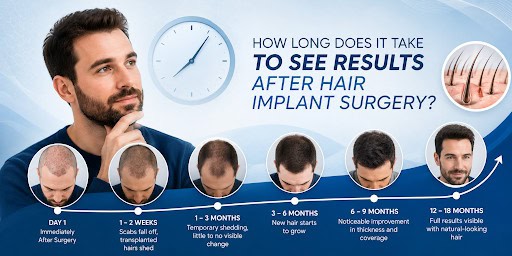
Hair restoration is rarely an instant change. After treatment, the scalp needs time to heal, transplanted follicles go through their natural growth cycle, and visible hair develops gradually. This can make the early weeks feel very different from what you may have expected.
Did You Know?According to the NHS, new hair will usually start to appear around four months after a hair transplant, while the full results should be visible after around 10 to 18 months.
This timeline is useful to remember when looking at your hair during the early stages. Seeing little change soon after treatment does not necessarily reflect the eventual result.
The Skin & Hair Clinic provides FUE, FUT and DHI hair transplant procedures in Liverpool. If you are considering hair implant surgery, knowing what happens during the months after treatment can help you understand the recovery period and set realistic expectations.
Key Takeaways
- Hair growth after transplantation happens gradually rather than immediately.
- Some transplanted hairs can shed a few weeks after treatment.
- New hair usually starts to appear around four months.
- Visible improvement can develop over the following months as the new hair becomes thicker.
- The NHS states that full results can take around 10 to 18 months to become visible.
What Happens During Hair Implant Surgery?
A hair transplant procedure involves moving healthy hair follicles from a donor area to parts of the scalp affected by thinning or hair loss. The exact technique depends on the type of treatment chosen and the hair loss pattern of the patient.
FUE is the removal of individual grafts from the donor area and placement of these in small openings created in the scalp. The NHS says FUE involves taking out individual grafts and putting them into small cuts on the scalp.
The number of grafts needed can also vary from patient to patient so the treatment plan and growth timeline will not be exactly the same for all patients.
Why Does Transplanted Hair Shed After Treatment?
Hair shedding after a transplant can be surprising, particularly when someone expects the transplanted hairs to keep growing straight away.
The NHS states that transplanted hair will often fall out after a few weeks and later begin to grow again.
This is why the early appearance of the scalp should not be used to judge the final outcome. The follicles remain in the scalp while the visible hair goes through its natural cycle.
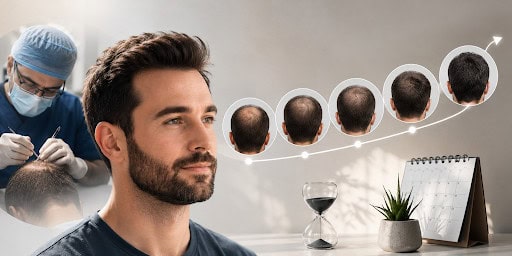
Hair Transplant Growth Timeline
Understanding what can happen month by month makes the waiting period easier to follow.
| Stage | What you may notice |
| First few days | Redness, swelling, tenderness or scabbing may occur |
| First 2 weeks | The grafts need careful handling while they settle |
| After a few weeks | Transplanted hairs may shed |
| Around 4 months | New hair usually starts to appear |
| 6 to 9 months | Growth can become more noticeable |
| 10 to 18 months | The full result should become visible |
The exact pace can vary between patients. NHS guidance confirms the general four-month starting point for new growth and the 10 to 18-month timeframe for the full result.
What Is Hair Implant Recovery Like?
The early hair implant recovery period is focused on protecting the newly transplanted grafts while the scalp heals.
The NHS advises that patients may need around one to two weeks away from work and should take particular care of transplanted hair during the first two weeks.
Your clinic may provide specific instructions covering washing, sleeping, exercise, medication and scalp care. These instructions should be followed carefully rather than relying on general advice from other patients.
When Does New Hair Become Noticeable?
New growth can be fine and difficult to see at first. Over time, the hairs can become longer and thicker, making the change easier to notice.
The timing differs between patients because hair grows according to an individual cycle. Donor hair quality, the extent of hair loss, number of grafts and healing can also affect how the result develops.
This is why comparing your progress with another patient’s timeline may not give you an accurate picture of your own treatment.
What Can Affect Your Final Hair Transplant Results?
Several factors can influence how the final result develops:
- The number of grafts transplanted
- Quality and availability of donor hair
- Extent and pattern of existing hair loss
- Natural hair-growth cycle
- Individual healing
- Following the clinic’s aftercare instructions
- Future thinning of non-transplanted hair
A reputable hair transplant clinic should discuss these factors during your consultation and explain what you can reasonably expect from treatment.
How Can You Support Your Hair Growth After Treatment?
Following your clinical team’s aftercare instructions is important during the early healing period.
- Avoid touching and scratching the transplanted area as much as possible.
- Follow the washing instructions recommended.
- Use any prescribed medication as instructed.
- Follow advice about activity and other physical activities.
- Scheduled follow-up appointments
- Contact your clinical team if you have concerns about your recovery.
The Skin & Hair Clinic provides aftercare guidance and scheduled reviews following its hair restoration procedures, including reviews at 3, 6, 9 and 12 months.
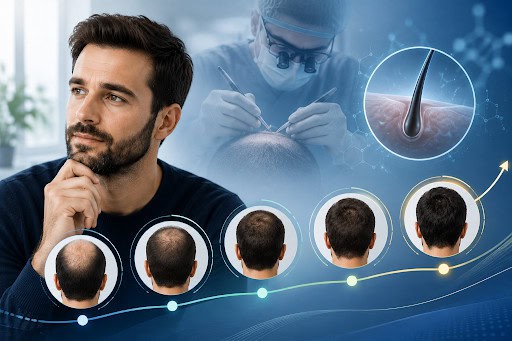
When Should You Judge the Final Result?
It can be tempting to judge your transplant after a few weeks or months, but this is far too early for many patients. Hair may shed before new growth appears, and early new hairs can be fine before gaining more length and density.
The NHS states that the full result should be seen after around 10 to 18 months.
Looking at progress over several months gives a much more useful picture than focusing on changes from one week to the next.
Ready to Understand Your Hair Restoration Timeline?
Hair growth after transplantation takes patience, with healing, shedding and new growth forming different stages of the process. Knowing what can happen during each stage can help you assess your progress without expecting instant changes.
If you are considering treatment in Liverpool, The Skin & Hair Clinic offers FUE, FUT and DHI hair restoration procedures. You can call 0151 280 3248 or visit 203-205 Rose Lane, Liverpool, L18 5EA to arrange a consultation and discuss your hair loss, treatment options and expected growth timeline.
FAQs
1. How long does it take to see results after hair implant surgery?
New hair usually starts to appear around four months after a transplant, while the NHS states that the full result can take around 10 to 18 months.
2. Does transplanted hair fall out after surgery?
Yes. The NHS explains that transplanted hair will often fall out after a few weeks before starting to grow again.
3. When does hair transplant growth become visible?
New growth usually starts appearing from around four months, although the timing can vary between patients.
4. How long does recovery take after a hair transplant?
Early healing takes place during the first couple of weeks, although the complete growth process takes much longer. The NHS says some people may need one to two weeks away from work.
5. When can I judge my final hair transplant results?
It is better to wait several months before assessing progress. The NHS advises that the full result should be visible around 10 to 18 months after treatment.