Reviewed by Dr. Jyotsna Kumari
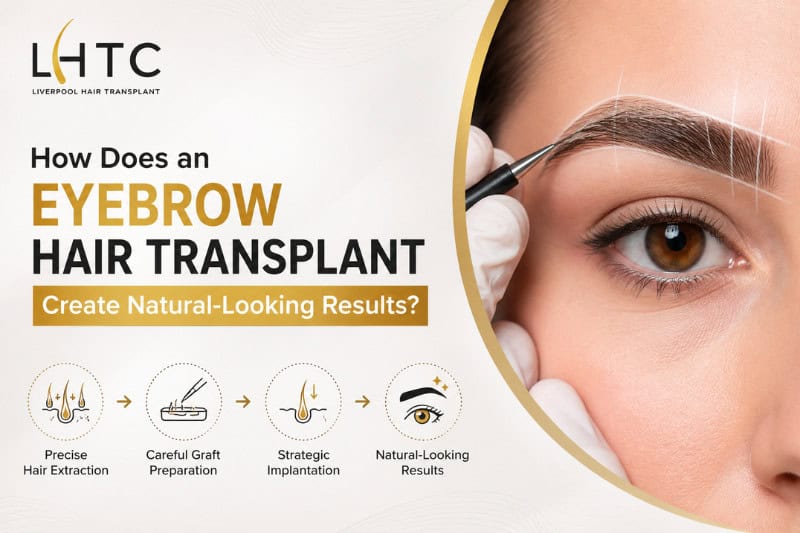
If you’re researching eyebrow hair transplant results, the question that matters most isn’t just whether the hair grows back. It’s whether it looks like it was always there. A well-planned procedure creates natural-looking results by recreating individual hair follicles at the correct angle, direction and density, rather than filling a bald patch with hair that simply sits on the skin.
Did you know? Separately, a peer-reviewed study published via the U.S. National Library of Medicine reported an average graft survival rate of 85% and a 95% patient satisfaction rate for density and natural appearance following standardised single-hair eyebrow reconstruction.
This guide breaks down exactly how surgeons achieve that finish, what shapes your outcome, and what you can realistically expect from a natural eyebrow transplant. If you’re exploring options in the North West, our eyebrow transplant in Liverpool service is built around the same single-hair grafting principles covered below.
Key Takeaways
- Natural results come from single-hair (single-follicle) grafts placed one at a time, not multi-hair grafts, which tend to look tufted or unnaturally dense.
- Direction and angle matter more than graft count. Eyebrow hairs grow at a shallow, fanned angle that differs from scalp hair, and replicating this is what sells the illusion.
- Clinical outcomes are well documented: published research and industry census data (linked below) back up realistic expectations for graft survival, patient satisfaction, and timelines.
- Results take time. New growth typically starts around 3 to 4 months after surgery, with final results visible between 10 and 18 months.
- Surgeon experience is the single biggest factor in a natural outcome, since eyebrow grafting is technically more demanding than scalp work despite involving far fewer grafts.
- In the UK, look for a clinic registered with the Care Quality Commission and a surgeon registered with the General Medical Council before booking any consultation.
What Makes Eyebrow Hair Transplant Results Look Natural?
Natural-looking eyebrows come down to three technical decisions your surgeon makes before a single graft is placed: how hair is grafted, which direction it’s angled, and how density is distributed across the brow. Get these three right, and the transplant becomes practically undetectable.
Single-Hair Follicular Grafting
Unlike scalp restoration, where follicular units of 2 to 4 hairs are often used, eyebrow work relies almost entirely on single-hair grafts. Placing one hair at a time is slower and more labour-intensive, but it avoids the tufted, “doll hair” appearance that multi-hair grafts create in such a small, delicate area.
Matching Hair Growth Direction and Angle
Natural eyebrow hairs don’t all point the same way. Hairs near the bridge of the nose point upward, hairs in the body of the brow angle outward and slightly upward, and hairs at the tail lie almost flat against the skin. A skilled surgeon maps this pattern individually for each patient before placing a single graft, rather than applying a generic template.
Building Density Gradually, Not All at Once
Real eyebrows are denser in the middle and taper at both ends. Recreating that gradient, rather than placing hair at uniform density across the whole brow, is what makes transplanted eyebrows read as natural rather than “drawn on.”
Why Eyebrows Lose Their Natural Shape and Density
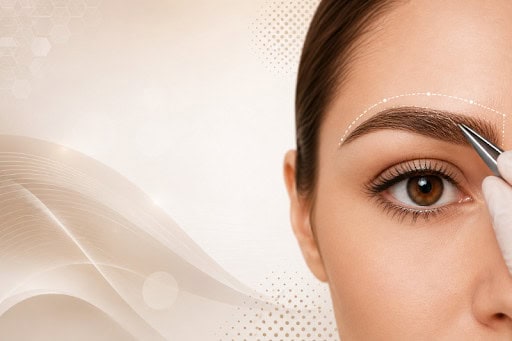
Over-plucking, alopecia, thyroid conditions, aging, chemotherapy, and scarring from burns or previous cosmetic tattooing are among the most common reasons people seek eyebrow restoration. Understanding the underlying cause matters because it affects candidacy and planning. Our detailed guide on eyebrow hair loss covers these causes in more depth, including which ones respond best to transplantation versus non-surgical treatment.
How the Eyebrow Hair Restoration Process Works
Eyebrow restoration follows the same follicular unit extraction (FUE) principles used in scalp work, adapted for a much smaller recipient area. Individual follicles are harvested, usually from the back or sides of the scalp, then implanted one at a time into tiny incisions that follow the natural angle of the brow. You can read a full technical breakdown on our FUE hair transplant in Liverpool page, since the extraction stage is essentially identical whether the destination is the scalp or the eyebrow.
In broad terms, the process involves:
- Consultation and brow mapping, where growth direction, density, and shape are planned around your facial structure.
- Donor hair extraction under local anaesthetic, usually taking a small number of follicles relative to a full scalp session.
- Precise, single-follicle implantation at the mapped angles, working from the inner brow outward.
- Aftercare guidance to protect the fragile new grafts during the first two weeks of healing.
Eyebrow Hair Transplant Results Timeline: What to Expect
Patience matters more than almost any other factor in how natural the final result looks, because transplanted hair follows its own growth cycle rather than appearing instantly. Our hair transplant results timeline page covers the general healing stages in detail; for eyebrows specifically, most patients can expect the following broad pattern:
- Weeks 1 to 3: Transplanted grafts settle in; some scabbing is normal and should not be disturbed.
- Weeks 3 to 6: A large proportion of the transplanted hairs shed. This is expected and is not hair loss failure; it’s part of the natural growth cycle.
- Around 4 months: New hair growth typically becomes visible.
- 10 to 18 months: Full, mature results are visible, including natural texture and direction.
What Influences How Natural Your Results Will Look
Several variables determine whether the end result blends in or stands out, including:
- Surgeon skill and case volume: eyebrow work is unforgiving of small errors in angle or placement, so specific experience with facial hair transplantation matters more than general scalp experience alone.
- Donor hair characteristics: finer, straighter donor hairs (often taken from behind the ear or the nape) tend to match natural eyebrow texture better than coarser scalp hair.
- Graft survival: as referenced above, published clinical data shows survival rates in eyebrow reconstruction averaging around 85%, which is why realistic planning sometimes allows for a top-up session.
- Aftercare compliance: avoiding friction, sun exposure, and premature makeup use on the treated area supports graft survival during the fragile early weeks.
Seeing Real Eyebrow Transplant Results
Photographs are one of the most reliable ways to judge a clinic’s standard of natural-looking work before booking a consultation. You can view genuine before-and-after cases, including eyebrow restoration, on our patient results.
Ready to See What Natural Eyebrow Restoration Looks Like on You?
Every brow shape is different, and the best way to know what’s realistic for yours is a one-to-one consultation. Book a consultation with The Skin and Hair Clinic today and get a personalised plan for natural, long-lasting eyebrow hair restoration.
Frequently Asked Questions
Q: Does an eyebrow transplant look fake?
Not when it’s planned and executed correctly. A fake-looking result is almost always caused by using multi-hair grafts, ignoring natural growth direction, or over-densifying the brow. Single-hair grafting placed at the correct angle is what makes the outcome blend in.
Q: How many grafts are needed for a full eyebrow?
Most eyebrow restorations use somewhere in the range of 100 to 250 grafts per brow, depending on existing density and the desired shape. This is a much smaller session than a typical scalp transplant.
Q: Is an eyebrow hair transplant permanent?
Transplanted follicles are generally taken from areas resistant to the hormonal triggers that cause hair loss, so results are considered long-lasting. As with any hair transplant, some natural thinning can still occur over time due to aging.
Q: Will transplanted eyebrow hair need trimming?
Often, yes. Because the donor hair usually comes from the scalp, it can grow faster and slightly longer than natural eyebrow hair, so light, regular trimming is common in the months after growth begins.
Q: How much does an eyebrow hair transplant cost in the UK?
Costs vary by clinic and graft count, but UK hair transplant procedures generally fall between £1,000 and £30,000 according to NHS guidance, with eyebrow sessions typically at the lower end of that range due to the smaller graft numbers involved.
Q: Can both men and women get natural-looking results?
Yes. Techniques are adapted to suit facial structure and desired brow shape for both men and women, and eyebrow restoration is currently the leading non-scalp procedure among female hair restoration patients worldwide.