
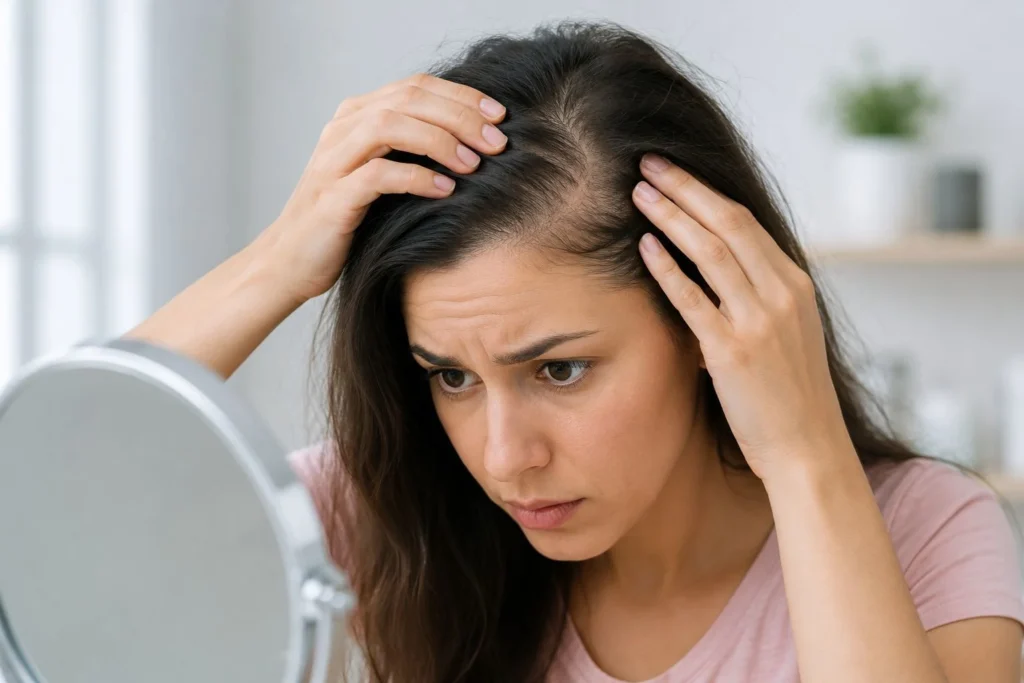
Hair loss in women is common and in most cases, it can be treated. If your ponytail has less hair or you see a broader part in your hair, keep reading. You’re not alone, and there are real solutions.
Did you know? According to the National Council on Aging, about 8 million women in the UK suffer from hair loss. So, it is no surprise that many women suffer in silence because they don’t know their reason. Discovering hair loss in women causes enables you to seek the right treatment.
At The Skin and Hair Clinic, specialists see women every day who were told their hair loss was “just stress.” The reality is far more nuanced.
Key Takeaways
- Hair loss in women can be due to various reasons- genetics, hormonal imbalance, lack of iron, and problems with the thyroid glands.
- Female pattern hair loss, or FPHL, usually follows the Ludwig scale and is a slow process. Detecting it early would make the treatment much more effective.
- Hair shedding after giving birth and during menopause is quite common, but with the right and timely consultation, it can be managed quite well.
- Iron deficiency is one of the common causes that usually goes unnoticed. A simple blood examination can easily detect it and help to plan treatment.
- Many causes of female hair loss are treatable. So, getting help from an expert even at the initial stage is the single most important action you can take.
Why Women Lose Hair: A Closer Look at the Common Causes
Many people ask why women lose hair. Hair loss in women rarely has a single cause. It is usually the result of hormonal shifts, nutritional gaps, or genetic factors. Let us break down each one clearly.
Female Pattern Hair Loss (FPHL): The Most Common Culprit
Female pattern hair loss (FPHL) is the most common cause of hair thinning in women. It is different from male baldness; it does not usually cause a receding hairline. Gradually, the parting becomes wider over time. The crown tends to thin, while the frontal hairline remains fairly unchanged.
The severity of FPHL is usually determined using the Ludwig Scale. It runs from:
- Stage I: Mild thinning at the crown area.
- Stage II: The parting is wider, accompanied by a visible loss of volume.
- Stage III: Significant thinning across the top of the scalp.
FPHL results from a hypersensitivity to dihydrotestosterone (DHT) and is inherited. The best results of treatment come with early intervention. For women with significant thinning, a female hair transplant may be explored as a longer-term solution.
PCOS and Hormonal Hair Loss in Women
PCOS hair loss is one of the most overlooked symptoms. When a woman has polycystic ovary syndrome (PCOS), her level of androgens will be elevated. These excess androgens shrink hair follicles over time.
Generally, women with PCOS often notice:
- Thinning at the temples or crown
- Increased hair shedding during brushing
- Oily scalp with slower hair regrowth.
Working with a GP or an endocrinologist to control PCOS can be a great help in stopping and even reversing this kind of hair loss. Do not ignore it
Postpartum Hair Loss: When New Mothers Shed More Than Expected
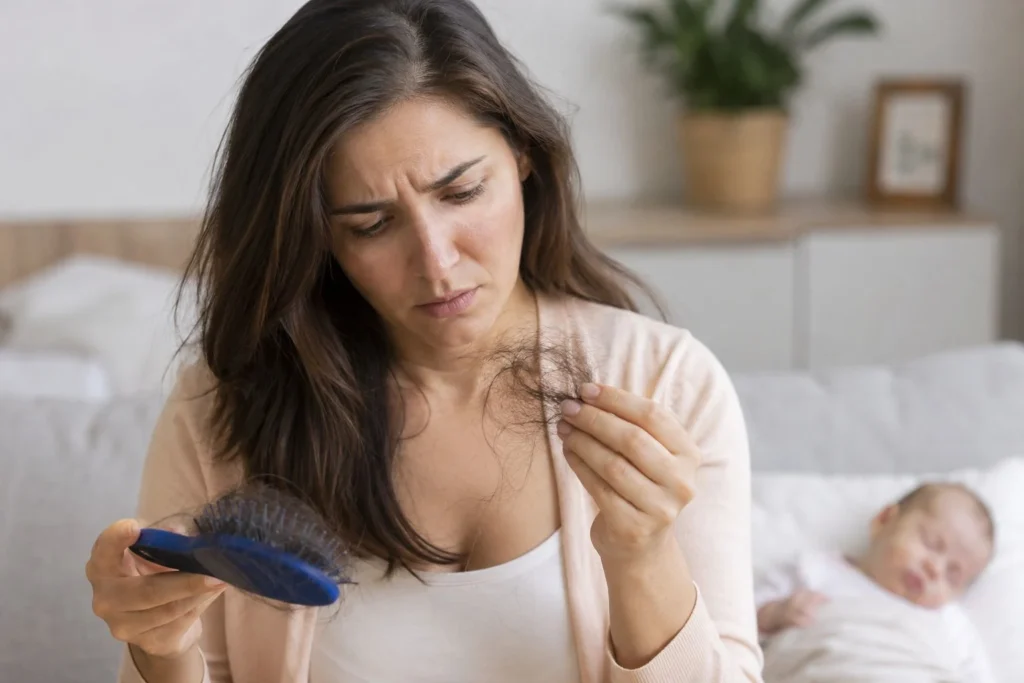
The postpartum hair loss is one of the most common things women experience after giving birth, and usually, it’s nothing to worry about. When you are pregnant, the amount of estrogen in your body rises, and this makes your hair stay in the growing stage for a longer time. After the baby is born, the level of estrogen falls very quickly.
This causes a quick shedding phase that is normally noticed at 6 to 12 weeks after birth. It can be alarming, but for most women, hair growth goes back to normal after 6 to 12 months.
But if you are losing hair even after a year, you should consult a doctor.
Menopause and Hair Thinning: What Falling Estrogen Does
Menopause hair thinning is another common concern. During perimenopause and menopause, as the levels of estrogen and progesterone decrease, androgens take over as the main hormones.
They can cause:
- An overall reduction in hair density
- Slower hair growth cycles
- Drier, more brittle strands
This is a change that many women notice in their late 40s and 50s. Hormone replacement therapy (HRT) can be beneficial for some women. A trichologist will inform you about the most suitable method for your condition.
Thyroid Disorders: The Hidden Hair Thief
Thyroid imbalance can cause excessive shedding of hair from all over the scalp, and new hair follicle development. Two extremes are underactive thyroid or hypothyroidism and overactive thyroid or hyperthyroidism.
Key signs to watch for:
- Hair that feels dry and brittle
- Shedding hair occurs throughout the scalp, not only at the crown of the hair
- Fatigue, weight changes, or mood shifts alongside hair loss.
A thyroid problem can be easily diagnosed with a blood test. Most of the time, after providing the treatment, hair loss caused by thyroid disorders returns to normal.
Iron Deficiency Hair Loss in Women: A Surprisingly Common Trigger
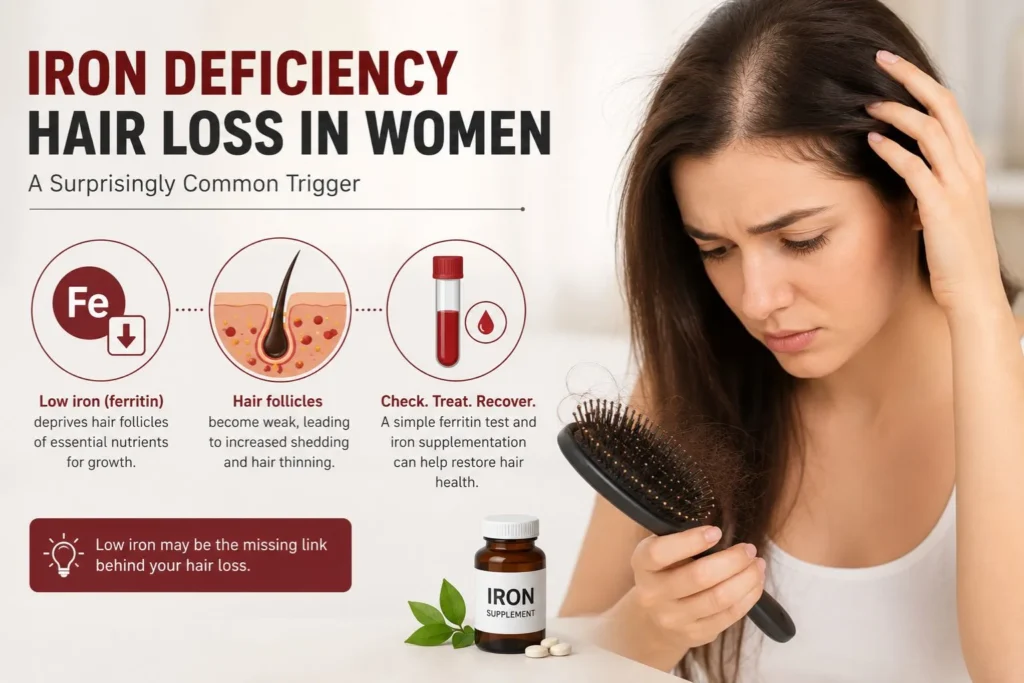
One of the most underdiagnosed causes is Iron deficiency hair loss in women. Ferritin is a protein that acts as a storage site for iron. When ferritin levels drop to a certain point, the hair follicles become the most deprived of the nutrients necessary for their growth.
Several factors make women more susceptible to this condition, including their monthly periods. The blood loss from heavy periods can cause the gradual depletion of the body’s iron reserves.
Signs of iron deficiency include:
- Unusual fatigue
- Pale skin
- Brittle nails alongside hair shedding
A blood test for serum ferritin can diagnose this quickly. Iron supplementation often produces visible results within several months and can work well alongside PRP hair treatment for faster follicle recovery.
Causes of Hair Loss in Women at a Glance
| Cause | Key Trigger | Reversible? |
| Female Pattern Hair Loss | Genetics, DHT sensitivity | Manageable with treatment |
| PCOS | Elevated androgens | Often yes, with treatment |
| Postpartum | Hormonal drop after birth | Usually, yes, within 12 months |
| Menopause | Declining oestrogen | Partially, with intervention |
| Thyroid Disorder | Hormonal imbalance | Yes, once the thyroid is treated |
| Iron Deficiency | Low ferritin levels | Yes, with supplementation |
When Should You See a Specialist?
Don’t wait until the loss feels severe. Book an appointment if you notice
- Shedding more than 100 hairs daily for longer than 3 months
- Have a noticeably wider hair part or scalp showing
- Are losing hair plus other symptoms like tiredness, a change in weight, or irregular periods
- Patchy bald spots, which may indicate alopecia areata
- Have hair loss that started suddenly with no obvious reason
If you catch it early, you’ll almost certainly get better results. Most hair loss in women responds well to the right treatment plan.
Restore Your Confidence With Expert Hair Care!
It can be really heartbreaking to see your hair fall, but remember, it doesn’t necessarily have to be permanent. Whether you are dealing with early FPHL or thinning linked to a hormonal condition, expert help is available.
The Skin and Hair Clinic offers specialists who are well-equipped to identify and assess female hair thinning at any stage. Don’t postpone getting solutions even for a single month. Book your free consultation today and take the first step towards a fuller, healthier head of hair.
FAQs
1. What is the most frequent reason for hair loss in women?
Female pattern hair loss (FPHL) is the cause of hair loss in women. It is related to heredity and the way hair follicles react to DHT. The result is less hair on the crown and a wider parting.
2. Can stress cause hair loss in women?
Yes. Both physical and psychological stress of a great magnitude are factors that often means telogen effluvium. From experiencing a stressful event, hair shedding can be observed 2 to 3 months later, almost all over the scalp.
3. How do I know if my hair loss is caused by iron deficiency?
Blood testing is the simplest way for your doctor to determine your serum ferritin levels. Typical symptoms that indicate iron deficiency are tiredness, paleness of the skin, brittle nails, and increased hair shedding.
4. Is hair loss during menopause permanent?
Not always. Hair loss caused by menopause may be managed or, in some cases, reversed through appropriate treatment. These days, topical minoxidil, HRT, and specialist trichology care are the main options.
5. At what point does hair loss after childbirth become a concern?
Normal postnatal shedding can last for up to 12 months after the birth of the baby. If the hair loss is persistent beyond that or is causing other symptoms, see your doctor or hair loss specialist.