
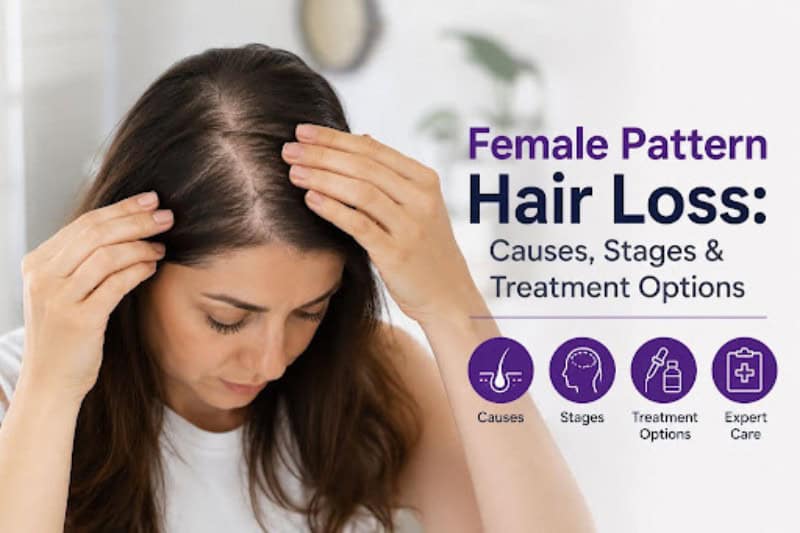
Female pattern hair loss (FPHL) is a genetic condition. It shows up as gradual thinning across the crown and the parting. It is one of the most common concerns, affecting women of different ages, not just those who are older.
Did you know? According to the NIH, twelve per cent of women first develop clinically detectable FPHL by age 29 years, 25% by age 49 years, and 41% by age 69 years.
So age clearly plays a part. Here’s what tends to surprise people: this isn’t really the same thing as male baldness. Women almost never end up with a fully bald patch. What happens instead is that individual strands shrink a little more with every growth cycle, coming back thinner and shorter each time round. The hairline usually stays put. It’s the crown and the centre parting that take the visible hit.
A lot of women brush this off as “just shedding,” which is understandable, but that hesitation impacts time you don’t really want to lose. Understanding what is female pattern hair loss and starting the right treatment can make a significant difference in slowing its progression and preserving hair.
Key Takeaways
- Female pattern hair loss causes gradual thinning, not full baldness, mainly around the crown and parting.
- Genetics, hormones, ageing, and health factors all play a part in what causes female pattern hair loss.
- Spotting early-stage female pattern hair loss early gives treatment its best shot at working.
- Options for how to treat female pattern baldness range from topical minoxidil right through to PRP and transplants.
- The best treatment for female pattern hair loss usually means combining two approaches for stronger results.
What Causes Female Pattern Hair Loss
Trying to work out what causes female pattern hair loss? It’s rarely just one thing. Usually it’s a combination of the following.
Genetic Sensitivity
Some follicles are simply built to shrink over time, and yes, this runs in families. If your mum or your grandmother thinned out early, there’s a decent chance you might follow a similar path.
Hormonal Shifts
Menopause, pregnancy, PCOS, all of these throw hormone levels around, and that can speed up how quickly follicles shrink. Oddly enough, plenty of women with totally normal hormone levels still develop the condition anyway, so hormones alone don’t explain everything.
Age and Follicle Ageing
Follicles wear down as we age; it’s really that simple. Growth phases shorten. Resting phases drag on longer than they used to. Put those two together, and the result is visibly thinner hair.
Underlying Health Factors
A 2024 case-control study actually tied female pattern hair loss to higher waist circumference and BMI in premenopausal women, and the gap between cases and controls was statistically significant. Thyroid trouble, low iron, chronic stress- these can all push things along faster too.
Styling and Lifestyle Habits
Tight ponytails, heat tools every day, and harsh chemical treatments- none of these actually cause the condition on their own. But they do pile extra pressure onto follicles that are already under strain, which speeds up the process.
Spotting Early-Stage Female Pattern Hair Loss
Catching early-stage female pattern hair loss really does change how things go. Keep an eye out for:
- A parting that looks wider than it used to
- More scalp showing through under bright light
- Noticeably more hair left on your pillow or caught in the shower drain
- A ponytail that just feels thinner in your hand
- Regrowth that seems to take longer after a trim
Pro tip: Take a photo of your parting every few months. Day-to-day changes are nearly impossible to spot on your own. Photos, on the other hand, don’t lie.
The Stages of Female Pattern Baldness
Doctors usually track progression with the Ludwig or Sinclair scale. Here’s a simplified breakdown of what that looks like.
| Stage | What You’ll Notice | Best Time to Act |
| Stage 1 | Slight widening at the parting | Ideal window for prevention |
| Stage 2 | Visible thinning at the crown | Treatment still highly effective |
| Stage 3 | Noticeable scalp show-through | Combination treatment is often needed |
| Stage 4+ | Significant density loss | Surgical options may be considered |
Not everyone moves through these stages at the same pace. Some women stay at Stage 1 for years without much shifting. Others move faster, usually down to hormones or genetics doing their own thing.
How to Treat Female Pattern Baldness
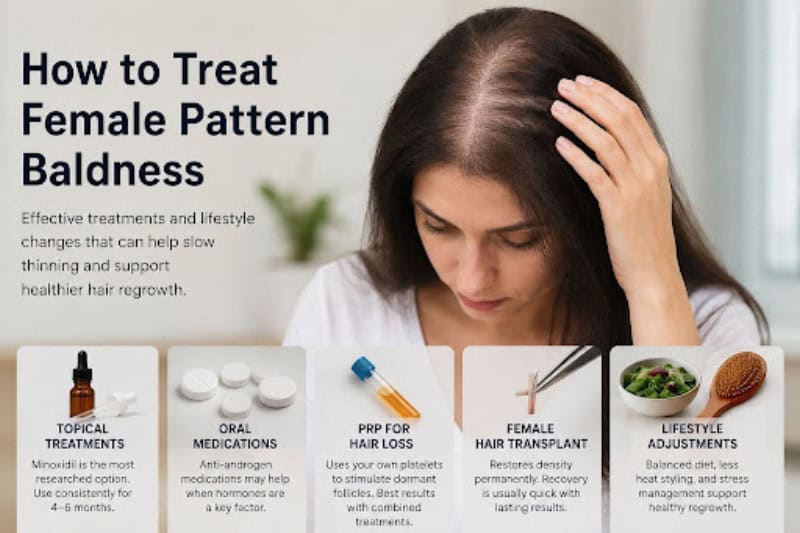
So, how to treat female pattern baldness properly? There are a few genuinely proven routes, and most women see better results when they combine more than one.
Topical Treatments
Minoxidil is still the most researched option for women dealing with this. You apply it straight to the scalp, and it works by stretching out the hair growth phase. Give it four to six months of consistent use before you expect to see a real difference.
Oral Medications
Some clinicians will prescribe anti-androgen medication when there’s a clear hormonal driver behind the thinning. It’s not the right fit for everyone, which is exactly why a proper consultation matters before jumping in.
PRP for Hair Loss in Women
PRP for Hair Loss in Women uses your own blood platelets to wake up follicles that have gone dormant. It’s non-surgical, and quite a few women pair it with a topical treatment for a stronger combined result.
Female Hair Transplant
For thinning that’s gone further, a transplant can restore density on a permanent basis. Recovery tends to be pretty manageable too, with most women back to their usual routine within days. It’s worth understanding female hair transplant recovery beforehand so you know what to expect.
Lifestyle Adjustments
Getting enough iron, easing off heat styling, and keeping stress in check all of this supports healthier regrowth. Think of these as backup support, not a replacement for actual treatment.
Best Treatment for Female Pattern Hair Loss: Which One Wins
Honestly, there isn’t one single best treatment for female pattern hair loss that works for every case. It really comes down to your stage, the reason behind it, and what you’re hoping to get out of treatment.
- Early stage? Topical minoxidil paired with some lifestyle changes usually does the trick.
- Hormonal cause? Anti-androgens alongside a topical treatment tend to work best here.
- Advanced thinning? PRP or a transplant might offer the strongest, longest-lasting outcome.
Clinicians who spend their days treating hair loss patients often notice something interesting: women tend to see better results when they layer two treatments together. Tackling the problem from a couple of angles at once just seems to work better in practice.
Common Mistakes Women Make
- Waiting too long to seek professional help, allowing hair thinning to progress before starting the right treatment.
- Trying supplements or home remedies without a proper diagnosis, which may not address the actual cause of hair loss.
- Assuming stress is the only reason for hair loss, while overlooking other factors like genetics, hormonal changes, or nutritional deficiencies.
- Stopping treatment too early, even though most hair restoration treatments need several months to deliver noticeable results.
- Skipping a detailed scalp and hair assessment makes it harder to identify the underlying cause and choose the most effective treatment.
Start Your Hair Restoration Journey Today!
Now you understand what is female pattern hair loss. Thinning hair doesn’t have to be the thing that defines you. You can get the lasting results that are genuinely within reach with the right plan and the right support behind you. The Skin and Hair Clinic offers personalised assessments to pin down your exact stage and cause, then builds a plan around that. Book a consultation and take that first step towards hair restoration today. This information has been medically reviewed by Dr Jyotsana Kumari to ensure it is clear and clinically informed.
FAQs
Q: What is female pattern hair loss exactly?
It’s a genetic condition causing gradual thinning at the crown and parting, without leading to full baldness.
Q: What is female pattern baldness caused by?
A mix of genetics, hormonal shifts, ageing follicles, and sometimes underlying health issues.
Q:Can early-stage female pattern hair loss be reversed?
Often, yes. Catching it early gives topical treatments and lifestyle changes the best shot at slowing or reversing it.
Q: What is the best treatment for female pattern hair loss?
It really depends on your stage and cause, ranging from topical minoxidil to PRP and hair transplant surgery.
Q: Is female pattern hair loss the same as male baldness?
Not really. Women rarely go fully bald. Thinning spreads out diffusely across the crown while the hairline usually stays where it is.