
Reviewed by Dr. Jyotsna Kumari

A patchy or uneven beard can be frustrating, particularly when some areas have very little growth. A beard transplant can help add hair to areas where natural growth is limited. Before considering treatment, it is worth understanding what the procedure involves, who may be suitable and what recovery can be like.
Did you know? A hair transplant is usually carried out under local anaesthetic, and the NHS advises patients to check that the clinic is registered with the Care Quality Commission (CQC) and that the doctor is registered with the General Medical Council (GMC).
If you are asking what a beard hair transplant is, it is a procedure that moves hair follicles from a suitable donor area, often the scalp, into areas of the beard where growth is sparse. The Skin & Hair Clinic offers beard transplantation as part of its hair restoration services, with treatment planned around each patient’s existing facial hair and donor supply.
Key Takeaways
- During a beard transplant procedure, appropriate hair follicles are transplanted to areas where there is not enough hair on the face.
- Medical assessment can assist in determining whether there is sufficient donor hair for the procedure.
- Proper preparation before treatment and proper aftercare can aid the healing process.
- Transplanted hair can shed in the initial stage before regrowth takes place.
- The outcome of the procedure will depend on several variables.
What Is a Beard Hair Transplant and How Does It Work?
Beard hair transplant is a process that involves taking hair follicles from the donor and inserting them into other parts of the body where there is no facial hair growth. In cases where it is possible, scalp hair may be used as donor hair for such an operation.
It begins with examining the current condition of the beard and donor hair. This will help in identifying the places where the extra hair follicles need to be implanted and in which direction they should be grown.
It can involve:
- Preparation of donor and recipient sites
- Hair follicle harvesting
- Preparing hair follicle grafts
- Implantation of hair follicles into selected beard areas
- Assessing the treated areas.
The number of follicles needed varies from one individual to another. A beard hair transplant should be planned around the available donor hair rather than using the same number of grafts for every patient.
Who Is a Good Candidate for a Beard Transplant?
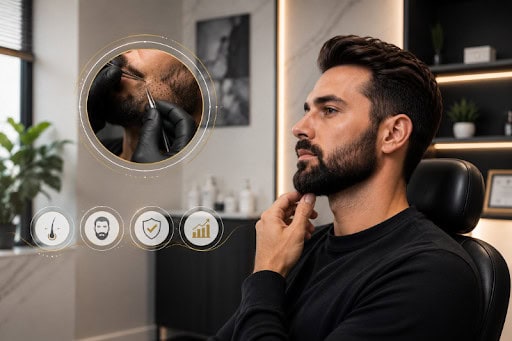
Suitability depends on several factors. Men with patchy growth, naturally sparse areas or little hair in specific parts of the beard may be considered for treatment.
A surgeon will usually assess your existing facial hair, donor supply, skin condition and general health before recommending treatment. Previous scarring or injury in the beard area may also be discussed.
Having realistic expectations is important. The amount of coverage possible depends partly on how much suitable donor hair is available.
What Should You Know Before Booking a Beard Transplant?
Choosing a qualified medical professional is an important step in the treatment planning process. Patients should be allowed to discuss the procedure, the risks, the recovery and the expected outcomes before they make a decision.
When researching a hair transplantation clinic, you should consider:
- The surgeon’s experience and qualifications.
- Their experience with beard and facial hair transplantation.
- The technique recommended for your needs.
- How many grafts may be required.
- Where the donor hair will be taken from.
- What aftercare and follow-up will be provided.
A consultation should give you enough information to decide whether the procedure is suitable for you.
How Should You Prepare for a Beard Transplant?
Good beard transplant preparation starts with understanding the instructions provided by your medical team. Your medical history and current medicines should be discussed during your consultation.
You may also need to plan some time away from work or social activities while the treated skin settles. Follow any instructions about washing, shaving, medication, smoking, alcohol or exercise given by your clinical team, as these can vary between patients.
What Happens on the Day of a Beard Transplant?
The treatment area is prepared before the procedure starts. The areas are numbed with local anesthetic. The appropriate follicles are then removed from the donor area and prepared for implantation.
The surgeon creates recipient sites in areas where more growth is required. The follicles are then carefully inserted as close as possible in the same direction as the surrounding facial hair.
The exact time of treatment depends upon the number of grafts and the areas treated.
What Is Beard Transplant Recovery Like?
During beard transplant recovery, some redness, swelling, sensitivity or small crusts may appear around the treated areas. These effects can settle as the skin heals.
The transplanted hairs may shed during the weeks after treatment. New growth takes longer and develops gradually over the following months.
Protecting the grafts during the early healing period is important. Your medical team should explain how to wash the area and when you can return to normal activities.
What Can You Expect From the Final Results?
The final appearance develops gradually rather than immediately after treatment. Hair growth can vary between different areas, and transplanted hairs may take several months to become established.
The quality of donor hair, number of grafts, existing beard pattern and direction of follicle placement can all influence the final appearance. Individual healing and hair growth also differ between patients.
What Questions Should You Ask Before Treatment?
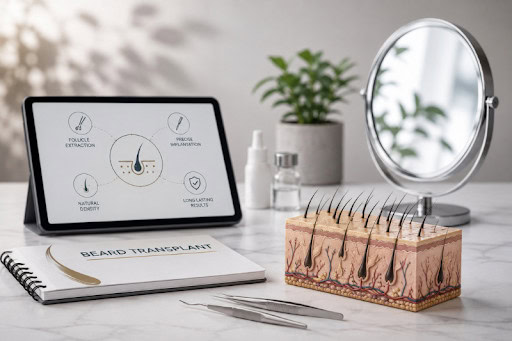
A consultation is a useful opportunity to understand what treatment could involve before you make a decision.
Consider asking:
- Am I suitable for a beard transplant?
- Where will the donor hair come from?
- How many grafts might I need?
- Which technique is recommended for me?
- What risks and side effects should I know about?
- How long might recovery take?
- What aftercare will I need?
- What results can I realistically expect?
Thinking About a Beard Transplant? Start With a Consultation
It is helpful to understand what a beard hair transplant is, but also to understand its suitability, preparation, recovery and expected results.
If you are considering treatment, The Skin & Hair Clinic will assess your individual needs and talk through whether beard transplantation may be right for you. A consultation is a great opportunity to ask questions, understand the procedure and decide what feels right for you.
FAQs
Q: What is a beard hair transplant?
Hair transplantation is the process of transplanting follicular units of hair from a donor site to the areas where there is inadequate hair growth in the beard region.
Q: Where does the hair for a beard transplant come from?
Suitable follicles are often taken from the back or sides of the scalp. The donor area is assessed before treatment to determine whether the hair is suitable.
Q: How long does beard transplant recovery take?
The early healing period can involve redness, swelling and crusting. New hair growth takes longer and develops gradually over the following months.
Q: Will a beard transplant look natural?
Natural-looking growth depends on factors such as follicle placement, direction, donor hair and the existing beard pattern. Careful planning is important for the final appearance.
Q: What should I do before getting a beard transplant?
Start with a medical consultation. Discuss your health, medicines, donor hair, treatment plan, recovery, aftercare and expected results with your surgeon before proceeding.