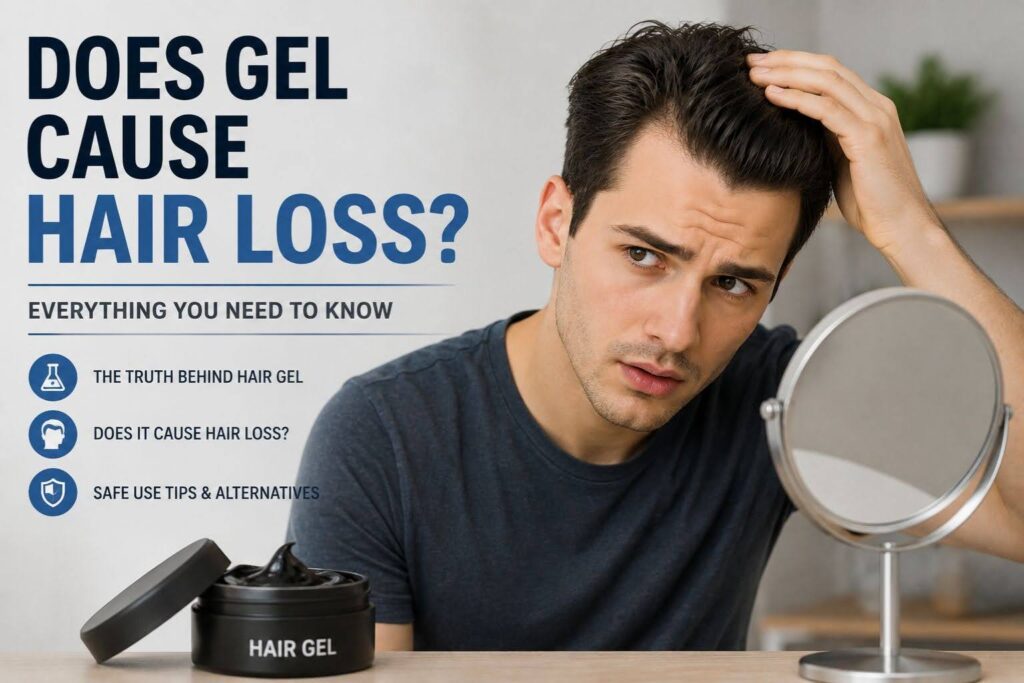
No, hair gel doesn’t directly cause hair loss. Genetics and hormones are behind most thinning. That said, using gel the wrong way can still take a toll on your scalp and strands over time.
Thousands of people search “does gel cause hair loss“ every month because they notice extra strands in the shower or on their hairbrush and wonder if their daily styling routine is damaging their hair. While the timing can make hair gel seem like the culprit, the real cause is often something else. Let’s separate the facts from the myths and look at what hair gel actually does to your hair and scalp.
Key Takeaways
- Hair gel doesn’t directly cause baldness; genetics and DHT are the real culprits.
- Alcohol-heavy gels can dry out hair, causing breakage that looks like thinning.
- Leftover gel buildup can irritate follicles and quietly worsen scalp health.
- Unexplained shedding often points to a vitamin deficiency, not your styling products.
- FUE hair transplants remain a proven fix for genuine, progressive hair loss.
Can Gel Cause Baldness? Here’s the Honest Answer
Many people ask, can gel cause baldness? On its own, no. Baldness in both men and women usually comes down to androgenetic alopecia, a condition tied to genetics and a hormone called DHT.
DHT gradually shrinks hair follicles. Over time, this shows up as a receding hairline or thinning at the crown. Gel, meanwhile, just sits on the hair shaft. It never gets deep enough to touch the follicle where this whole process plays out.
So if you’re noticing a wider parting lately, chances are your gel isn’t the villain here. That said, it’s not entirely off the hook either.
Does Hair Gel Damage Hair? What’s Really Going On
Many people ask, does hair gel damage hair? It can, under the wrong conditions. A lot of gels are loaded with alcohol, which dries out your strands. Dry hair gets brittle. Brittle hair snaps.
That snapping can look a lot like hair loss from the outside. In reality, it’s breakage along the shaft, not loss from the root. It’s a small distinction, but it changes how you should treat it.
Ingredients Worth Watching Out For
- Short-chain alcohols (think ethanol, isopropyl alcohol) strip away natural oils
- Propylene glycol can irritate scalps that are already sensitive
- Strong-hold polymers build up fast if you’re not rinsing properly
- Fragrance additives sometimes trigger contact dermatitis in certain users
Does Hair Gel Cause Balding? A Reality Check
Many people ask, does hair gel cause balding? Most dermatologists say normal use won’t do it. But leftover products can mix with sebum and dead skin and clog your follicles. Left unchecked, that buildup can turn into folliculitis, a scalp infection that genuinely can damage follicles.
Gel Habits: What Helps, What Hurts
| Habit | Effect on Hair |
| Washing gel out nightly | Keeps the scalp clean and healthy |
| Using a small amount | Cuts down on buildup and dryness |
| Leaving gel in overnight | Raises the risk of clogged follicles |
| Applying gel to a wet scalp daily | Can dry out skin and cause flaking |
| Choosing alcohol-free formulas | Helps protect natural moisture levels |
When Hair Loss Points to Something Deeper
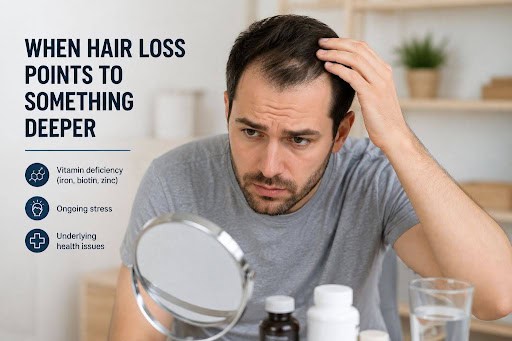
Sometimes thinning hair has nothing to do with what’s in your bathroom cabinet. It might come down to a vitamin deficiency, ongoing stress, or a health issue you haven’t spotted yet. Low iron, biotin, or zinc levels often show up first as weaker, thinner strands. It’s worth reading up on vitamin deficiency and hair loss to see if it fits what you’re experiencing.
Curious what’s actually driving your hair fall? A proper scalp check beats guesswork, every time.
How to Style Without Wrecking Your Scalp
A few small changes go a long way. Here’s what actually helps:
- Stick to a pea-sized amount of gel, not a fistful
- Go for alcohol-free, water-based formulas where you can
- Wash your scalp properly every evening
- Steer clear of tight styles that tug on your hairline
- Get a scalp check if the shedding feels off
Consistency beats perfection here. Small habits, kept up over months, are what actually move the needle.
Solutions for Lasting Hair Regrowth
If genetics is actually behind your thinning, no amount of switching up your gel will fix it. Plenty of people manage to reverse hair loss without surgery through options like finasteride, GFC therapy, or exosome treatments. For more advanced cases, an FUE hair transplant is still one of the most reliable long-term fixes out there.
An FUE hair transplant works by taking healthy follicles from thicker areas and moving them to the thinning spots. Recovery is fairly quick, and the results tend to look natural. It’s worth a conversation with a specialist if home remedies haven’t moved the needle.This information has been medically reviewed by Dr Jyotsana Kumari to ensure it is clear and clinically informed
Take the First Step Towards Healthier Hair!
Don’t let guesswork run your hair care routine. If shedding has you worried, a proper professional assessment clears things up fast. The team at The Skin and Hair Clinic offers expert consultations to pin down the real cause, whether that’s genetics, your diet, or scalp health. Book a free consultation by visiting our website and stop guessing about your hair.
FAQs
Q: Will using a styling gel everyday lead to hair loss?
No. Regular use of a hair gel would not cause your scalp to completely lose its hair, although it might have the effect of making your scalp very dry by constantly using it. It is best to remove the gel from your hair at night if you have to use it every day and choose only a product that does not have alcohol.
Q: Can gel cause baldness in men specifically?
Definitely not. Baldness that male pattern baldness (MPB) follows from genetic factors and sensitivity to the hair-shrinking hormone known as DHT. Hair gel is merely a styling product that coats the outside of the hair and has absolutely no effect on the tiny hair follicles that are responsible for hair growth.
Q: Does hair gel damage hair over time?
It can, Mainly when heavy alcohols are included. Too much of this can have a dehydrating effect, causing breakage. Select nourishing, alcohol-free gels and use sparingly.
Q: Does hair gel cause balding at the crown?
Not really. Crown thinning is common with androgenetic alopecia and if it is causing concern, a scalp check can be carried out to confirm whether the gel or the genes are at fault.
Q: Should I stop using gel if I’m losing hair?
Not necessarily. Many other factors should be excluded, like diet or genetics, and the switching to a milder formula combined with a good rinse will usually get rid of a gel problem.