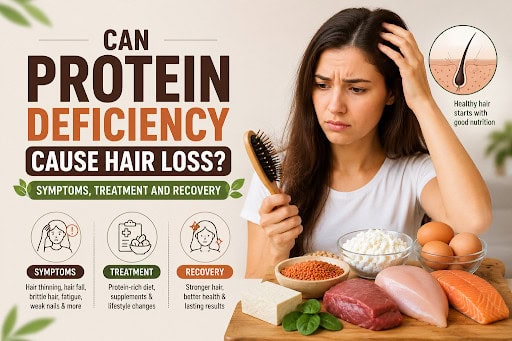
Protein deficiency is one of the most overlooked causes of hair thinning, and it’s more common than most people realize. Your hair is roughly 95% keratin, a protein your body has to build fresh every single day. So when protein intake falls short, your body simply doesn’t have the raw material to keep up production, and protein deficiency for hair loss is often one of the first ways that shortfall shows up.
So, can protein deficiency cause hair loss? The answer is yes. At The Skin and Hair Clinic, we see this pattern more often than you’d expect, especially in people on restrictive diets or those recovering from illness. The good news: this type of hair loss is usually temporary, and in most cases, it’s fully reversible once your diet catches up.
Can Protein Deficiency Actually Cause Hair Loss?
Yes. When your body doesn’t get enough dietary protein, it starts rationing the amino acids it does have, and hair follicles are near the bottom of the priority list. Vital organs, your heart, liver, and muscles, get first access to available protein. Hair, which your body treats as expendable, gets shut out.
The result isn’t sudden baldness. It’s diffuse, all-over thinning that shows up gradually, usually a couple of months after your protein intake drops. This is different from genetic hair loss, which tends to follow a pattern like a receding hairline or a thinning crown. Protein-deficiency shedding spreads evenly across the whole scalp.
Why Your Hair Needs Protein in the First Place
Every strand of hair grows out of a follicle that’s constantly manufacturing keratin from amino acids circulating in your bloodstream. Two amino acids in particular, cysteine and methionine, are critical for building the disulfide bonds that give hair its strength and structure. Without a steady supply, your follicles simply can’t produce strong keratin fibers.
This isn’t a niche concern. Hair, along with skin and nails, is often the first place visible signs of poor protein status show up, precisely because your body deprioritizes it whenever protein is scarce.
How Protein Deficiency Triggers Hair Loss
Hair doesn’t grow continuously, it cycles through distinct phases:
- Anagen (growth phase): Hair actively grows for 2–7 years.
- Catagen (transition phase): A short two- to three-week phase where growth stops.
- Telogen (resting phase): Hair rests for about three months before shedding to make room for new growth.
Normally, about 85–90% of your hair sits in the anagen phase at any given time. When amino acids are in short supply, your body pushes follicles out of anagen and into telogen prematurely. This is called telogen effluvium, and it’s the mechanism behind most cases of protein-related shedding.
Because hair that enters telogen doesn’t actually fall out for another two to three months, there’s a noticeable delay between the deficiency and the shedding. People are often confused when their hair starts falling out well after they’ve already started eating better, the shedding you see today usually reflects what your protein intake looked like 8–12 weeks ago.
Symptoms of Protein Deficiency Hair Loss
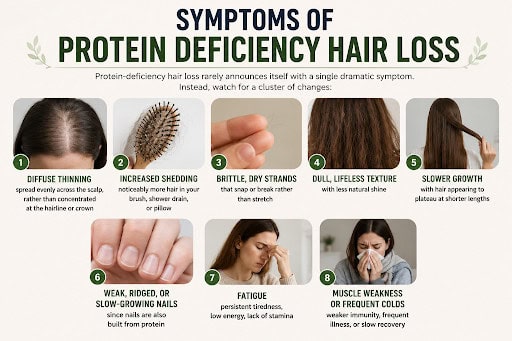
Protein-deficiency hair loss rarely announces itself with a single dramatic symptom. Instead, watch for a cluster of changes:
- Diffuse thinning spread evenly across the scalp, rather than concentrated at the hairline or crown
- Increased shedding noticeably more hair in your brush, shower drain, or pillow
- Brittle, dry strands that snap or break rather than stretch
- Dull, lifeless texture with less natural shine
- Slower growth, with hair appearing to plateau at shorter lengths
- Weak, ridged, or slow-growing nails, since nails are also built from protein
- Fatigue, muscle weakness, or frequent colds, which often accompany a broader protein shortfall
If you’re only noticing hair changes with none of the other signs, protein may still be a factor, but it’s worth ruling out other common culprits like iron deficiency, thyroid dysfunction, or hormonal shifts.
What Causes Protein Deficiency in the First Place
Outright protein deficiency is uncommon in the general US population, but it shows up more often than people expect in specific situations:
- Restrictive or crash diets that cut calories and protein simultaneously
- Disordered eating patterns, including anorexia and chronic under-eating
- Aging, since appetite naturally declines and protein needs actually increase
- Intense physical training without a matching increase in protein intake
- Chronic illness or extended hospital stays, which raise protein demand while often reducing intake
Expert insight: In our experience, the patients most surprised by protein-related shedding are the ones on trendy low-calorie diets who assume they’re eating “healthy.” Cutting calories aggressively without tracking protein is one of the fastest ways to trigger telogen effluvium, even in someone who isn’t underweight.
Best Food Sources of Protein for Hair Growth
Complete proteins, ones containing all nine essential amino acids, do the most for hair strength because they supply the cysteine and methionine your follicles need for keratin production.
| Food | Protein per Serving | Why It Helps Hair |
| Eggs | ~6g per egg | Complete protein plus biotin, which supports keratin structure |
| Greek yogurt | ~17g per cup | Complete protein and gut-friendly probiotics that aid nutrient absorption |
| Chicken breast | ~26g per 3 oz | Lean, complete protein with minimal saturated fat |
| Salmon | ~22g per 3 oz | Complete protein plus omega-3s that support scalp health |
| Lentils | ~18g per cup (cooked) | Plant protein plus iron and zinc, both linked to hair growth |
| Tofu/Edamame | ~10-17g per cup | Complete plant protein, useful for vegan and vegetarian diets |
| Nuts and seeds | ~5-7g per ounce | Protein plus zinc and vitamin E for scalp circulation |
| Cottage cheese | ~25g per cup | High-protein, low-effort snack option |
Which Protein Powder Is Best for Hair Growth and Thickness
Protein powder isn’t a magic fix, but it’s a practical way to close a protein gap, especially for people who struggle to hit their targets through food alone. When choosing one specifically to support hair, a few things matter more than the marketing on the label:
- Complete amino acid profile. Whey protein isolate and pea-and-rice protein blends both deliver all essential amino acids, including the cysteine and methionine your hair needs.
- Minimal additives. Skip powders loaded with sugar, artificial sweeteners, or fillers, they add calories without adding anything useful for your follicles.
- Third-party testing. Look for NSF Certified for Sport or Informed-Choice labels, which confirm the product contains what the label claims.
- Digestibility. If dairy causes bloating, a plant-based blend (pea, rice, and hemp combined) will usually give you a more complete amino acid profile than a single plant source alone.
For most people, whey protein isolates edges out other options because it’s fast-absorbing, low in lactose, and naturally rich in cysteine. For those who are dairy-free or vegan, a multi-source plant protein blend, rather than a single-source powder like straight pea protein, comes closest to matching whey’s amino acid completeness.
Pro tip: Protein powder works best as a supplement to real food, not a replacement for it. Aim to get the majority of your daily protein from whole foods, and use a shake to fill the remaining 15–25 grams if your diet consistently falls short.
Proteins and Vitamins for Hair Growth: Why You Need Both
Protein builds the physical structure of your hair, but several vitamins and minerals act as cofactors that help your body actually use that protein for growth:
- Biotin (B7): Supports keratin infrastructure; deficiency is rare but linked to brittle hair when it occurs
- Vitamin D: Helps activate hair follicle stem cells; low levels are associated with diffuse shedding
- Iron: Carries oxygen to follicles; deficiency is one of the most common co-occurring causes of hair loss alongside low protein
- Zinc: Supports tissue growth and repair, including keratin synthesis
- Vitamin C: Needed to absorb iron and to produce collagen, which supports the hair follicle structure
- Omega-3 fatty acids: Reduce scalp inflammation and support follicle health
If you’re correcting a protein deficiency but still eating a diet low in produce or fortified foods, you may be dealing with overlapping deficiencies rather than protein alone. A simple blood panel can clarify which nutrients actually need attention before you spend money on supplements you may not need.
Treatment: How to Reverse Protein Deficiency Hair Loss
- Confirm the deficiency. Ask your doctor about a basic metabolic panel, total protein, and albumin levels, especially if you have digestive symptoms or a restrictive diet.
- Increase protein gradually. Add one complete protein source to each meal rather than overhauling your entire diet overnight, which is easier to sustain and gentler on digestion.
- Address the root cause. If a malabsorption condition, eating disorder, or crash diet is driving the deficiency, treating that underlying issue matters more than food changes alone.
- Support the follicle externally. Gentle scalp care, minimal heat styling, and avoiding tight hairstyles reduce additional stress on hair that’s already weakened. In cases where shedding is severe or overlaps with genetic thinning, a PRP hair loss treatment
- Be patient with the timeline. Hair regrowth from nutritional causes takes months, not weeks, because it depends on the natural hair cycle resetting.
- Reassess at 3–4 months. If shedding hasn’t slowed by then, it’s time to investigate other causes rather than assuming it’s still protein-related.
Recovery Timeline: How Long Until Your Hair Grows Back
| Timeframe | What’s Happening |
| Weeks 1–4 | Protein intake improves; shedding typically continues since existing telogen hair hasn’t shed yet |
| Weeks 6–12 | Shedding gradually slows as follicles re-enter the anagen (growth) phase |
| Months 3–6 | New, fine “baby hairs” become visible along the hairline and part |
| Months 6–12 | Noticeable improvement in overall density and thickness |
| 12+ months | Full recovery for most people, assuming protein intake stays consistent |
Hair grows roughly half an inch per month, so even once follicles restart, visible length takes time to catch up. Consistency during this window matters more than any single dietary change.This information has been medically reviewed by Dr Jyotsana Kumari to ensure it is clear and clinically informed
Common Mistakes People Make
- Assuming more protein always means faster regrowth. Once you hit your target intake, additional protein doesn’t accelerate hair growth and may just add unnecessary calories.
- Giving up too early. Because of the telogen delay, people often quit after 4–6 weeks, right before visible improvement typically starts.
- Ignoring other nutrients. Iron, zinc, and vitamin D deficiencies commonly overlap with low protein and need to be addressed together.
- Relying entirely on supplements. Protein powder can help close a gap, but whole-food sources also provide iron, zinc, and B vitamins that support the same recovery process.
Take the First Step Towards Healthier Hair
Protein deficiency can lead to temporary hair loss by disrupting the normal hair growth cycle, but it is usually reversible with the right nutrition. Eating enough high-quality protein, maintaining a balanced diet, and addressing any underlying health issues can help restore healthy hair growth over time. If shedding continues despite improving your protein intake, consult a hair specialist or dermatologist for a proper diagnosis and personalised treatment.
Whether your hair loss is linked to protein deficiency or another condition, The Skin and Hair Clinic offers advanced hair restoration solutions tailored to your needs. Book your consultation today and discover the right treatment for lasting results.
FAQs
Q: Can a protein deficiency cause hair loss?
Yes. Inadequate protein intake forces the body to prioritize vital organs over hair follicles, pushing hair into a premature resting and shedding phase known as telogen effluvium.
Q: Is protein deficiency a common cause of hair loss?
It’s less common in the general population than causes like genetics, stress, or iron deficiency, but it’s frequently seen in people on restrictive diets, those with malabsorption conditions, or anyone recovering from illness or surgery.
Q: How long after low protein intake does hair loss start?
Shedding typically becomes noticeable 2–3 months after protein intake drops, due to the natural delay of the telogen (resting) phase.
Q: Can hair thinning from protein deficiency be reversed?
In most cases, yes. Once protein intake is corrected and any underlying cause is addressed, hair follicles usually return to a normal growth cycle within a few months.
Q: Which protein powder is best for hair growth and thickness?
Whey protein isolate is generally the most efficient option due to its complete amino acid profile and high cysteine content. Multi-source plant blends (pea, rice, and hemp) are the closest dairy-free alternative.