Reviewed by Dr. Jyotsna Kumari
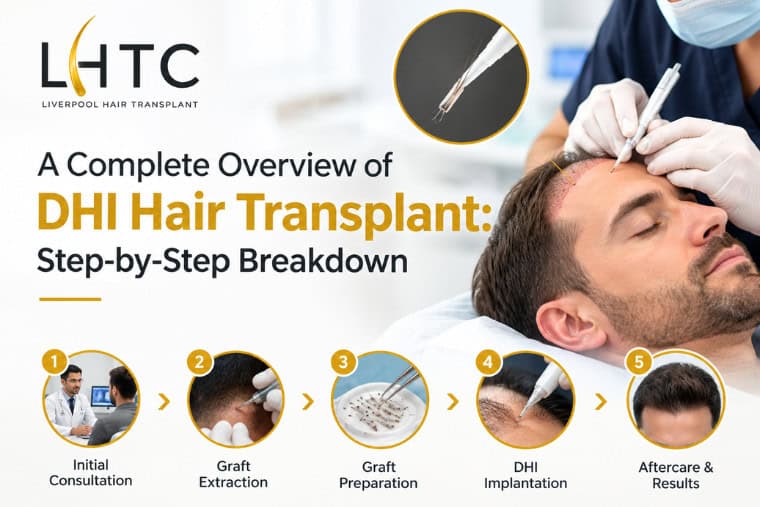
Hair loss can affect the hairline, crown or overall density, and several hair transplant techniques are available for people considering restoration. DHI is one technique that uses individual follicular units and a specialised implanter to place them into areas affected by thinning. If you have been searching for what is dhi hair transplant, understanding each stage can help you know what the treatment involves.
Did You Know? The NHS says transplanted hair often falls out after a few weeks before growing again. New hair usually starts appearing around four months after treatment, while full results can take 10 to 18 months.
The Skin & Hair Clinic provides DHI hair transplant treatment in Liverpool alongside FUE, FUT and other hair restoration services. Its DHI service describes the use of specialised Choi implantation tools and individual graft extraction before placement into thinning areas.
Key Takeaways
- DHI stands for Direct Hair Implantation and involves placing individual hair follicles into areas affected by hair loss.
- The treatment starts with an assessment of the hair loss pattern and donor area before the procedure is planned.
- DHI and FUE both involve individual follicle extraction, but the implantation method differs.
- Recovery involves protecting the grafts carefully during the early healing period.
- A consultation helps determine whether DHI is suitable for your hair loss and what results may be realistic.
What Is DHI Hair Transplant?
DHI stands for Direct Hair Implantation. During this hair transplant procedure, individual follicular units are taken from a donor area, usually at the back or sides of the scalp, and placed into areas where hair has become thin or has been lost.
Unlike traditional methods where recipient sites are prepared before graft placement, DHI uses an implanter device to place the follicles directly. The clinic describes the use of specialised Choi implantation tools for this stage.
So, what is a DHI hair transplant in simple terms? It is a form of hair transplantation where extracted follicles are implanted directly into the recipient area using an implanter.
How Does a DHI Hair Transplant Work?
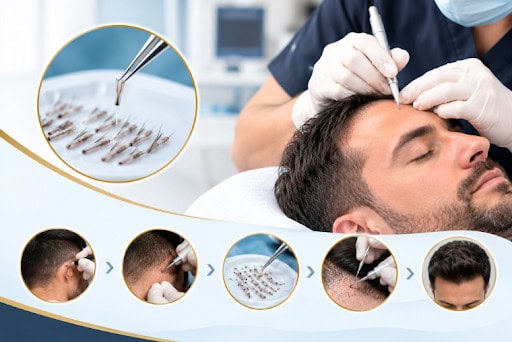
The treatment can be broken down into several stages:
- Hair and scalp assessment: The hair loss pattern, donor density and condition of the scalp are assessed.
- Treatment planning: The intended hairline and areas requiring additional density are discussed, along with the expected number of grafts.
- Follicle extraction: Individual grafts are carefully removed from the donor area.
- Direct implantation: The grafts are loaded into an implanter and placed into the recipient area at selected angles and directions.
- Aftercare: The scalp and new grafts need careful care during the early healing period.
The exact treatment plan can differ from person to person. The NHS advises patients to discuss the recommended procedure, the surgeon’s qualifications and experience, and the follow-up care available before having a hair transplant.
How Is DHI Different From FUE?
DHI and FUE are closely related because both can involve removing individual follicular units from the donor area. The main difference is how the extracted grafts are placed.
| Feature | DHI | FUE |
| Follicle extraction | Individual grafts | Individual grafts |
| Implantation | Uses an implanter | Grafts are placed into prepared sites |
| Recipient-site preparation | Incorporated into implantation | Usually carried out separately |
| Hairline work | Individual placement allows control over direction | Individual graft placement also allows detailed work |
The clinic offers both DHI and FUE, allowing treatment choice to be based on the patient’s hair loss pattern and clinical assessment.
Who May Be Suitable for DHI Hair Restoration?
DHI may be considered for people experiencing certain forms of permanent hair loss who have enough suitable donor hair. The cause and pattern of hair loss should be assessed before choosing a treatment.
These factors might include the following:
- Donor hair density
- Hair loss pattern and extent
- Thickness and properties of the hair
- State of the scalp
- Current hairline
- Long-term hair loss pattern
The NHS notes that hair transplantation is generally used for permanent baldness and may not be suitable for every type of hair loss.
What Can You Expect During Recovery?
The early recovery period requires care around the transplanted grafts. Redness, swelling, scalp discomfort and temporary scabbing can occur after treatment. The NHS advises being especially careful with transplanted hair during the first two weeks.
The Skin & Hair Clinic’s current DHI service includes aftercare guidance, medication, a spray bottle and follow-up reviews at different stages after treatment.
When Will DHI Hair Transplant Results Appear?
Hair growth does not happen immediately. Some transplanted hairs may shed during the first few weeks, which can be part of the normal growth cycle. New growth may begin around four months, while the NHS says full results can take 10 to 18 months.
The final result can vary according to factors such as donor supply, hair characteristics, healing and the extent of hair loss.
What Should You Ask During a DHI Hair Transplant Consultation?
A DHI hair transplant consultation gives you the opportunity to ask questions before deciding whether treatment is suitable.
Consider asking:
- What is causing my hair loss?
- Am I suitable for DHI?
- How many grafts might I need?
- Who will carry out the procedure?
- What results can I reasonably expect?
- What aftercare will I receive?
- What risks should I know about?
The NHS recommends checking the surgeon’s qualifications and experience and asking about the recommended procedure and follow-up care.

How to Choose the Best DHI Hair Transplant Clinic
Searching for the best DHI hair transplant provider should involve more than comparing prices or looking at photographs. Check the clinical team’s qualifications, experience, consultation process, treatment information and aftercare arrangements.
For patients in England, the NHS advises checking whether the clinic is registered with the Care Quality Commission and whether the doctor is registered with the General Medical Council.
Is DHI Right for You?
There is no universal hair transplantation technique that fits everybody equally. It is necessary to take into account such things as the type of hair loss, hair density, scalp quality, and the desired results.
Having a consultation will allow you to learn if the DHI technique is right for you, and what can be expected during the process. This may help when discussing expectations with an experienced medical practitioner.
Discuss Your DHI Hair Restoration Options
DHI can be a suitable option for some people seeking treatment for hair loss, but the right technique depends on individual clinical factors. Understanding extraction, implantation, recovery and expected growth can help you prepare for a more informed discussion.
The Skin & Hair Clinic provides DHI hair transplant treatment in Liverpool, with consultations and aftercare available as part of its hair restoration services.
If you are considering treatment, arrange a consultation to discuss your hair loss, donor area and available options with the clinical team.
FAQs
Q: What does DHI stand for?
DHI stands for Direct Hair Implantation. It involves placing individual extracted hair follicles directly into areas affected by hair loss using an implanter device.
Q: Is DHI the same as FUE?
They are closely related, as both can involve individual follicle extraction. The main difference is the method used to implant the extracted grafts.
Q: How long does DHI hair transplantation take?
The duration varies according to the number of grafts required and the area being treated. Your clinic should provide a treatment time based on your individual plan.
Q: How long does DHI hair take to grow?
New growth can begin after several months. The NHS states that new hair usually starts appearing around four months, with full results taking around 10 to 18 months.
Q: Is DHI suitable for everyone with hair loss?
No. Suitability depends on the cause and pattern of hair loss, donor hair supply and other clinical factors. An assessment is needed before choosing a transplant technique.
{
“@context”: “https://schema.org”,
“@type”: “FAQPage”,
“mainEntity”: [
{
“@type”: “Question”,
“name”: “What does DHI stand for?”,
“acceptedAnswer”: {
“@type”: “Answer”,
“text”: “DHI stands for Direct Hair Implantation. It involves placing individual extracted hair follicles directly into areas affected by hair loss using an implanter device.”
}
},
{
“@type”: “Question”,
“name”: “Is DHI the same as FUE?”,
“acceptedAnswer”: {
“@type”: “Answer”,
“text”: “They are closely related, as both can involve individual follicle extraction. The main difference is the method used to implant the extracted grafts.”
}
},
{
“@type”: “Question”,
“name”: “How long does DHI hair transplantation take?”,
“acceptedAnswer”: {
“@type”: “Answer”,
“text”: “The duration varies according to the number of grafts required and the area being treated. Your clinic should provide a treatment time based on your individual plan.”
}
},
{
“@type”: “Question”,
“name”: “How long does DHI hair take to grow?”,
“acceptedAnswer”: {
“@type”: “Answer”,
“text”: “New growth can begin after several months. The NHS states that new hair usually starts appearing around four months, with full results taking around 10 to 18 months.”
}
},
{
“@type”: “Question”,
“name”: “Is DHI suitable for everyone with hair loss?”,
“acceptedAnswer”: {
“@type”: “Answer”,
“text”: “No. Suitability depends on the cause and pattern of hair loss, donor hair supply and other clinical factors. An assessment is needed before choosing a transplant technique.”
}
}
]
}