
Reviewed by Dr. Jyotsna Kumari
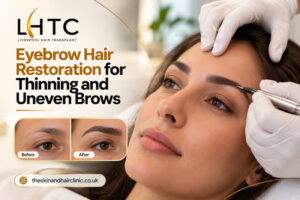
A woman spends years shaping her eyebrows a certain way, then one day realises she’s drawing in more than she’s actually growing. What started as routine shaping somewhere along the line turned into thinned brows that never quite grew back the way they used to.
In a Danish cohort of 1,494 dermatologist-verified alopecia areata patients, 36.2% had no or barely any eyebrow hair. That was a higher share than those with no or barely any eyelashes (32.2%) or with all or nearly all scalp hair missing (31.4%). Alopecia is just one of several causes, and a 2026 review of eyebrow madarosis lists autoimmune, endocrine, genetic, nutritional and traumatic causes, noting that eyebrow loss has significant cosmetic and psychosocial implications. That’s why eyebrow hair restoration isn’t just about appearance. For many people, an eyebrow hair transplant or other eyebrow surgery only makes sense once the cause of the thinning is properly understood, and the right eyebrow hair transplant clinic will start there.
What Causes Thinning or Uneven Eyebrows?
Eyebrow thinning rarely comes from a single cause. Published reviews describe a wide range, including:
- Alopecia areata, an autoimmune condition that can affect eyebrows as well as scalp hair
- Endocrine conditions, such as hypothyroidism
- Nutritional deficiencies
- Trauma, which can include repeated plucking or waxing
- Burns or scarring, the most common reason for eyebrow and eyelash transplantation in one systematic review (57.6% of cases)
- Genetic factors
Why Identifying the Cause Changes the Treatment Plan
Many non-scarring causes of eyebrow loss are reversible, and early recognition and targeted treatment can lead to regrowth [2]. Scarring causes, such as burns, are different, because the follicles in the scarred area may not recover. That’s why a proper diagnosis comes before any surgical recommendation.
What Is Eyebrow Hair Restoration?
Eyebrow hair restoration is a transplant procedure that moves hair follicles from a donor area, commonly the scalp, into the brow to rebuild density and shape. It uses the same core principle as scalp hair transplantation, adapted to the smaller, more detailed area of the eyebrow.
Techniques Used for Eyebrow Transplants
A systematic review of 67 articles covering 354 patients found that follicular unit transplantation techniques are used most commonly for eyebrows and eyelashes. Other approaches, such as composite grafts and skin flaps, are also used effectively with minimal complication rates. The choice depends on the surgeon’s preference and the patient’s presentation . Donor follicles can be harvested either as a strip or one at a time using follicular unit extraction (FUE). Your surgeon will explain which approach is right for your brows.
What Does Eyebrow Surgery Actually Involve?

In FUE, follicles are removed individually from the donor area and then implanted into the brow in a pattern planned in advance with the patient. The number of grafts depends on how much correction your brows need, and your surgeon will confirm this after assessing you.
What Should You Expect From Results?
Eyebrow transplants are judged over months, not days. In one hospital study of 58 patients with scar-related eyebrow defects, hair survival was measured 10 months after surgery and averaged 84%, and satisfaction was assessed at one year. Most patients (84.48%) were very satisfied. The same study recorded 14 adverse reactions across 12 patients (24.14%), so it’s worth discussing risks openly with your surgeon.
Why Shedding Is a Normal Part of the Process
Shedding of transplanted hair typically happens within the first few weeks. Visible regrowth usually begins around 3 to 4 months, with full or near-full results by around 8 to 12 months.

How Do You Choose the Right Eyebrow Hair Transplant Clinic?
Not every clinic offering hair restoration has deep experience specifically with eyebrows. A few things are worth confirming before booking:
- Documented experience with eyebrow procedures, not just scalp transplants
- A clear explanation of the technique they’ll use and why
- A thorough diagnostic process to identify the cause of your thinning before recommending surgery
- Before-and-after results from actual eyebrow patients
- A clear aftercare plan, including what happens if touch-up grafts are needed later
Eyebrows are small, symmetrical and highly visible, so even a slight mismatch in direction, density or shape is easy to notice. Choosing a clinic with specific eyebrow experience matters.
Talk to a Specialist About Restoring Your Eyebrows
Thinning or uneven eyebrows have real, identifiable causes, and eyebrow hair restoration can be a lasting option once the cause is properly understood. The Skin & Hair Clinic in Liverpool offers a free consultation with a GMC-registered specialist team to assess the cause of your brow thinning and discuss whether restoration surgery is the right fit.
Book your free consultation to get a clear plan for restoring your eyebrows.
Key Insights From the Research
| Study | Who / what was reviewed | Key finding |
| BMJ Open, 2022 | 1,494 dermatologist-verified alopecia areata patients (Denmark) | 36.2% had no or barely any eyebrow hair; 32.2% no or barely any eyelashes; 31.4% all or nearly all scalp hair missing |
| J Drugs Dermatol, 2026 | PubMed-based review of non-scarring eyebrow loss | Causes include autoimmune, infectious, endocrine, genetic, nutritional, traumatic and drug-induced; many are reversible with early treatment |
| J Clin Aesthet Dermatol, 2018 | 67 articles, 354 patients, 18 countries | Burns were the most common reason for transplantation (57.6%); follicular unit transplantation was the most common technique; other techniques also used with minimal complication rates |
| Chin J Burns, 2021 | 58 patients with scar-related eyebrow defects | 84% average hair survival at 10 months; 84.48% very satisfied at 1 year; adverse reactions in 24.14% of patients |
FAQs
Q1: Can eyebrow hair restoration fix brows damaged by years of over-plucking?
It depends on the cause and on how many active follicles remain in the area. Trauma is one recognised cause of eyebrow loss, and an in-person assessment is the only reliable way to tell whether restoration is suitable for you.
Q2: Will transplanted eyebrow hair need regular trimming?
Your surgeon can advise on aftercare and what to expect. Donor hair is commonly taken from the scalp [5], so it’s worth asking before surgery how your transplanted brow hair is likely to behave.
Q3: Is eyebrow restoration suitable for someone with alopecia areata?
Alopecia areata is an autoimmune condition that can affect the eyebrows, and some causes of eyebrow loss respond to treatment. For that reason a specialist will want to identify and manage the cause before advising on surgery.
Q4: How long do results from eyebrow hair restoration last?
Surgical approaches can provide longer-lasting or permanent restoration. Transplanted hair usually sheds in the first few weeks, regrowth begins around 3 to 4 months, and full results appear by around 8 to 12 months.
Q5: Is eyebrow surgery painful?
Ask your clinic what anaesthesia and comfort measures they use and what to expect afterwards. Your specialist will walk you through this at your consultation.