Reviewed by Dr. Jyotsna Kumari
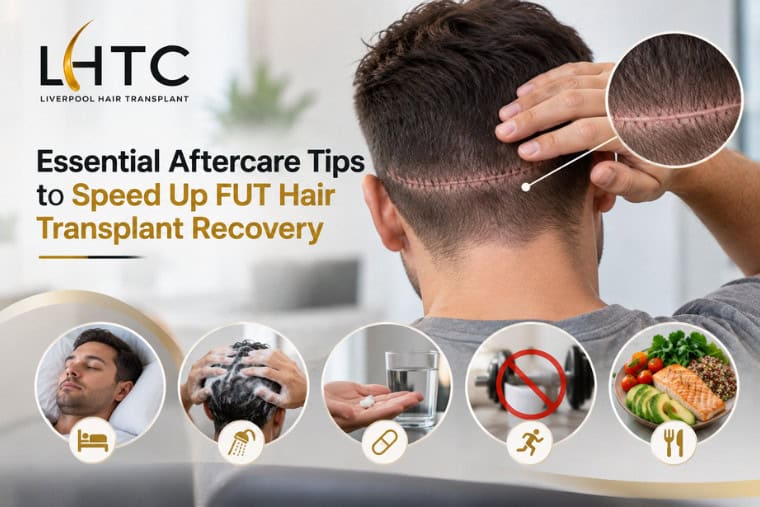
A FUT hair transplant involves removing a strip of hair-bearing skin from the back of the scalp and separating it into individual grafts for transplantation. Since the procedure involves an incision in the donor area, patients often have questions about soreness, healing and how to look after their scalp afterwards. People who have previously searched for eyebrow hair transplant recovery may also wonder how recovery differs when treatment is performed on the scalp.
The Skin & Hair Clinic provides hair restoration treatments and helps patients understand what to expect before and after their procedure.
Key Takeaways
- Some soreness, tightness or swelling can occur after a FUT hair transplant.
- The transplanted grafts need careful handling during the early healing period.
- Maintaining scalp hygiene following the guidelines from the clinic would promote normal healing.
- It may be necessary to limit the level of physical activity, as well as any activities that might disrupt the grafts.
- The transplanted hair follicles may shed before the appearance of new hair.
Did You Know? The NHS states that hair transplants are generally carried out under local anaesthetic and sedation, so patients should not feel pain during the procedure. After treatment, a tight, achy or swollen scalp can occur for a few days. The NHS also advises taking particular care of transplanted hair during the first two weeks because the grafts are not yet secure.
Is FUT Hair Transplant Painful?
So, is FUT hair transplant painful? Some discomfort can occur, particularly after the local anaesthetic wears off. Pain and stiffness can occur because of the surgery done on the donor area.
The level of pain varies from one person to another. Your healthcare professionals can give you an insight on what to expect after the operation and provide you with tips on managing any postoperative pain.
What Happens During FUT Hair Transplant Recovery?
The first few days are also when the scalp is more sensitive. Tenderness, tightening, soreness, and scabbing may occur during the healing process.
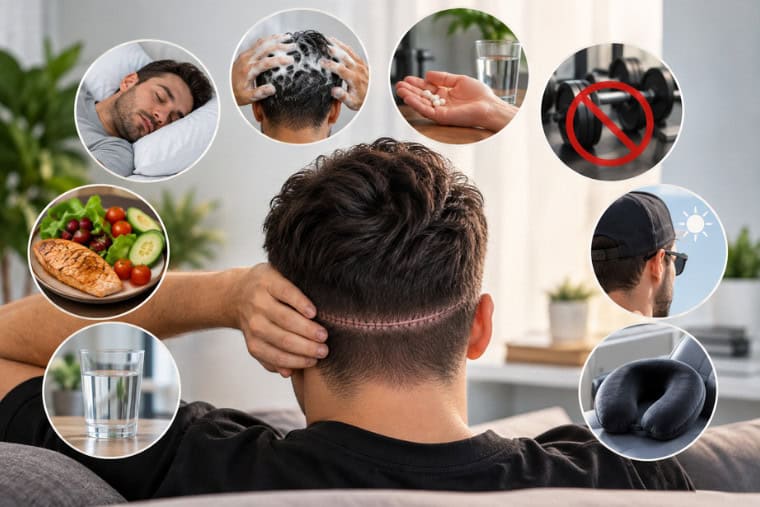
During the initial phase:
- Avoid touching, scratching, or rubbing the transplant area.
- Be sure to follow the directions for washing your scalp at the clinic.
- Keep pressure away from the grafts while sleeping.
- Take any prescribed medication exactly as directed.
The NHS recommends that you may need anywhere from one to two weeks off work, but the duration will vary based on your personal circumstances and the type of job that you have. It is best that your practitioner determines when you can go back to your regular routine.
7 Essential FUT Hair Transplant Aftercare Tips
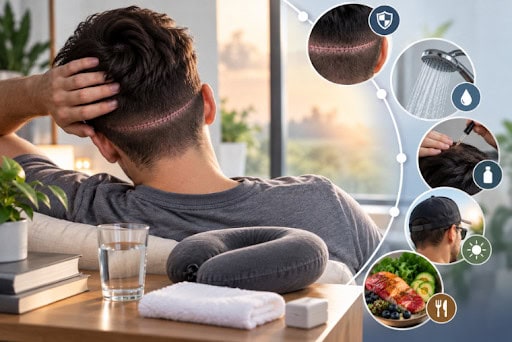
Good FUT hair transplant aftercare involves protecting the grafts while also looking after the donor incision.
- Follow Clinic Directions About Washing
Your clinic will be able to advise you on how often to wash your hair and how to do so without causing undue stress to the grafts.
- Do Not Scratch Your Head
It is common to itch during the recovery process. Scratching the scalp may interfere with the healing process or disturb the scabs or grafts.
- Try Not to Put Pressure on Grafts When Sleeping
Your clinic will be able to advise you on the best sleep position at the beginning stages of the recovery process.
- Stop Exercising for a While
Heavy exercise can increase sweating and physical strain while the scalp is healing. Your clinician can tell you when it is suitable to return to exercise.
5. Protect Your Scalp From Strong Sunlight
A healing scalp can be sensitive. Follow your clinic’s advice about sun exposure and suitable head protection after treatment.
- Take Medications as Directed
Take any prescribed medications according to your doctor’s recommendations. Do not take new medications and hair care products without consulting your doctor first.
- Have Follow-Up Visits
Follow-up appointments help your healthcare professionals evaluate both the donor and recipient areas.
What Should You Avoid During Recovery?
Protecting the scalp is especially important during the first couple of weeks. Avoid activities that could knock, rub or disturb the grafts until your medical team says they are safe.
You may also need to avoid swimming and strenuous physical activity for a period after treatment. Your individual instructions should take priority, since recovery can differ between patients.
When Will the Transplanted Hair Grow?
Early shedding can cause concern, but transplanted hairs often fall out a few weeks after treatment. This is followed by a period of gradual new growth.
The NHS says new hair usually starts to appear from around four months, while the full result can take 10 to 18 months. This means the appearance during the first few months does not show the final outcome.
People comparing different treatments, including eyebrow hair transplant recovery, should remember that recovery and hair growth timelines can vary according to the treatment area and procedure used.
How to Support Your FUT Hair Restoration Journey
Following your aftercare instructions, protecting the grafts and giving your scalp enough time to heal can help you move through recovery safely. These hair transplant recovery tips can also make it easier to recognise expected changes and know when to ask your clinic for advice.
A FUT hair implant does not produce its final appearance immediately. Patience is important while the transplanted hairs move through the shedding and regrowth stages.
When Should You Contact Your Clinic?
If you notice any signs which appear abnormal or worsen instead of improving, contact your healthcare provider.
- Intense or worsening pain
- Persistent or abnormal bleeding/discharge
- Swelling or any other unexpected sign
- Symptoms indicating an infection
- Any worries about the incision site or graft area
The NHS recommends getting in touch with your clinic immediately if intense pain or any other abnormal signs occur following a hair transplant.
Ready to Take the Next Step Towards FUT Hair Restoration?
If you are wondering if FUT hair transplant is painful, understanding what recovery may involve can help you decide whether FUT is suitable for you. A consultation gives you the opportunity to discuss your hair loss, donor area, treatment options and expected recovery.
The Skin & Hair Clinic can assess your hair and scalp and discuss whether FUT hair restoration may be suitable for your needs. You can also ask about the procedure, aftercare, expected healing and future hair growth.
Book a consultation today to discuss your hair restoration options and take the next step towards restoring fuller-looking hair.
FAQs
Q: Is FUT hair transplant painful?
Some soreness, tightness or swelling can occur after the procedure, particularly around the donor area. Local anaesthetic is used during treatment to prevent pain.
Q: How long does FUT hair transplant recovery take?
The early healing period can take several days to weeks. Many people may need around one to two weeks away from work, depending on their job and recovery.
Q: When can I wash my hair after FUT?
Your clinic will give you specific washing instructions. The NHS states that gentle hand washing may usually begin around day six, but you should follow the instructions given by your own medical team.
Q: When can I exercise after a FUT hair transplant?
Exercise may need to be reduced during the early recovery period. Your clinician can advise when it is safe to resume different activities.
Q: When will my FUT transplant start growing?
Transplanted hairs often shed after a few weeks. New hair usually starts appearing around four months, while the full result can take 10 to 18 months.