Reviewed by Dr. Jyotsna Kumari
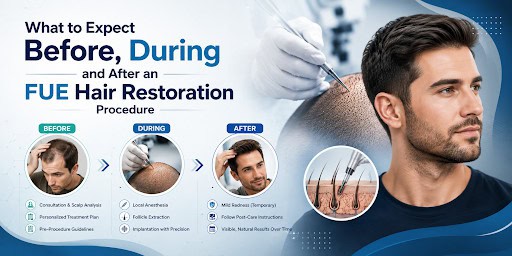
Hair transplantation can raise plenty of questions, especially when you are considering treatment for the first time. You may want to know how the procedure works, what preparation is needed, how long healing takes and when new hair growth may become visible. Knowing what happens at each stage can help you prepare and set realistic expectations.
Did You Know?According to the NHS, new hair usually starts appearing around four months after a hair transplant, while full results can take 10 to 18 months to become visible.
The Skin & Hair Clinic provides FUE, FUT and DHI hair transplant procedures in Liverpool. If you are considering a FUE hair transplant, understanding the treatment journey from consultation through recovery can help you decide whether it is suitable for you.
Key Takeaways
- FUE is a procedure where individual hair follicles are taken from a donor area and placed into areas of hair loss.
- At a consultation we will assess your hair loss, donor hair and suitability for treatment.
- The procedure usually consists of preparation, extraction, graft preparation and implantation.
- Redness, swelling and small scabs around the treated area can occur during early healing.
- It takes time for new growth to appear and the end result will form over a period of months.
What Is a FUE Hair Transplant?
FUE stands for Follicular Unit Extraction. In the procedure, single follicular units are removed from a donor area, typically the back or sides of the scalp, and then transplanted into areas of thinning or missing hair.
In FUE, there is no removal of a strip of scalp as in the FUT. According to the NHS, FUE involves taking out individual grafts and putting them into small incisions made in the receiving area.
What Happens Before Your FUE Treatment?
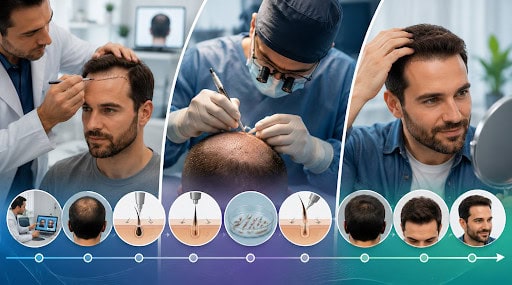
Your treatment starts before the day of surgery. A consultation allows the clinical team to examine your scalp, discuss your hair-loss pattern and assess the donor area.
You may discuss:
- The number of grafts you may need
- Your desired hairline and density
- Your medical history
- The suitability of FUE
- Expected growth and recovery
- Aftercare requirements
A good consultation also gives you the chance to ask questions about the procedure and expected outcome.
What Happens During the FUE Treatment Process?
The FUE treatment process usually takes place under local anaesthetic. The treatment area is prepared before individual follicles are extracted from the donor area.
The main stages include:
- Hairline design: The treatment area is marked according to the planned result.
- Preparation: The donor area is cleaned and numbed.
- Extraction: Individual follicular units are carefully removed.
- Graft preparation: The extracted follicles are prepared for implantation.
- Implantation: Grafts are placed into small openings in the recipient area.
The length of treatment can vary depending on the number of grafts and the size of the area being treated.
What Can You Expect During FUE Recovery?
The early FUE recovery period can involve some redness, swelling, tenderness and small scabs. These effects are generally part of the healing process, but your clinic should give you specific instructions for caring for the treated area.
The NHS advises that patients may need around one to two weeks away from work and should take particular care of transplanted hair during the first two weeks.
Your hair transplant recovery instructions may cover washing, sleeping, medication, exercise and protecting the grafts from unnecessary contact.
What Happens After the Initial Healing Period?
It is normal for transplanted hairs to shed during the weeks after treatment. This can be concerning if you are expecting immediate growth, but shedding can form part of the normal transplant cycle.
New growth develops gradually. The NHS states that new hair generally begins appearing from around four months, with the full result taking longer to develop.
The Skin & Hair Clinic’s FUE service also provides follow-up appointments during the recovery period, including reviews at different stages after treatment.
What Can Affect Your FUE Hair Transplant Results?
Several factors can influence the final appearance of your FUE hair transplant results, including the available donor hair, extent of hair loss, number of grafts, existing hair and individual growth cycle.
Your aftercare can also play an important role while the transplanted follicles are healing. Following the instructions given by your clinical team can help protect the grafts during this early stage.
How Can You Prepare for Your Recovery?
Follow the instructions provided by your clinical team rather than relying on general advice found online.
- Follow washing instructions carefully.
- Take prescribed medication as directed.
- Avoid touching or scratching the grafts unnecessarily.
- Follow guidance about exercise and other physical activities.
- Attend your scheduled follow-up appointments.
- Contact your clinic if you notice unexpected symptoms or have concerns about healing.
What Should You Ask Before Choosing a Clinic?
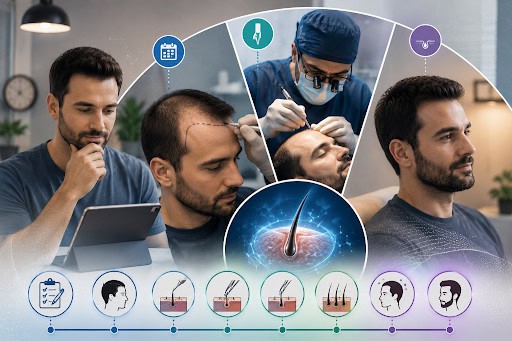
Before booking treatment, ask who will perform the procedure, how your donor area will be assessed and what aftercare is included. It is also worth asking about previous patient results and how long you should expect the recovery to take.
Choosing a reputable hair transplant clinic and having a detailed consultation can help you understand what the treatment involves before making a decision.
Ready to Explore Your FUE Hair Restoration Options?
Understanding the treatment journey can make it easier to know what to expect from consultation through recovery and gradual new growth. The right choice should be based on your suitability, treatment plan, expected results and aftercare rather than a quick decision.
If you are considering FUE hair restoration in Liverpool, The Skin & Hair Clinic offers FUE alongside FUT and DHI procedures. You can call 0151 280 3248 or visit 203-205 Rose Lane, Liverpool, L18 5EA to arrange a consultation and discuss your hair-loss concerns and available treatment options.
FAQs
1. How long does an FUE procedure take?
Treatment time varies according to the number of grafts required and the size of the area being treated. Your clinic should give you a clearer estimate during your consultation.
2. Is FUE painful?
FUE is generally performed using local anaesthetic, which numbs the treatment area during surgery. You may experience some tenderness or discomfort while the scalp heals.
3. When does hair start growing after FUE?
The NHS states that new hair usually begins to appear around four months after a hair transplant, although the final result takes considerably longer.
4. Can transplanted hair fall out after FUE?
Yes. Temporary shedding of transplanted hair can occur during the early months. New growth can then develop gradually from the transplanted follicles.
5. How long does it take to see the final result?
The timeline varies between patients. NHS guidance states that full hair transplant results can take around 10 to 18 months to become visible.