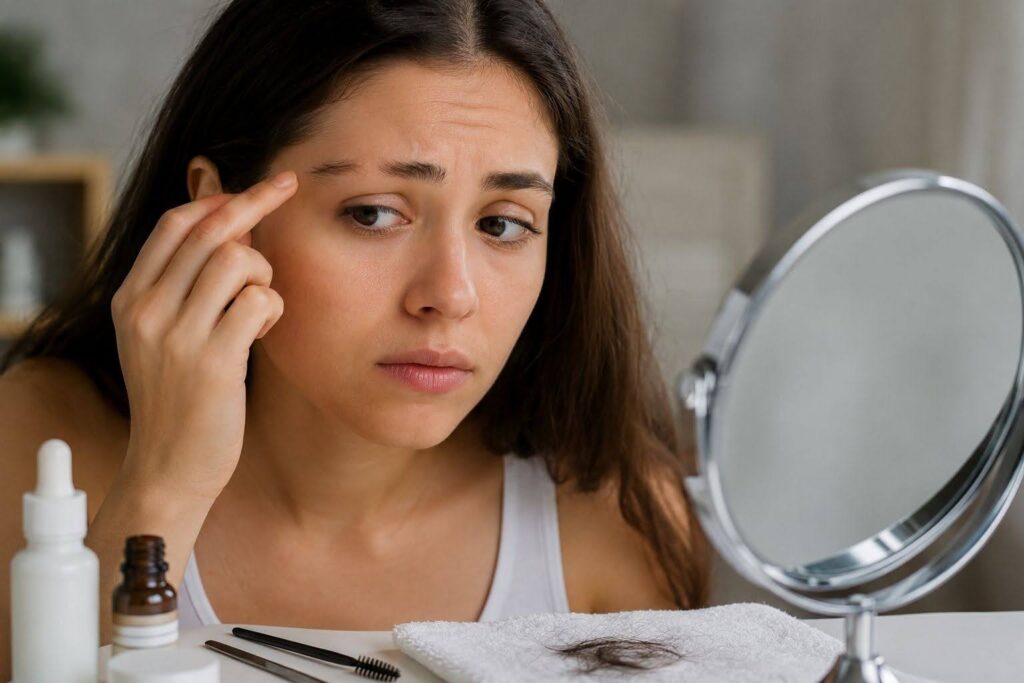
Eyebrow hair loss usually comes down to one of a handful of causes: an underactive or overactive thyroid, an autoimmune condition like alopecia areata, a nutrient shortfall, years of over-plucking, or a skin condition affecting the brow area. If you’re trying to work out why your eyebrows are falling out, the pattern of the loss is often your first clue: patchy versus gradual, one side versus both. Most cases respond well to treatment once the cause is identified, though regrowth can take a few months of patience.
The most common causes of eyebrow hair thinning
Eyebrow thinning rarely has a single, simple explanation. It’s usually your body signalling that something else is going on, whether that’s hormonal, nutritional, or purely mechanical from years of grooming habits.
Thyroid problems
Both hypothyroidism and hyperthyroidism can disrupt the hair growth cycle, and eyebrows are often the first place it shows, especially the outer third of the brow. According to the British Thyroid Foundation, thyroid hormone imbalances affect the whole body’s metabolism, including how hair follicles cycle through growth and rest.
Alopecia areata and other autoimmune conditions
Alopecia areata happens when the immune system mistakenly targets hair follicles, causing sudden, often patchy hair loss. It can affect eyebrows on their own, without touching the scalp, and tends to come on over days or weeks rather than gradually.
Low iron, zinc or biotin
Nutritional deficiencies are a genuinely common but often overlooked cause. Iron and zinc are essential for the cell turnover that keeps follicles active, and low levels can quietly thin brows over months. A simple GP blood test can usually rule this in or out.
Over-plucking, waxing and scarring
Years of aggressive tweezing or waxing can damage the follicle itself, and sometimes the hair simply stops growing back in that spot. Burns and repeated trauma cause the same problem, which is why this is one of the few causes where the damage can be permanent.
Skin conditions and stress
Eczema, psoriasis and seborrheic dermatitis all cause inflammation that can disrupt follicles around the eyebrows, though hair usually regrows once the skin condition is treated. Significant stress can also push follicles into a resting phase all at once, a pattern called telogen effluvium, which typically shows up a few months later. Certain medications, including some blood pressure treatments and chemotherapy drugs, list hair thinning as a known side effect too.
Men’s thinning eyebrows: is it different?
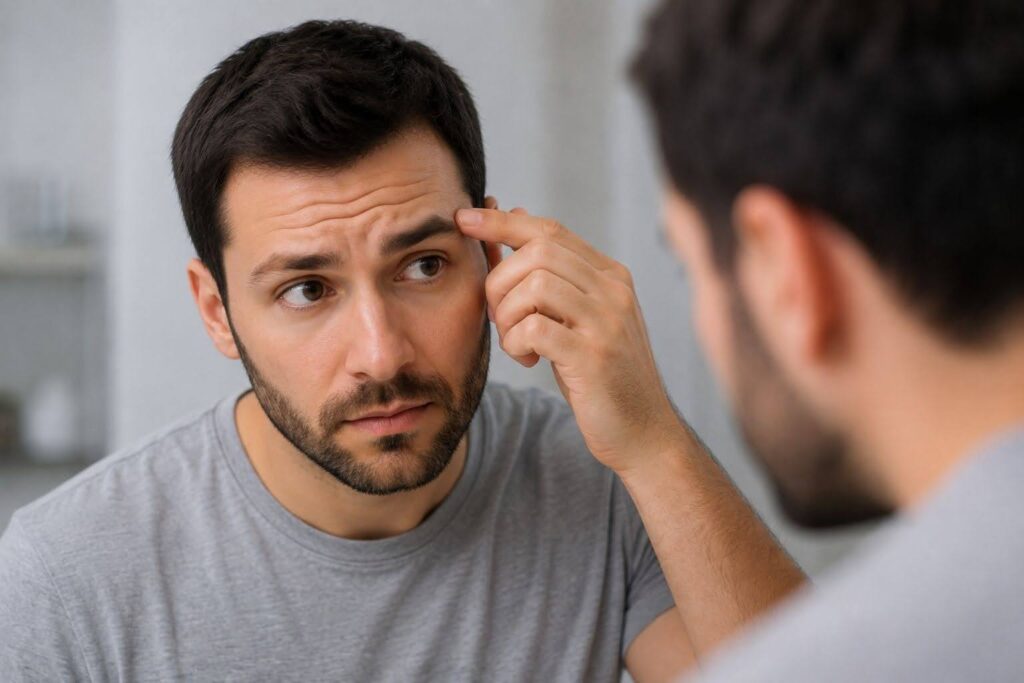
Men ask about this less often, but the underlying causes, thyroid issues, alopecia, nutrient gaps and skin conditions, are largely the same. The main difference is that thinning often goes unnoticed for longer, since eyebrow grooming is less frequent than in women. Male pattern hair loss on the scalp doesn’t typically extend to the brows, so if both are thinning together, it’s worth mentioning to a GP rather than assuming they’re connected.
Common misconceptions about eyebrow loss
Myth: Plucking a few hairs won’t matter.
Reality: Occasional plucking is fine, but repeated plucking of the same follicles over years can damage them permanently. The risk is cumulative, not immediate.
Myth: If it’s not on your scalp, it’s not real hair loss.
Reality: Alopecia areata and thyroid disorders frequently affect eyebrows and eyelashes on their own, with no scalp involvement at all.
What actually helps eyebrows grow back
Treatment works best once you know the cause, which is why a GP check-up, often including thyroid and iron blood tests, is a smarter first step than jumping straight to serums. From there, options include addressing the root cause directly (thyroid medication, supplementation, or a steroid cream for skin conditions), topical growth products used off-label on brows, and PRP treatment: platelet-rich plasma made from your own blood and injected into the brow area to stimulate follicles that are thinning but not dead. Microneedling is sometimes combined with PRP to support the same effect.
In practice, at The Skin and Hair Clinic we find that people who’ve had thinning for under a year, without deep scarring, tend to respond best to PRP and topical treatments combined. Where follicles have been permanently damaged, semi-permanent makeup or transplant options become more realistic than regrowth treatments.
When to see a doctor about eyebrow hair loss
See your GP if the loss is sudden, patchy, or happening alongside symptoms like fatigue or weight changes, since these can point to a thyroid issue worth catching early. It’s also worth getting checked if brows haven’t improved after a few months of fixing an obvious cause like over-plucking. A GP can arrange thyroid and iron blood tests, and refer you on if a skin condition or alopecia areata is suspected.This information has been medically reviewed by Dr Jyotsana Kumari to ensure it is clear and clinically informed
Next steps for thinning eyebrows
Eyebrow hair loss almost always has an identifiable cause, whether that’s a thyroid imbalance, a nutrient gap, alopecia, or years of grooming habits catching up with the follicles. Getting a proper GP check-up before trying treatments saves time and gets you to the right fix faster. If your brows haven’t responded to the obvious explanations, The Skin and Hair Clinic can help you find the cause and talk you through options like PRP.
FAQs
Q: Why is the hair on my eyebrow falling out on just one side?
A: One-sided eyebrow loss is often localised, caused by a skin condition, a small patch of alopecia areata, or repeated rubbing on that side. It’s less commonly linked to thyroid problems, which usually affect both brows evenly. A GP or dermatologist can examine the area to narrow down the cause.
Q: Can eyebrows grow back after thinning?
A: Yes, in most cases eyebrows grow back once the underlying cause is treated. Regrowth from thyroid or nutrient-related thinning usually takes two to four months. Follicles damaged by long-term scarring or repeated trauma are less likely to fully recover.
Q: Does PRP treatment actually work for eyebrows?
A: PRP can help stimulate follicles that are thinning but not permanently damaged, using platelets from your own blood to encourage regrowth. Results usually need a course of several sessions rather than one treatment, and it tends to work best alongside fixing any underlying cause.
Q: Can low iron cause eyebrow hair loss?
A: Yes, low iron is a well-recognised cause of eyebrow and scalp thinning. A simple blood test can confirm whether iron is the issue, and levels usually improve within a few months of appropriate supplementation.
Q: Should I stop plucking my eyebrows if they’re thinning?
A: Yes, it’s sensible to pause plucking and waxing while brows are actively thinning, since further trauma can make recovery slower. Shaping with a light trim is generally safer than removal at the root until the cause is treated and hair has recovered.