
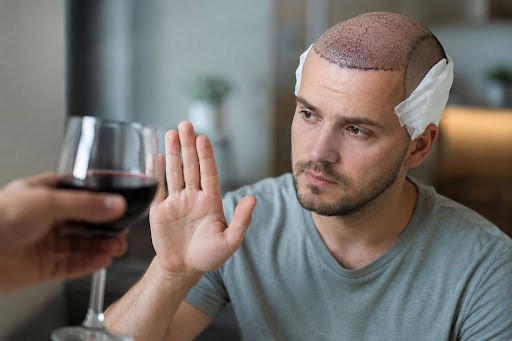
No, you should not drink alcohol for at least 10 to 14 days after a hair transplant. Alcohol thins your blood, slows healing, and puts your new grafts at risk. Here’s exactly why you need to wait, and how long the wait really is.
Thinking about celebrating your new hairline with a pint? Hold that thought. Whether you can you drink alcohol after a hair transplant depends on how well your grafts are healing, and rushing it can undo weeks of careful aftercare.
Did you know? According to the Alcohol Rehab Help, thins your blood and slows the body’s clotting response for up to 72 hours after your last drink.
That single fact explains why most surgeons ask patients to wait far longer than a “day or two off the booze.”At The Skin and Hair Clinic, we see the same question from almost every patient: when is it safe to have a drink again? The honest answer is that timing matters more than most people realise, and getting it wrong can affect your final results.
Key Takeaways
- Avoid alcohol for at least 10 to 14 days after your hair transplant. Give your scalp enough time to heal before drinking alcohol to protect newly implanted hair grafts.
- Alcohol thins blood and raises the risk of bleeding and swelling. Drinking alcohol can increase bleeding, worsen swelling, and make the recovery process slower and more uncomfortable.
- Combining alcohol with prescribed medication can slow healing further. Alcohol may interfere with antibiotics and pain medication, reducing effectiveness and delaying proper healing after surgery.
- Feeling fine is not proof that your grafts are fully secure. Even without pain or discomfort, transplanted grafts remain vulnerable and need time to establish successfully.
- Always confirm timing with your surgeon before drinking again. Your surgeon can recommend the safest time based on your healing progress and individual recovery after transplantation.
Why Alcohol Affects Your Hair Transplant Healing
Your scalp is doing serious repair work in the first two weeks. Fresh grafts need steady blood flow, oxygen, and nutrients to survive. Alcohol works against every part of that process.
How Alcohol Consumption After Hair Transplant Slows Recovery
- Thins the blood: Increases the risk of bleeding at graft sites
- Dehydrates the scalp: Causes dryness, tightness, and itching
- Widens blood vessels: Raises swelling around the forehead and eyes
- Weakens the immune system: Makes infection more likely
- Reduces collagen production: Tissue repair slows down
Even one drink in the first three days can nudge these risks higher. Your grafts are not anchored yet, so any extra swelling or itching increases the chance you scratch or dislodge one by accident.
How Long After Hair Transplant Can I Drink Alcohol
Many people ask, how long after hair transplant can i drink alcohol. There is no single universal rule, but most clinics agree on a staged approach. The table below breaks down what’s generally safe at each stage of healing.
| Recovery Stage | Alcohol Guidance |
| Days 1–3 | Strictly avoid – grafts are most vulnerable |
| Days 4–7 | Still avoid – swelling and scabbing are active |
| Days 8–14 | Avoid unless your surgeon confirms healing is on track |
| Weeks 3–4 | Occasional, moderate drinking is usually fine |
| Beyond 1 month | Normal consumption, in moderation, is generally safe |
If you’re wondering, after a hair transplant, can I drink alcohol sooner because you feel fine, remember that internal healing continues even once the surface looks normal. Feeling fine is not the same as being healed.
Alcohol After Hair Transplant: What Changes Week by Week
- Week 1: Grafts are settling into place; any disruption risks graft loss
- Week 2: Scabs fall away; the scalp is still sensitive to irritation
- Week 3–4: New follicles are more secure, though not fully established
- Month 2 onwards: Growth cycle begins; general lifestyle habits matter less for graft survival
This pattern lines up closely with our guide on the hair transplant healing timeline, so it’s worth reading both together if you want the full recovery picture.This information has been medically reviewed by Dr Jyotsana Kumari to ensure it is clear and clinically informed
Common Mistakes Patients Make With Alcohol After Hair Transplant
Many patients assume a “small” drink won’t matter, or that beer is gentler than spirits. Neither is true. Alcohol after hair transplant affects your body regardless of the type or amount, because it’s the alcohol itself, not the drink, that thins your blood and dehydrates your scalp.
Another common mistake is mixing alcohol with prescribed antibiotics or painkillers. This combination can cause nausea, dizziness, and reduced medication effectiveness, which slows your recovery even further.
Pro Tips for a Smoother Recovery Without Alcohol
- Swap your usual drink for sparkling water with lime at social events
- Stay hydrated with at least two litres of water daily
- Set a realistic date with your surgeon rather than guessing
- Avoid smoking too, as it restricts blood flow in the same way
- Follow the full hair transplant aftercare do’s and don’ts to protect your results
Can You Drink Alcohol After a Hair Transplant If You Feel No Pain?
Pain levels are not a reliable guide. Many patients feel comfortable within days, yet their grafts are still fragile beneath the surface. Surgeons rely on visual healing markers, not how you feel, to judge when alcohol is safe again.
Based on results we’ve tracked across hundreds of patients, those who wait the full two weeks consistently report fewer complications and better graft survival rates than those who resume drinking early.
Plan Your Recovery the Right Way!
Getting your timing right after surgery protects the results you invested in. If you’re unsure if you can drink alcohol after a hair transplant, ask your surgeon directly and follow their personalised advice. The team at The Skin and Hair Clinic is always available to guide you through every stage of aftercare, so your new hair gets the best possible start.
FAQs
Q: Is it okay to have an alcoholic drink after a hair transplant?
No. The majority of hair transplant specialists advise against drinking alcoholic beverages for at minimum 10 to 14 days post procedure since it can provoke blood loss, swelling, delay healing, and compromise grafting results
Q: What makes drinking alcohol harmful after a hair transplant?
Consuming alcohol reduces blood thickness in your body, which may cause a thinning of blood vessels, dehydrates one’s body, cause an increase in the level of inflammation, and potentially lead to an altercation with your prescribed medicines. These negative impacts may result in a prolongation of the body’s natural recovery mechanism and an elevation of the chance to harm the recently implanted hair units.
Q: Is it ok to drink alcohol if I get up and feel fine after my hair transplantation procedure?
Absolutely not. You feeling normal does not mean your grafts are fully secure. As healing proceeds, it may take weeks to even realize that it is done. This way if you start drinking before that time, it is still possible that your recovery is affected and the transplant may not take.
Q: When is it safe to drink alcohol after a hair transplant?
For most of the individuals the return to a moderate alcohol lifestyle may happen two to four weeks post procedure, Though the most cautious timing is going to depend solely on how well you are healing. Always follow your surgeon’s advice before drinking again..
Q: Does drinking alcohol interfere with hair transplant results?
Yes. Drinking alcohol too soon after surgery can slow healing, increase swelling, and raise the risk of graft damage. Waiting until your surgeon approves helps protect your final hair transplant results.