
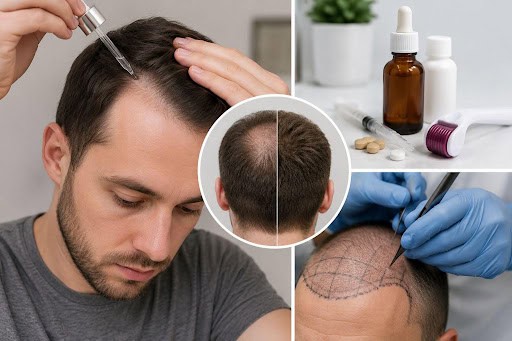
A receding hairline is not the end of the road. The best treatments for a receding hairline include minoxidil, finasteride, PRP therapy, and hair transplants like FUE and FUT. The right choice depends on your stage of hair loss.
Did you know? According to the American Hair Loss Association. Androgenetic alopecia, also known as common male pattern baldness (MPB), is responsible for over 95% of hair loss in men.
Your hairline does not need to disappear quietly. There is a receding hairline treatment for almost every stage, from early thinning to advanced loss. This guide breaks down what actually works, so you can pick the right path with confidence.
Key Takeaways
- The cause of receding hairlines usually lies in genetics and DHT, though stress and diet play a role too.
- Minoxidil and finasteride are obtained only when treatment has started at an early stage of recession.
- The use of Platelet-Rich Plasma (PRP) injections increases growth because they use your own blood plasma as a growth medium.
- FUE and FUT hair transplants give you permanent solutions to hair loss provided that hair loss stabilizes.
- Regular use and prompt intervention are more determining than any one medication or technique.
What Causes a Receding Hairline?
Genetics drive most cases. Androgenetic alopecia, or male pattern baldness, shrinks hair follicles over time. This happens because of a hormone called DHT (dihydrotestosterone).
Other triggers include:
- Stress and poor sleep, which disrupt the hair growth cycle
- Nutrient deficiencies, especially iron, zinc, and biotin
- Ageing, which naturally slows follicle activity
- Certain medications, including some blood thinners and antidepressants
Knowing the cause helps you pick the right hair loss treatment for receding hairline concerns. A GP or trichologist can confirm the trigger with a simple scalp check.
Stages of a Receding Hairline You Should Know
Hair loss does not happen overnight. It follows a pattern, and catching it early makes treatment far more effective.
The Norwood Scale is the standard tool used to track this. It runs from Stage 1 (no visible loss) to Stage 7 (severe balding).
| Stage | What You’ll Notice | Best Approach |
| 1–2 | Slight recession at temples | Minoxidil, lifestyle changes |
| 3 | Clear M-shaped hairline | Finasteride, PRP therapy |
| 4–5 | Thinning crown, wider recession | Combination therapy, laser treatment |
| 6–7 | Significant baldness | FUE or FUT hair transplant |
Spotting the stages of a receding hairline early gives you more options. Waiting too long limits what medication alone can achieve.
Medications That Slow or Reverse Hair Loss
Medication is usually the first line of defence. It works best when you start early.
Minoxidil for Thinning Hairline Treatment
Minoxidil is a topical solution applied directly to the scalp. It widens blood vessels and boosts blood flow to hair follicles. This helps stimulate regrowth in areas of thinning.
Results usually take three to six months to appear. You must use it consistently, or new growth may stop.
Finasteride to Cure a Receding Hairline
Finasteride is a tablet that blocks DHT production. Since DHT shrinks hair follicles, cutting it off can slow or reverse thinning. It is one of the most researched options to cure a receding hairline in men.
Note: Finasteride is not suitable for women, particularly those who are pregnant.
PRP Therapy for Hairline Regrowth
Platelet-Rich Plasma (PRP) therapy uses your own blood plasma, rich in growth factors. A specialist injects it into the scalp to stimulate dormant follicles. Many clinics pair PRP with other treatments for stronger results.
How to Stop Receding Hairline Progression Naturally

Lifestyle changes will not reverse advanced hair loss. But they can slow it down and support other treatments.
- Eat protein-rich meals. Hair is made of keratin, a protein.
- Manage stress. Chronic stress pushes follicles into a resting phase.
- Avoid tight hairstyles. These cause traction alopecia over time.
- Get enough sleep. Growth hormones peak during deep sleep.
- Massage your scalp. This may improve blood circulation to follicles.
Learning how to stop a receding hairline early gives medication and lifestyle changes the best chance to work together.
Hair Transplants: The Permanent Fix
When medication is not enough, a hair transplant offers a lasting solution. Two methods dominate the field.
FUE Hair Transplant
FUE hair transplant, or Follicular Unit Extraction technique, involves extraction of individual hair strands through a microscopic view. After extraction, these are replanted in the areas where the hair is thinning or falling out. It leaves minimal scarring and requires a shorter recovery time.
FUT Hair Transplant
FUT stands for Follicular Unit Transplantation. The first step is taking out a section of the scalp containing hair follicles. After this, the surgeon divides it into the hair grafts that will be used for the transplant. Compared to other techniques, this allows for transplanting more grafts at the same time. A linear scar is the side effect of this method.
Expert Insight: Clinics generally recommend FUE for smaller, more targeted areas of recession, and FUT for those needing high graft numbers in a single sitting. Your surgeon should assess your scalp laxity and donor density before choosing either method.This information has been medically reviewed by Dr Jyotsana Kumari to ensure it is clear and clinically informed
How to Get Your Hairline Back: A Realistic Timeline
Patience matters here. Hair growth is slow, and results build gradually.
- Month 1–3: Shedding may increase slightly before new growth starts.
- Month 4–6: Fine, new hairs appear at the hairline.
- Month 6–12: Thickening continues with consistent treatment.
- Year 1+: For transplants, full results show after 12 to 18 months.
Knowing this timeline stops you giving up too early. Most treatments need consistency, not quick fixes.
Common Mistakes People Make
Avoid these pitfalls if you want real results.
- Stopping treatment too soon. Minoxidil and finasteride need months to show results.
- Ignoring the underlying cause. Treating symptoms without addressing hormones or diet limits progress.
- Choosing a transplant too early. Surgery works best once hair loss has stabilised.
- Skipping professional advice. Over-the-counter products alone rarely solve advanced hair loss.
Explore Your Hair Restoration Options!
You do not have to accept hair loss as inevitable. Whether it’s taking medication every day or getting one of these modern surgical procedures, there will always be a solution for the particular stage.
If you are unsure when to get a hair transplant or want to explore medication first, speak to a specialist. At The Skin and Hair Clinic, professionals will personally help you by doing a hair consultation and guiding you to get back a fuller hairline.
FAQs
Q: Can a receding hairline grow back naturally?
Mild thinning can improve with better diet, less stress, and scalp care. An advanced recession usually needs medical treatment.
Q: What is the best age to treat a receding hairline?
Earlier is better. Starting treatment in your 20s or 30s often gives stronger, faster results.
Q: Is FUE better than FUT for a receding hairline?
FUE suits smaller areas and leaves less visible scarring. FUT suits larger areas needing more grafts in one go.
Q: How long does minoxidil take to work on a hairline?
Most people see initial regrowth within three to six months of daily use.
Q: Does finasteride have side effects?
Some men report reduced libido or mood changes. Always discuss risks with a doctor before starting.