
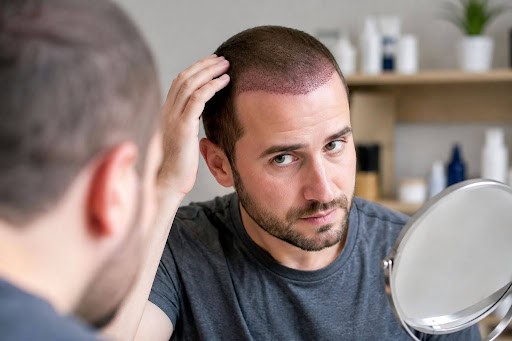
Most hair grafting side effects are mild and fade within two weeks. Swelling, itching and scabbing are normal parts of healing. Hair grafting side effects are common, but they’re rarely serious. Knowing what to expect in advance makes the whole recovery feel far less daunting. In this blog, we will discuss some of the common grafting side effects and how to manage them. So, read until the end!
Did you know? According to the NIH, swelling of the forehead and periorbital tissues peaks around 2–3 days after surgery and resolves spontaneously within 5–7 days.
Key Takeaways
- Swelling and redness are the most common early side effects, easing within two weeks
- FUE and FUT carry similar risks overall, though scarring and recovery time differ
- A genuine hair plug infection is rare, affecting under 1% of patients
- Watch for spreading redness, pus, or fever as clear infection warning signs
- Following aftercare instructions closely is the best way to manage recovery smoothly
Understanding Hair Surgery Side Effects Before You Book
Every graft procedure involves hundreds of tiny wounds across your scalp. Your body responds the way it would to any injury. It sends blood, fluid and immune cells to the area. That response is what causes most of the swelling and redness people notice.
This isn’t a sign something has gone wrong. It’s your scalp doing exactly what skin is meant to do after trauma. Surgeons expect it, plan for it, and usually prescribe medication to keep it manageable.
FUE Hair Transplant vs FUT Hair Transplant Recovery
An FUE hair transplant removes follicles one at a time, using a small circular tool. It leaves tiny dot scars scattered across the donor area, and patients often find it heals faster and with less discomfort.
A FUT hair transplant works differently. Surgeons remove a strip of scalp, then close the wound with stitches or staples. This method can involve more tension on the skin, which sometimes means a longer recovery window.
Both techniques carry similar hair surgery side effects overall. The difference lies mainly in scarring style and how quickly the donor area settles down. Your surgeon should walk you through which option suits your hair type, scalp laxity and lifestyle.
Common Side Effects Of Hair Transplant Surgery
Here are the side effects of hair transplant surgery most patients notice within the first fortnight.
- Swelling across the forehead and around the eyes, peaking around day three or four
- Redness at the recipient site, which can linger for up to two weeks
- Itching as the new grafts settle into place and start healing
- Scabbing around each graft, which falls away naturally within seven to ten days
- Shock loss, where some existing hair sheds temporarily before regrowing
- Numbness near the surgical site, which tends to fade over several weeks
These reactions are temporary. They aren’t a sign the procedure has failed. One detail patients often miss: shock loss can look alarming, but it’s genuinely one of the most common and predictable hair transplant side effects. The follicles are simply resting before they cycle back into active growth.
Hair Replacement Side Effects That Need Closer Monitoring
Some hair replacement side effects deserve more attention than others. Mild soreness on day one is expected. Pain that keeps building after day three is not. Watch, too, for pus, unusual warmth, or swelling that keeps expanding rather than settling.
These signs don’t always mean infection. But they’re worth a same-day call to your clinic, just to rule it out.
Quick Comparison: FUE vs FUT Side Effects
| Side Effect | FUE Hair Transplant | FUT Hair Transplant |
| Scarring | Small, scattered dot scars | One linear scar at the back of the scalp |
| Swelling | Mild to moderate | Moderate |
| Recovery time | Generally faster | Slightly longer, due to stitches |
| Infection risk | Low | Low, marginally higher at the strip site |
| Return to work | Often within a week | Usually seven to ten days |
Hair Plug Infection: What To Watch For
A hair plug infection is the risk patients ask about most, and it’s genuinely uncommon. Clinical data puts documented infection rates at under 1% of cases, which is reassuring when you’re weighing up the procedure.
Still, “rare” doesn’t mean “impossible,” so it pays to know the warning signs rather than second-guess every twinge.
Signs Of A Hair Transplant Infection
Get in touch with your clinic right away if you notice:
- Yellow or green discharge from any of the grafts
- A fever above 38°C that doesn’t settle
- Redness that spreads outward rather than gradually fading
- Pain that gets worse after day three, instead of easing
Catching a hair transplant infection early almost always means simpler, faster treatment. Left unchecked, it can put the grafts themselves at risk, which is the outcome nobody wants after investing in the procedure.
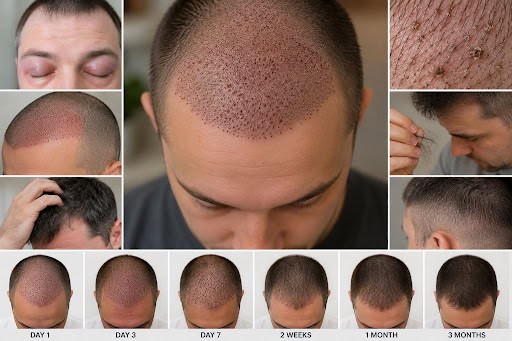
How To Manage Side Effects Of Hair Transplant Surgery
Small habits in the first ten days make a real difference to how smoothly you heal.
- Sleep with your head slightly raised for the first five nights
- Apply cold compresses to your forehead, but never directly on the grafts
- Avoid touching, scratching or picking at the treated area, however tempting
- Take any prescribed antibiotics or painkillers exactly as directed
- Skip the gym, swimming and saunas for at least ten days
- Wash your scalp only using the method your surgeon recommends
- Protect your scalp from direct sun with a loose hat, not sunscreen, in the early days
Following aftercare properly is, honestly, the single biggest factor in a smooth recovery. Surgeons see far fewer complications in patients who stick to the plan than in those who rush back to normal life too soon.
Is Hair Transplant Surgery Safe?
Yes, for the vast majority of patients. Most reputable clinics will confirm that hair transplant surgery is safe when it’s carried out by a properly trained surgeon in a sterile setting. Serious complications remain genuinely rare across both FUE and FUT approaches.
What matters more than the technique itself is who’s holding the tools. An experienced team, a clean environment and clear aftercare instructions do more for your outcome than any single surgical method.This information has been medically reviewed by Dr Jyotsana Kumari to ensure it is clear and clinically informed
Take the First Step Towards Healthier Hair!
Understanding hair grafting side effects takes the fear out of decision-making. Most reactions are mild, expected, and easy to manage. Serious problems stay genuinely uncommon when you choose an experienced surgeon and follow aftercare properly.
The Skin and Hair Clinic helps patients prepare for surgery and recover properly, from the first consultation through to the final check-up. Visit our website or talk to our experts and get direct answers before you commit to anything.
FAQs
Q: How long do hair transplant side effects last?
Most side effects, like swelling and redness, settle within one to two weeks after surgery.
Q: Is swelling after a hair transplant normal?
Yes, swelling is very common. It usually peaks around day three or four before fading naturally.
Q: Can a hair transplant get infected?
Infections are rare, occurring in under 1% of cases, but proper aftercare lowers the risk further.
Q: Does FUE hurt less than FUT?
FUE generally causes less discomfort and scarring, though both methods involve similar healing steps.
Q: When should I worry about hair transplant recovery?
Contact your surgeon if pain worsens after day three, or if you notice pus, fever, or spreading redness.