Yes, hair transplant surgery is generally very safe when performed by a qualified and experienced surgeon in a licensed clinic. While every surgical procedure carries some risks, serious complications are rare, and most side effects are temporary and manageable.
Thinning hair does something to your confidence that’s hard to explain unless you’ve been through it. To gain that confidence back more and more people opt for hair transplant surgery and wonder is hair transplant surgery safe.
Let’s understand the actual risks, the side effects of hair transplant surgery that nobody warns you about, and what separates a safe clinic from a risky one.
Table of Contents
Key Takeaways
- Hair transplant surgery has a very low complication and fatality rate worldwide.
- DHI and FUT mainly differ in scarring, recovery time, and precision.
- Most side effects, like swelling and numbness, fade within a few weeks.
- Serious complications stay rare and mostly trace back to unlicensed clinics.
- Women can safely get hair transplants once the diagnosis is done properly.
How Safe Is Hair Transplant Surgery
Many people wonder, how safe is hair transplant surgery next to other cosmetic procedures. Genuinely safe, and the numbers back it up. It’s minimally invasive, done as an outpatient, and typically uses local anaesthesia rather than general. That alone removes a big chunk of surgical risk.
In accredited clinics, graft survival often tops 90% at the twelve month mark. Surgeons plan the session around your scalp’s blood supply and donor density beforehand. That groundwork is what keeps complications rare rather than common.
DHI Hair Transplant vs FUT Hair Transplant: Which Is Safer
Not every technique carries the same risk. Here is a quick overview:
| Technique | Invasiveness | Scarring | Recovery Time | Best For |
| DHI hair transplant | Low | Minimal, pinpoint dots | 7 to 10 days | Precise hairline design |
| FUT hair transplant | Moderate | Thin linear line | 10 to 14 days | Sessions needing more grafts |
| FUE | Low | Minimal, scattered | 7 to 10 days | The most common choice |
DHI hair transplant relies on a specialised implanter pen, so grafts go straight in without pre-made incisions first. FUT means removing a strip of scalp tissue, which leaves that familiar thin scar line. Both are safe when done by a properly trained surgeon. The right pick usually comes down to your goals, not just safety alone.
The Hair Transplant Risks Worth Actually Knowing About
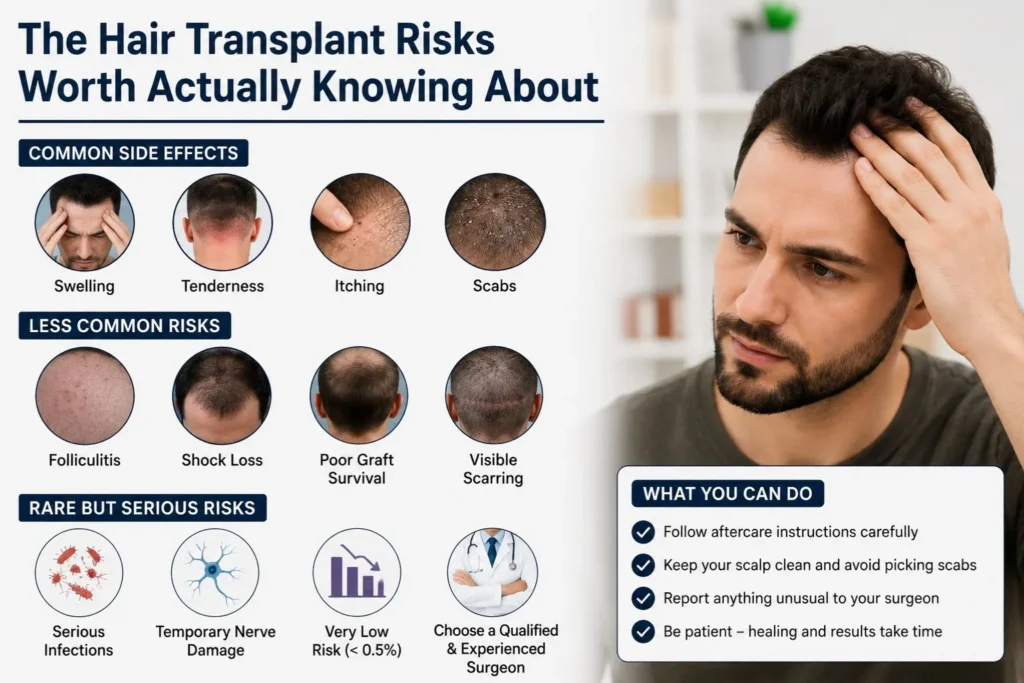
No surgery is risk-free, and pretending otherwise helps nobody. Here’s what the hair transplant risks actually look like in practice.
Common Side Effects of Hair Transplant Surgery
Most patients deal with mild, short-lived issues rather than anything dramatic.
- Swelling around the forehead and eyes for a few days
- Tenderness or mild pain near the donor site
- Temporary numbness that eases off within weeks
- Small scabs forming around each graft
- Itching while the scalp heals
These side effects of hair transplant surgery usually settle within two to three weeks. A good surgeon walks you through aftercare so nothing catches you off guard.
Less Common Hair Surgery Side Effects
Some hair surgery side effects show up less often but are still worth flagging.
- Folliculitis, a mild infection around the follicles
- Shock loss, where existing hair sheds for a while after surgery
- Weaker graft survival if aftercare gets ignored
- Visible scarring, more likely with FUT than FUE or DHI
Shock loss tends to freak people out, understandably. But the hair almost always grows back within a few months. It happens because the scalp has just been through trauma, not because the grafts have failed.
Rare Hair Replacement Side Effects
- Serious infections: In rare cases, an infection may develop and require treatment with antibiotics.
- Temporary nerve damage: Some patients may experience temporary numbness or altered sensation, which usually improves over time.
- Very low risk: Published clinical data show that serious hair replacement side effects occur in fewer than 0.5% of cases.
- Choose a qualified clinic: The risk becomes even lower when the procedure is performed by an experienced surgeon in a licensed, sterile clinic that follows proper safety protocols.
Can Women Get Hair Transplants Safely
Yes, and more are doing it every year. Female pattern hair loss doesn’t always look like male pattern baldness, so getting the diagnosis right matters first.
Women tend to lose hair in a more diffuse pattern, which changes how a surgeon plans the grafts. A proper scalp assessment rules out things like hormonal shifts or iron deficiency before anyone books a surgery date. The safety principles don’t change between men and women, though the technique often does.
What Actually Makes a Hair Transplant Safe
Safety rarely comes down to the procedure itself. It comes down to who’s holding the tools.
- Pick a surgeon-led clinic, not one run mainly by technicians.
- Ask about sterilisation protocols before you book anything.
- Find out how many grafts they’d recommend per session.
- Look through reviews, real before and after photos, and accreditations.
- Walk away from anyone promising huge graft counts in a single sitting.
Good clinics also stabilise hair loss with medical therapy first, when it’s needed. That one step protects both your results and your money long-term. A lot of patients also ask Is hair transplant surgery worth it once the safety side makes sense to them. For most people with realistic expectations, it usually is.
Take the Next Step Toward Fuller Hair!
Hair transplant surgery has a solid safety record when done by experienced surgeons. Risks exist, for sure, but they stay low and manageable with decent planning and proper aftercare. Honestly, the bigger risk is usually the clinic you choose, not the procedure itself. The Skin and Hair Clinic offers you the proper consultations so you can weigh your options without guessing. Book a consultation today and take an informed step toward getting your hair back.
Frequently Asked Questions
Is hair transplant surgery painful?
Not really. Most patients feel little discomfort since local anaesthesia handles the pain during surgery.
How long do hair transplant side effects last?
Common side effects usually fade within two to three weeks, though full results take a few months to show.
Is DHI better than FUE for safety?
Both carry similarly low risk, though DHI tends to leave less visible scarring behind.
Can hair transplants fail completely?
Total failure is rare. Poor aftercare or an undiagnosed scalp condition can lower graft survival, though.
What’s the recovery time after a hair transplant?
Most people get back to light activity within a week, with full healing taking a few months.