Table of Contents
Key Takeaways
- Hormonal shifts, menopause in particular, are a major driver of female hair thinning.
- Conditions like thyroid disorders and PCOS can also be behind unexplained hair loss.
- Early signs, like a widening parting, are worth acting on rather than ignoring.
- A proper diagnosis, bloodwork plus a scalp exam points you toward the right treatment.
- A female hair transplant offers a lasting option once pattern loss has progressed.
Hair loss in women usually comes down to hormones, stress, or an underlying health issue, and most cases can be treated once you pin down the cause.
Did you know? According to UCLA Health, by age 50, up to 40% of women will have noticeable hair loss, but it can happen at any age.
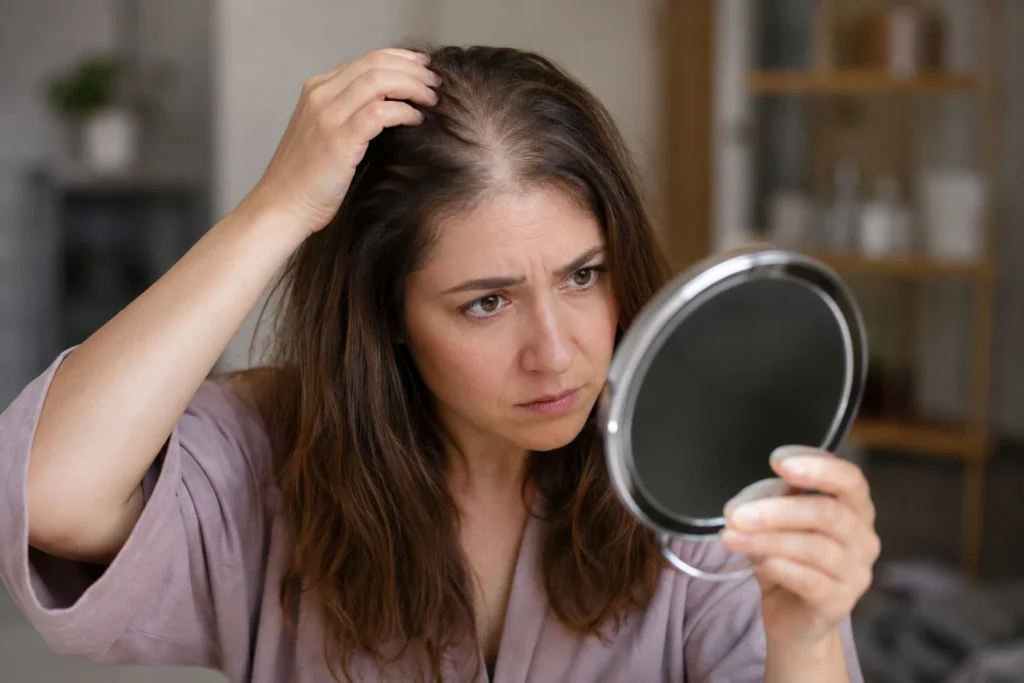
That’s a lot of women quietly dealing with something they think is just “bad luck.” Understanding the real causes of female hair loss changes that. Some shedding is just age catching up with you. In many cases, the cause is treatable. You just haven’t found the right solution yet. In this guide, we will understand what causes hair loss in women, so read until the end!
What Triggers Thinning and Hair Loss in Women?
There’s rarely one culprit here. Hair loss usually builds up from a few things happening at once, quietly, until you notice a lot more hair on your pillow than usual. A few of the usual suspects:
- Hormonal imbalances, especially around menopause or pregnancy
- Nutritional gaps, low iron, and vitamin D being the big ones
- Chronic stress, which forces follicles into an early resting phase
- Genetics, otherwise known as female pattern hair loss
- Rough styling habits, think tight ponytails and daily heat tools
Hormonal Shifts Behind Thinning Hair Causes Female Patients Notice
Oestrogen keeps hair in its growth phase for longer. Once levels drop during menopause, follicles start shrinking faster than they used to. This is one of the most common thinning hair causes female patients bring up in the clinic. Postpartum shedding works similarly, though thankfully it tends to settle down within a few months on its own.
What Diseases Cause Hair Loss?
A handful of medical conditions sit quietly behind unexplained shedding. Thyroid issues slow the whole growth cycle down. PCOS raises androgen levels, which thins hair right at the crown. Alopecia areata is different again; it’s autoimmune, and it attacks follicles directly, leaving patchy bald spots behind. Iron-deficiency anaemia comes up a lot too, particularly in women with heavy periods.
Symptoms You Shouldn’t Brush Off
Catching this early makes a real difference. Keep an eye out for:
- A parting that’s slowly getting wider
- Noticeably more hair in the shower drain
- A ponytail that feels thinner in your hand
- Regrowth that seems to take longer after a cut
- Itching or scalp tenderness alongside the shedding
Brushing these off usually just means slower recovery down the line.
How Is Female Hair Loss Diagnosed?
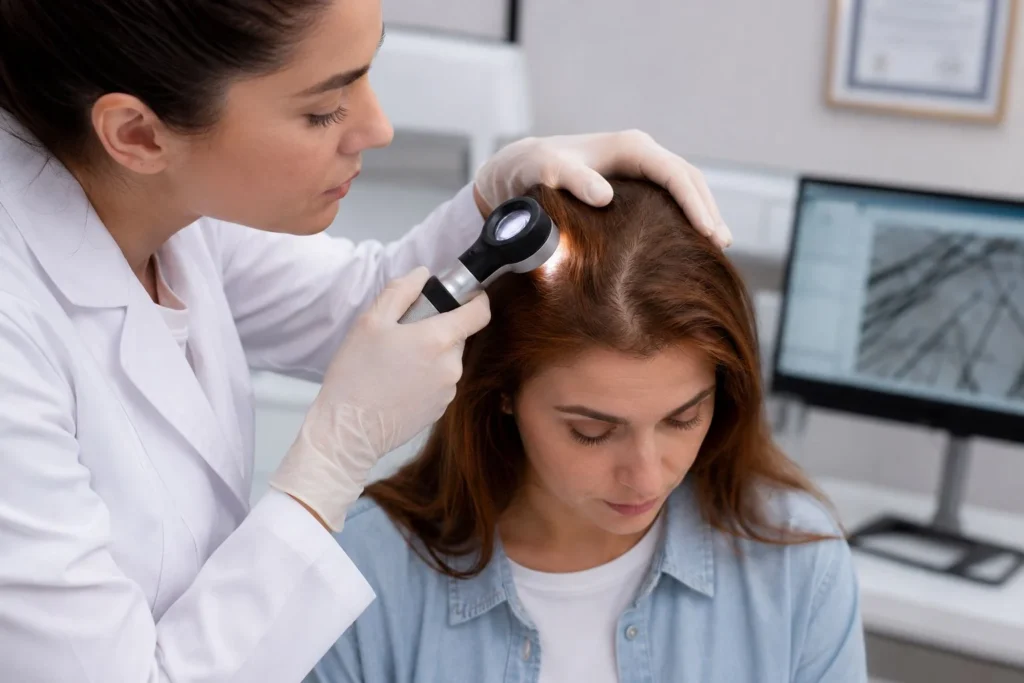
It starts with a proper scalp exam, nothing fancy, just a trained eye. Many clinicians use the Ludwig Scale to gauge how advanced the thinning is. Blood tests come next, checking thyroid function, iron, and hormone levels. Occasionally, a small scalp biopsy is needed to see whether follicles are scarred or still active underneath. This step matters more than people realise, because hormonal thinning and autoimmune hair loss are treated in completely different ways.
What Can Cause Hair Loss in Women Beyond Genetics?
Genetics gets most of the blame, but lifestyle changes are one of the main causes of female hair loss. Crash diets deprive follicles of the protein they need. Some medications, certain antidepressants and blood thinners among them, list shedding as a known side effect. Even a bad bout of illness or a surgery can trigger telogen effluvium, a temporary but genuinely alarming shedding phase.
| Cause | Typical Symptom | Common Age Group |
| Hormonal (menopause) | Diffuse thinning at the crown | 45–60 |
| Genetic (pattern loss) | Widening parting | 30–70 |
| Nutritional deficiency | Brittle, thinning strands | Any age |
| Autoimmune (alopecia areata) | Round bald patches | 15–40 |
| Postpartum shedding | Sudden hair fall | Post-pregnancy |
Causes for Women’s Hair Loss: Stress and Daily Habits
Stress genuinely deserves its own mention here. A cortisol spike can push a huge chunk of follicles into shedding mode all at once. Throw in poor sleep, restrictive dieting, and near-daily heat styling, and the scalp simply can’t keep pace. A lot of these causes for women’s hair loss are reversible once the habits behind them change.
Solutions That Work: From Home Care to Female Hair Transplant
What actually helps depends entirely on the cause. Mild hormonal or stress-driven thinning often responds well to topical minoxidil, better nutrition, and easing off the heat tools. Nutritional gaps close up once bloodwork confirms exactly what’s missing and supplements target it directly.
For thinning that’s more advanced or long-standing, a female hair transplant tends to be the more permanent fix. Newer techniques transplant healthy follicles into thinning areas with barely any visible scarring. More clinics now offer hair transplant for women specifically, using approaches built around female scalp patterns rather than borrowing male techniques and hoping they translate.
One thing worth remembering: get a proper diagnosis before you commit to any treatment plan. Treating stress-related shedding as if it were genetic loss just wastes time and money you didn’t need to spend.
Find the Right Solution for Your Hair Concerns!
Hair loss in women can feel overwhelming, but it doesn’t have to be something you simply accept. Whether the cause is hormonal changes, stress, nutritional deficiencies, or an underlying medical condition, identifying the reason behind the shedding is the first step toward effective treatment.
At The Skin and Hair Clinic, every treatment plan begins with a thorough diagnosis, ensuring you receive care that’s tailored to your specific needs. From medical therapies to advanced female hair transplant procedures, the clinic offers personalised solutions designed to offer natural-looking, long-lasting results.
Frequently Asked Questions
1. What is the main cause of female hair loss?
Hormonal changes, menopause especially, sit near the top of the list, though genetics and stress play a big part as well.
2. Can stress alone cause noticeable hair loss?
It can. Severe or long-running stress can trigger telogen effluvium, which shows up as widespread shedding.
3. Is female hair loss reversible?
Often, yes, particularly when it’s stress-related or tied to nutrition. Genetic pattern loss usually needs ongoing management instead.
4. When should I see a doctor about hair thinning?
Worth booking in if you notice sudden shedding, bald patches, or thinning that hangs around past three months.
5. Does a female hair transplant look natural?
It should. Current techniques follow your natural growth pattern, so results blend in rather than standing out.