Yes, a hair transplant can genuinely restore a full, natural hairline. But going from surgery to a result you are proud of takes patience. Knowing what lies ahead makes the whole process far less stressful.
Did you know? According to Grand View Research, the global hair restoration market size is projected to reach USD 18,923.4 million by 2030.
This figure says a lot about how far the procedure has come. The Skin and Hair Clinic regularly speaks with patients who want more than just surgical information. They want to know what actually happens after. This blog walks you through the complete picture, from your first post-op week right through to your final, fully grown hair transplant after results.
Table of Contents
Key takeaways
- Hair transplant before and after results take 12 to 18 months to fully reveal. Patience genuinely matters here.
- Shock loss around weeks two to three is normal and does not mean the transplant has failed.
- FUT hair transplant works well for patients who need a higher graft count to cover advanced hair loss.
- Female hair transplant before and after results focus on density and natural blending, not just hairline rebuilding.
- Surgeon experience and how well you follow post-op care are the two biggest factors in your hair transplant results.
What honest before and after hair transplant photos actually tell you
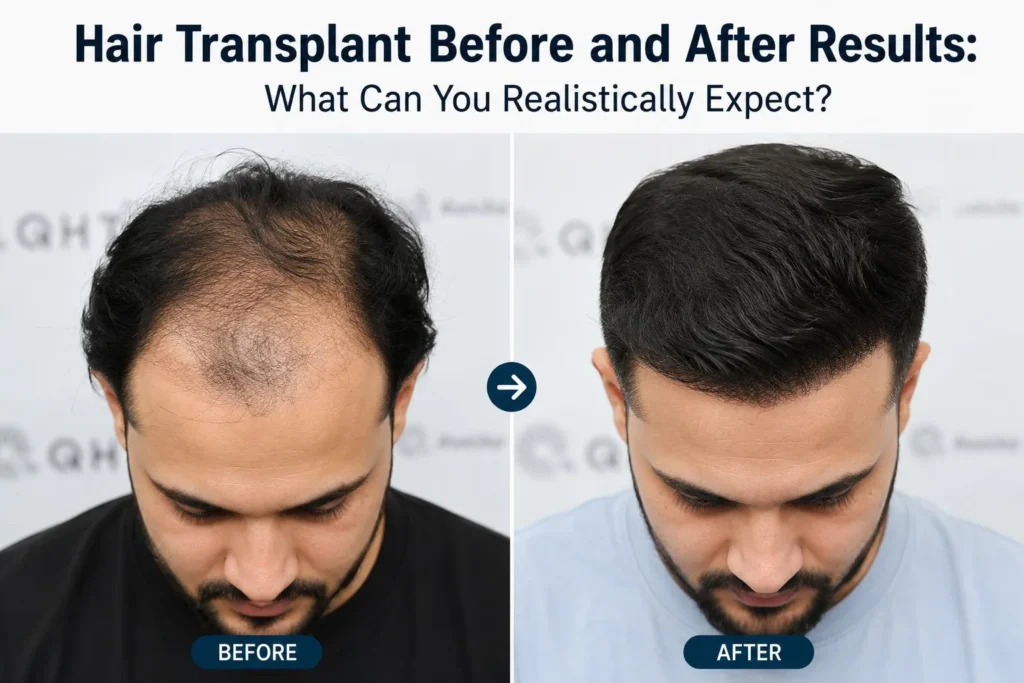
Hair transplant before and after photos carry real weight. They can also mislead you if you do not know what to look for. Here is what genuine photos should show you:
- The donor zone before and after graft extraction
- The density and coverage achieved in the thinning areas
- The natural hairline shape and direction
- Overall thickness at 12 months versus the starting point
Good before and after hair transplant images are taken under consistent lighting and from the same angle. Clinics that brighten their “after” shots are not giving you the full picture. Always ask for a standardised hair transplant before and after photos before you decide anything.
The hair transplant healing timeline: Month by month
Knowing what each stage looks like stops a lot of unnecessary worry. Many patients panic when their hair sheds around week three. That is completely expected and part of the process.
| Timeframe | What Happens |
| Week 1 | Redness, scabbing, and mild swelling around the graft sites |
| Weeks 2–3 | Scabs clear up; newly placed hairs begin to shed (shock loss) |
| Months 1–3 | A quiet phase with little visible growth while follicles settle |
| Months 4–6 | Fresh growth starts coming through; texture may feel soft at first |
| Months 9–12 | Density builds noticeably; hair surgery results become clear |
| Months 12–18 | Full results of hair transplant are visible and look completely natural |
The hair transplant healing timeline does not move in a straight line. Progress comes in bursts. Hold off on judging your outcome until at least the 12-month mark.
FUT hair transplant before and after: What makes it different
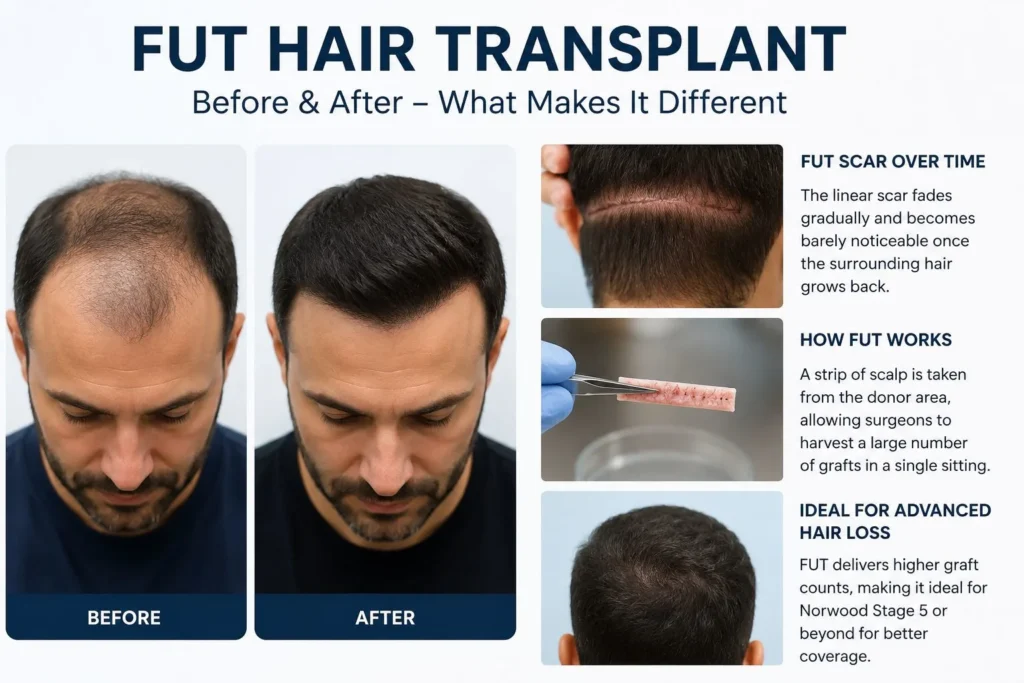
The FUT hair transplant method involves taking a strip of scalp from the donor area. This lets surgeons harvest a large number of grafts in a single sitting.
Higher graft counts for more advanced hair loss
FUT hair transplant outcomes tend to be particularly strong for patients at Norwood Stage 5 or beyond. The strip method yields more follicular units per session, which translates to better coverage across wider bald areas.
What happens to the scar over time
The linear scar from a FUT hair transplant fades gradually. It sits below the natural hairline and becomes barely noticeable once the surrounding hair grows back over it. If you prefer very short styles, talk this through honestly with your surgeon before going ahead.
Female hair transplant before and after: Why the results look different
Female hair transplant cases follow a different pattern from male ones, both in how hair loss presents and what a good result looks like.
What sets female hair transplant results apart
A female hair transplant before and after comparison usually shows restored density across the crown and parting rather than a fully rebuilt front hairline. The aim is to blend the transplanted follicles naturally with whatever hair already exists.
Women considering a female hair transplant should get a thorough assessment first. Hormonal causes, nutritional gaps, or conditions like alopecia areata need to be ruled out before surgery becomes the right option.
What actually shapes your hair transplant results
Two patients with the same procedure can end up with quite different outcomes. Several real factors influence your final hair surgery results.
- Donor hair quality: Thicker, denser hair from the donor area produces better overall coverage
- Surgeon technique: Graft angle, depth, and direction all make a visible difference
- Scalp laxity: This affects how many grafts can safely be taken in one session
- Your age and loss stage: Younger patients may keep losing native hair after surgery
- Post-op care: Following aftercare instructions has a direct impact on hair transplant outcomes
Start planning your hair restoration today!
The clearest way to understand your personal hair transplant before and after potential is through a proper one-to-one assessment. At The Skin and Hair Clinic, GMC-qualified surgeons look at your scalp, donor supply, and hair loss pattern before recommending anything. Whether you are looking at FUE, FUT, or female hair transplant options, the focus is always on honest outcomes and care that fits your situation. Book your free consultation today and take a real step towards lasting change.
Frequently Asked Questions
Q1. How long does it take to see full hair transplant results?
Most patients notice strong growth by month nine. Full results of hair transplant generally show between 12 and 18 months after the procedure.
Q2. Does transplanted hair fall out after a hair transplant?
Yes, shock loss happens around weeks two to three. It is temporary. The follicles stay intact, and new hair grows back from them over the months that follow.
Q3. Are female hair transplant results different from male results?
Female hair transplant before and after comparisons show restored density and improved partings. Male results more often focus on hairline rebuilding and crown coverage.
Q4. What is the difference between FUE and FUT hair transplant before and after outcomes?
Both deliver natural-looking outcomes. FUT hair transplant can provide more grafts per session, which suits patients with more extensive loss. FUE leaves no linear scar, making it a better fit for patients who keep their hair short.
Q5. Can I trust before and after hair transplant photos from clinics?
Standardised photos taken under consistent lighting and angle are generally reliable. Ask for unedited images shot from the same position to get an honest sense of a clinic’s real hair transplant before and after photos.