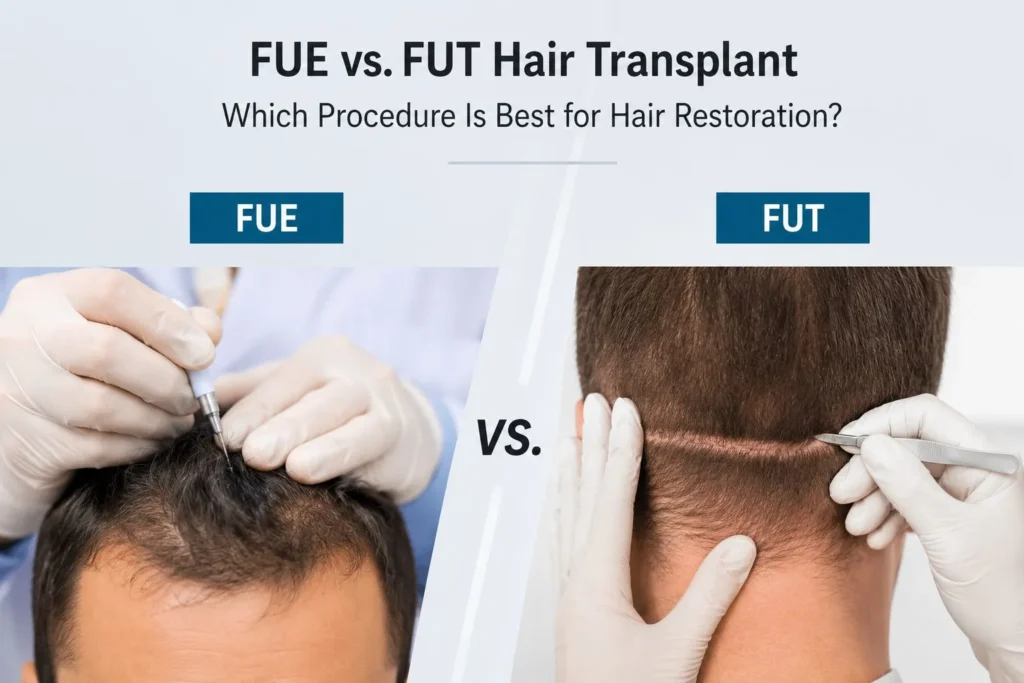
Since hair loss affects people in different ways, one of the most important things a person has to do when thinking about hair restoration is to choose the right technique. In fact, one of the questions that patients ask the most is if FUE vs. FUT hair transplant methods give better results. It is because that the decision depends on a number of factors, hair loss level, personal taste and long-term aspirations among them.
“Did You Know? According to the NHS, hair loss is a common condition that can affect both men and women due to genetics, ageing, and other factors.“
At The Skin and Hair Clinic, people are offered the opportunity to get advice on hair restoration based on advanced technology and to find out which one is the best for their situation. There are pros and cons for each hair transplant method, and it depends on several factors like the level of hair loss, how much donor hair is available, what kind of style one prefers, and what one’s goals are.
Table of Contents
Key Takeaways
- There is no single best hair transplant technique that fits every person.
- FUE is favored by patients who prefer shorter hairstyles and less scarring.
- FUT is good for larger graft sessions and more advanced hair loss.
- Recovery and costs vary depending on the procedure.
- In a professional consultation you will be able to decide which is the best treatment for you.
What Is the Main Difference Between FUE and FUT?
When You Compare FUT vs. FUE, The Most Important Difference Is The Way Donor Hair Is Harvested.
FUE treatment consists of picking the single hair follicles from the donor area, and the same follicles are passed on in the same session to the scalp to be operated on.
FUT is more invasive, as it involves harvesting the donor area through a single, long, and thin incision that will later be sutured. The strip of tissue will be processed into the individual hair grafts that will be used for transplantation.
Overall, both procedures aim to groom the patient for abundant and natural hair growth.
| Feature | FUE | FUT |
| Harvesting Method | Individual follicles | Donor strip |
| Scarring | Small dot scars | Linear scar |
| Recovery | Typically quicker | Longer healing period |
| Suitable For | Mild to moderate hair loss | Larger graft sessions |
| Hair Length | Suitable for short styles | Often better with longer styles |
Why Do Many Patients Choose FUE?
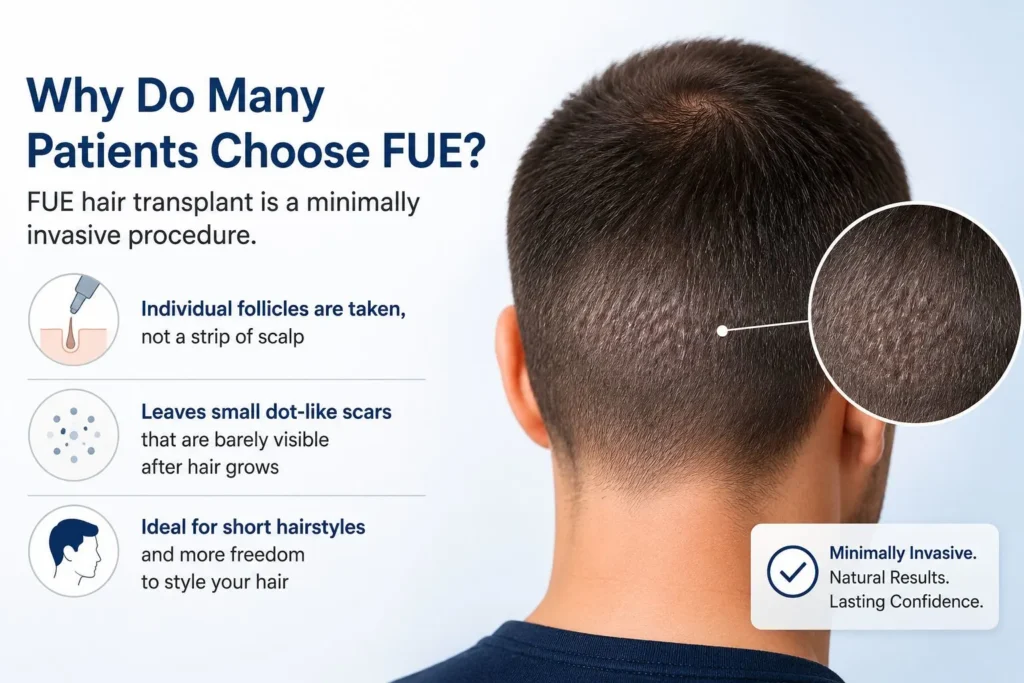
FUE hair transplant is attractive to many patients because it is a minimally invasive procedure.
Instead of taking out a whole strip of scalp, single follicles are taken and implanted. This results in small dot-like scars which are hardly visible after the hair has grown. People who want to have very short hair usually go for this method, as it gives more freedom in the way of styling their hair.
When Could FUT Be the Right Call?
Today, hair restoration has arrived with various techniques, and FUE and FUT hair transplant procedures still match different patient needs.
FUT is usually a preferred option for many people who have very advanced hair loss and symptoms and who, in one session, want to cover as much as possible of their balding area with a hair transplant. The method is able to achieve a great balance between getting the maximum amount of donor hair available and, at the same time, maintaining graft quality.
Understanding the FUT Procedure
To understand how a FUT hair transplant works, it helps to look at the donor harvesting stage. The FUT hair transplant procedure involves removing a narrow strip of donor tissue from the back of the scalp. Individual follicular units are then prepared and implanted into thinning areas.
Although FUT creates a linear scar, it can often be concealed effectively when hair is worn at a medium or longer length.
How Does Recovery Compare?
Recovery is an important consideration for many patients.
The FUT hair transplant recovery time is generally longer because the donor area requires additional healing after strip removal. Many patients return to daily activities sooner after FUE, while FUT recovery may take longer due to healing requirements at the donor site.
Recovery Tips
- Follow all post-procedure instructions.
- Avoid strenuous activities during early healing.
- Attend follow-up appointments.
- Protect the scalp from excessive sun exposure.
- Allow adequate time for hair growth progression.
Is FUT Still a Relevant Treatment?
Yes. The FUT hair transplant technique remains a valuable option for suitable candidates, particularly those who may benefit from a larger number of grafts in a single procedure.
The best treatment choice should always be based on individual assessment rather than popularity.
How do FUE and FUT compare in terms of cost?

Cost can influence treatment decisions.
In many cases, FUE requires more time because follicles are extracted individually. FUT can be a more cost-effective option for patients needing extensive graft placement during one session. However, treatment costs vary depending on the extent of hair loss and individual requirements.
Which Procedure Produces Better Results?
When evaluating FUE vs. FUT hair transplants, both procedures can produce natural-looking outcomes when performed appropriately. Neither technique is automatically superior.
Success depends on factors such as donor hair quality, treatment planning, graft placement, and patient suitability.
What Can Patients Expect from Before-and-After Results?
Patients researching FUT hair transplant before and after results often focus on density improvements and coverage across larger balding areas.
Those exploring FUE hair transplant before and after outcomes frequently appreciate the ability to maintain shorter hairstyles with less noticeable scarring.
So, FUE and FUT: Which Is Better?
Many prospective patients ask, “FUE and FUT which is better?”
The answer depends on:
- Hair loss severity
- Donor hair availability
- Preferred hairstyle
- Recovery expectations
- Budget considerations
Understanding the difference between FUE and FUT helps patients focus on the treatment most appropriate for their circumstances.
Patients considering an FUE hair procedure often value minimal scarring, while those interested in the FUE method hair transplant may appreciate its precision and flexibility.
Discover Your Ideal Hair Restoration Solution at The Skin and Hair Clinic
Choosing between FUE and FUT requires more than comparing techniques—it requires understanding which option aligns with your hair loss pattern, lifestyle, and expectations. Both procedures offer proven benefits and can deliver natural-looking results when recommended appropriately.
At The Skin and Hair Clinic, every patient receives a personalised assessment to determine the most suitable treatment approach. Whether you are considering FUE for minimal scarring or FUT for larger graft requirements, expert guidance can help you make a confident decision. Book your consultation today and start restoring fuller, natural-looking hair.
Frequently Asked Questions
1. Is FUE more painful than FUT?
Both procedures use local anaesthesia, and most patients report manageable discomfort during recovery rather than during the procedure itself.
2. Which procedure leaves less visible scarring?
FUE generally leaves tiny dot-like scars, while FUT creates a single linear scar that can often be concealed by longer hair.
3. How long does hair transplant recovery take?
Recovery varies between individuals, but FUE typically allows a quicker return to normal activities than FUT.
4. Can both techniques provide natural-looking results?
Yes. Both procedures can achieve natural density and hairline design when performed for suitable candidates.
5. Which option is better for advanced hair loss?
Patients requiring larger graft numbers may benefit from FUT, depending on their donor hair availability and treatment goals.