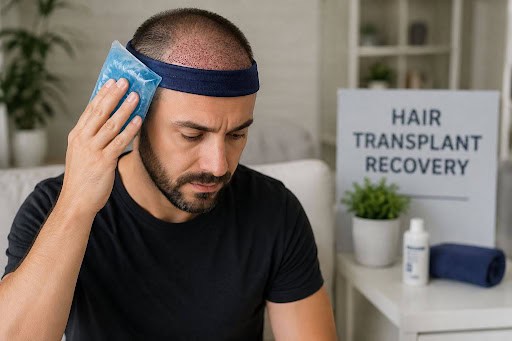
Ice, rest, and the right painkillers reduce pain after hair transplant surgery within days. Most soreness fades by day three.
So, if you’re worried about how to reduce pain after hair transplant treatment, the answer is clear; most pain is short-lived and manageable. Local anaesthesia numbs your scalp during the procedure itself. Real pain usually starts once the numbness wears off, a few hours later. This guide walks you through seven proven steps for a comfortable recovery.
Did you know? According to the NIH, Hair transplant surgery is a safe procedure, but there can be some complications, which may be in the form of complaints like postoperative pain, itching, and dissatisfaction related to the procedure’s outcome.
Key Takeaways
- Pain is usually strongest for the first three days post-surgery, but it slowly disappears as regeneration and healing are underway.
- Regular intake of painkillers as prescribed by a surgeon is an effective way to prevent pain. It is better to take pills on time rather than to wait until it is already painful.
- Sleeping with your head elevated helps to reduce swelling, increase the comfort of your neck, and allows the body to heal quickly in the first seven days.
- Careful washing of the hair and protection of the skin from direct sunlight is advised in order not to increase irritation, discomfort or other side effects.
- Carrying out the recovery plan customized to your needs leads to better outcomes, minimizes healing time, as well as prevents possible health issues in the long run.
Understand Why Discomfort Happens After Hair Implant Surgery
Your scalp goes through thousands of tiny punctures during FUE hair transplant surgery. This triggers a natural healing response. Swelling, tightness, and mild soreness are normal. They’re signs your body is repairing itself, not signs something is wrong.
Does Hair Transplant Hurt During the Procedure?
Many patients ask: does a hair transplant hurt? Not during surgery itself. Surgeons use local anaesthetic to numb the area first. You may feel pressure, but sharp pain is rare. Discomfort tends to build after the anaesthetic fades.
1. Take Prescribed Painkillers on Schedule
Don’t wait for pain to strike. Take your painkillers at set times instead. This keeps discomfort steady and low.
- Take paracetamol regularly for the first two days, as most UK surgery guidance recommends.
- Avoid ibuprofen or aspirin unless your surgeon approves them, since they raise bleeding risk.
- Stick to your clinic’s exact dosage instructions.
2. Sleep Upright to Ease Hair Transplant Donor Area Pain
Swelling worsens when you lie flat. Prop yourself up with two or three pillows for the first few nights. This simple trick eases hair transplant donor area pain and reduces facial puffiness too. Your head position controls blood flow to the scalp. Sleeping upright limits fluid pooling. This speeds up hair implant recovery and cuts morning stiffness.
3. Use Cold Compresses the Right Way
Cold packs numb nerve endings and calm inflammation. But never apply ice directly to grafts.
- Place a cold compress on your forehead, not the transplanted area.
- Wrap ice in a clean cloth first.
- Limit sessions to fifteen minutes at a time.
4. Keep Your Scalp Clean With Gentle Washing
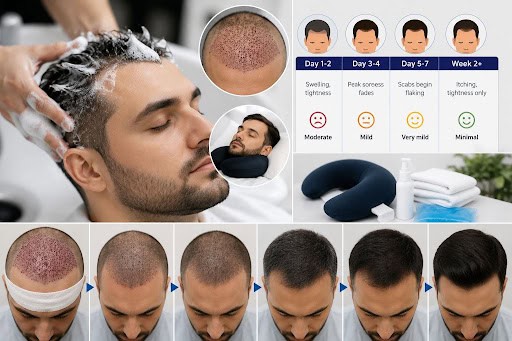
Bacteria and dried blood irritate healing follicles. Gentle washing, started when your surgeon advises, speeds healing and lowers infection risk. This forms a core part of proper after hair transplant care.
| Recovery Day | What to Expect | Pain Level |
| Day 1–2 | Swelling, tightness | Moderate |
| Day 3–4 | Peak soreness fades | Mild |
| Day 5–7 | Scabs begin flaking | Very mild |
| Week 2+ | Itching, tightness only | Minimal |
5. Avoid Strenuous Activity Early in Hair Transplant Surgery Recovery
Sweat, heat, and raised blood pressure all worsen swelling. Skip the gym, running, and heavy lifting for at least ten days.
So, which activities slow down hair transplant surgery recovery? Bending forward, saunas, and alcohol all strain healing tissue. Each one raises blood flow to your scalp. That means more swelling and more pain.
6. Protect Your Scalp From Sun and Friction
Sunlight burns tender grafts fast. Tight hats rub against fresh wounds. Both delay healing and spike discomfort.
- Wear a loose, breathable hat outdoors after day five.
- Apply surgeon-approved sunscreen once grafts have settled.
- Avoid tight headbands or helmets for several weeks.
7. Follow Your Surgeon’s Personalised Aftercare Plan
Every scalp heals differently. Based on clinical experience across thousands of patients, surgeons consistently find that personalised aftercare plans cut recovery time noticeably compared with generic advice. Your surgeon knows your graft count, technique, and skin type. Follow their plan closely, especially around washing schedules and medication.
Wondering is hair transplant painful beyond the first week? For most patients, real discomfort is gone by day seven, leaving only mild itching as hair follicles settle in. This information has been medically reviewed by Dr Jyotsana Kumari to ensure it is clear and clinically informed.
Start Your Pain-Free Recovery Journey!
A swift and pain-free recovery is a result of proper treatment and planning. These seven points are the key to reduce pain after a hair transplant, and you don’t need to worry or feel uncertain while healing after doing a series of recovery steps. The Skin and Hair Clinic, while customising treatment for you, will always keep your comfort in mind. Book a consultation today and take the guesswork out of your recovery.
FAQs
Q: How long does pain last after a hair transplant?
Most pain fades within three to four days. Mild tightness can linger for two weeks.
Q: Is FUE less painful than FUT?
Yes, generally. FUE avoids stitches, so the donor area heals faster with less pain.
Q: Can I take ibuprofen after a hair transplant?
Only if your surgeon approves it. Ibuprofen can increase bleeding risk after surgery.
Q: When can I wash my hair after a transplant?
Most clinics allow gentle washing between day two and five. Always follow your surgeon’s timeline.
Q: Why does my donor area hurt more than the transplanted area?
The donor area has more extraction points and nerve endings. It often feels sorer than the recipient site in the early days.